Huazhou Academy
Subtitle: A Millennium-Old Sanctuary of Learning and Natural Beauty in Nanyang
1. Introduction: The Legacy of a Renaissance Man
Nestled in the ancient city of Nanyang, in China's Henan province, lies the Huazhou Academy (花洲书院), a site that quietly embodies the profound intellectual and aesthetic spirit of the Song Dynasty. Its foundation is inextricably linked to one of China's most venerated historical figures: Fan Zhongyan. A polymath of the Northern Song Dynasty—renowned as a distinguished statesman, military strategist, literary master, educator, and philosopher—Fan Zhongyan served as the prefect of Dengzhou (modern-day Dengzhou, Nanyang). During his tenure in the Qingli era (1041-1048 AD), driven by a Confucian commitment to education and cultivation of talent, he established the core of what would become this celebrated academy. More than just an administrative project, the creation of Huazhou Academy was a personal endeavor by Fan to foster a harmonious environment where scholarly pursuit and artistic appreciation could flourish in unison with nature.
2. Architectural and Landscape Core: The "Spring Breeze Hall" and Beyond
The academy's original layout, conceived under Fan Zhongyan's direction, was designed to facilitate both rigorous study and serene contemplation. Its architectural heart was the lecture hall, famously named "Chunfeng Tang" (春风堂), or the "Spring Breeze Hall." This name, evocative of nurturing warmth and revitalizing energy, perfectly captures Fan's educational philosophy. It was within these walls that he presumably lectured, engaging with local scholars and students, imparting knowledge and his famous ethos of "being the first to worry about the world's troubles and the last to enjoy its comforts."
Beyond the lecture hall, the traditional academy complex included essential structures such as a dedicated library for housing classical texts and living quarters for resident scholars. However, Fan Zhongyan's vision extended beyond mere buildings. He ingeniously integrated the academy with a meticulously crafted landscape, thereby elevating it from a simple school to a poetic retreat.
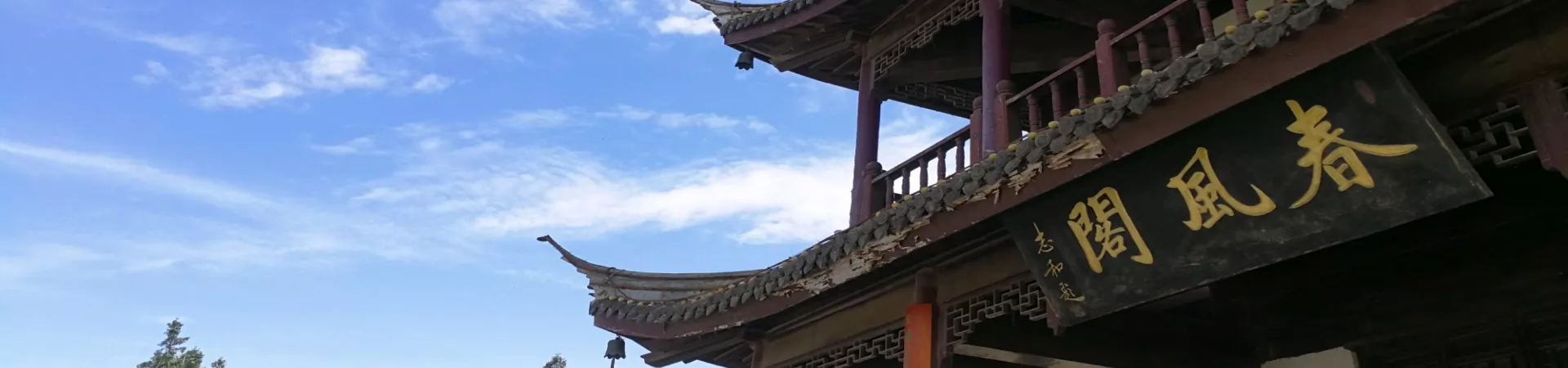
2.1. The Birth of "Hundred Flowers Islet" and the Academy's Name The most defining feature of the academy's landscape is the Baihua Zhou (百花洲), or the "Hundred Flowers Islet." Fan Zhongyan personally oversaw the creation of this exquisite garden area on the eastern side of the academy grounds. By dredging soil to form an islet within a pond and planting it with a rich variety of flowers and trees, he crafted a seasonal spectacle of color and fragrance. It is from this beautiful "Hundred Flowers Islet" that the academy ultimately derived its enduring name—Huazhou Academy. The landscape project also involved the renovation of the Lanxiu Ting (览秀亭), or the "Viewing Elegance Pavilion," and the construction of the Chunfeng Ge (春风阁), or the "Spring Breeze Pavilion." These structures provided vantage points from which scholars could compose poetry, paint, or simply meditate while immersed in the tranquil beauty of the surroundings, perfectly illustrating the classical Chinese ideal of drawing inspiration from nature.
3. Practical Information for the Modern Visitor
Today, Huazhou Academy stands as a well-preserved historical and cultural site, open to visitors who wish to walk in the footsteps of ancient scholars. The following practical details are essential for planning a visit:
3.1. Operating Hours and Admission * Ticket Price: The entrance fee is 30 RMB per person. * Opening Hours: The operating hours vary by season to accommodate daylight and weather conditions. * Spring Season (March 1 - May 31): The academy is open from 08:30 to 18:30 daily. The last admission is at 18:30. * Autumn Season (September 1 - November 30): The academy is open from 08:30 to 17:30 daily. The last admission is at 17:30. * It is advisable to check for any potential changes in hours during summer (June-August) and winter (December-February) periods not listed above.
3.2. Important Visitor Notes * Accessibility and Supervision: A crucial policy for visitor safety states that elderly individuals or children with limited mobility (deemed "without civil capacity") must be accompanied into the academy by a family member who has purchased a ticket. This ensures necessary supervision and assistance within the historical grounds. * Contact Information: For specific inquiries, visitors can contact the academy at 0377-62965586.
4. The Enduring Atmosphere: A Living Cultural Tapestry
Walking through Huazhou Academy today, one experiences more than just historical architecture. The site functions as a living museum of Song Dynasty scholarly culture. The restored Spring Breeze Hall allows one to imagine the vibrant discourses of the past, while the serene Hundred Flowers Islet continues to bloom, offering a sensory connection to the landscape Fan Zhongyan so cherished. The Viewing Elegance Pavilion and Spring Breeze Pavilion still provide peaceful spots for reflection. The combination of dignified historic buildings and the meticulously maintained classical garden creates a uniquely tranquil and contemplative atmosphere. It is a place where the boundaries between studying classical texts, composing poetry inspired by plum blossoms, and discussing philosophy by a lotus pond naturally dissolve. Visitors are not merely touring an old site; they are engaging with a physical manifestation of the Chinese literati ideal, where intellectual rigor and a deep, aesthetic appreciation for nature were seen as two sides of the same coin—a principle masterfully embodied here by its illustrious founder over a thousand years ago.