Zhang Jian's Former Residence
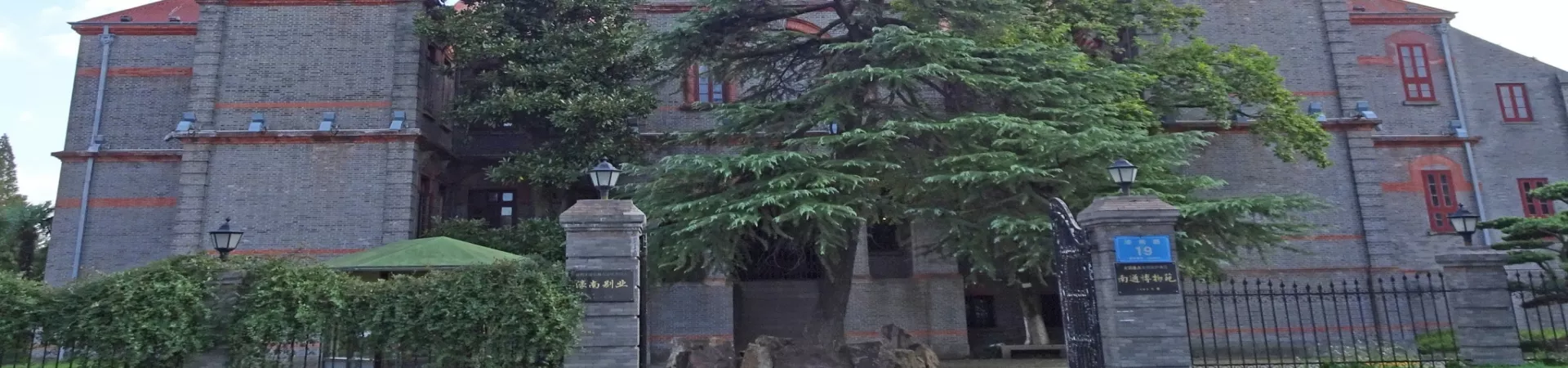
Subtitle: A Journey Through the Life and Legacy of Zhang Jian: Nantong's Visionary Industrialist and Reformer
1. Introduction: The Man Behind the Legacy
Nestled within the bustling modern city of Nantong, Jiangsu Province, lies a tranquil complex that serves as a profound testament to one of modern China's most influential yet often understated figures: Zhang Jian. The Zhang Jian Former Residence is not merely a collection of old buildings; it is a portal into the mind and soul of a scholar, industrialist, social reformer, and urban planner whose ideas shaped the very fabric of Nantong and left an indelible mark on China's early modernization. Visiting this site offers more than a historical tour; it is an immersive experience into the philosophy of "shiyè jiùguó" (saving the nation through industry and education), a creed that Zhang Jian lived and breathed. The compound, blending Chinese architectural elegance with subtle Western influences, stands as a physical embodiment of his pragmatic and forward-thinking vision.
2. Historical Context and Architectural Harmony
2.1. From Scholar to Industrial Pioneer To understand the residence, one must first understand the man. Born in 1853 during the late Qing Dynasty, Zhang Jian excelled in the traditional imperial examination system, achieving the prestigious title of zhuàngyuan (top scholar) in 1894. However, deeply affected by China's national crises and humiliations, he made a radical turn. Forsaking a conventional official career, he returned to his hometown of Nantong to embark on an unprecedented experiment in local modernization. His residence became the nerve center for this grand project.
2.2. The Design Philosophy: Blending Tradition and Modernity Constructed between 1895 and 1926, the residence complex covers approximately 1.1 hectares. It is a superb example of late Qing and early Republican architecture, characterized by its serene Jiangnan garden-style layout. The compound is divided into distinct sections: the main residential quarters, a beautiful garden, a library, and auxiliary buildings. The architecture primarily follows traditional Chinese styles—grey-tiled roofs, wooden beam structures, intricate lattice windows, and whitewashed walls enclosing peaceful courtyards. However, keen observers will note subtle incorporations of Western elements, such as the use of glass in windows and more functional spatial arrangements. This fusion perfectly mirrors Zhang Jian's own ideology: rooted in Chinese cultural essence while pragmatically adopting advanced Western knowledge for national strength.
3. Exploring the Compound: A Spatial Narrative
3.1. The Main Courtyard and Living Quarters The heart of the complex is the main courtyard, surrounded by the rooms where Zhang Jian lived, worked, and received guests. The central hall, or zhèngtīng, was used for formal meetings and family ceremonies. Its dignified yet understated decor reflects his character—scholarly, serious, and focused on substance over ostentation. Adjacent studies and bedrooms are furnished with simple wooden furniture, books, and personal artifacts, creating an intimate atmosphere that conveys his disciplined lifestyle. These rooms were where countless strategic discussions on business, education, and urban projects took place.
3.2. The Garden: "Juéyōu" and the Pursuit of Tranquility A highlight of the residence is the exquisite garden named "Juéyōu." In contrast to the formal living areas, the garden is a meticulously designed landscape of ponds, rockeries, pavilions, winding paths, and lush greenery. It embodies the classical Chinese ideal of creating a microcosm of nature for contemplation and spiritual respite. For Zhang Jian, a man burdened with the immense pressures of pioneering multiple enterprises, this garden was undoubtedly a essential sanctuary. It symbolizes the balance he sought between active engagement with the world and the inner peace found in traditional Chinese literati culture.
3.3. The Library and Study: The Intellectual Engine Perhaps the most significant section for understanding Zhang Jian's drive is his private library and study. An avid bibliophile and scholar, he amassed a vast collection of tens of thousands of books here. This space underscores that his industrial and social endeavors were not merely commercial but were deeply informed by study, reflection, and a profound sense of intellectual responsibility. The study, filled with books, writing brushes, and inkstones, was the birthplace of his numerous essays, business plans, and educational proposals.
4. The Legacy Beyond the Walls: Nantong as Zhang Jian's Masterpiece
4.1. The Residence as a Command Center The true importance of Zhang Jian's home lies in its function as the strategic command center for the transformation of Nantong. From here, he directed the establishment of China's first modern cotton mill, the Dasheng Cotton Mill, which became an industrial powerhouse. The profits were not hoarded but reinvested into the city according to a holistic plan.
4.2. A Model for Comprehensive Urban Development Zhang Jian's vision extended far beyond industry. Using his residence as a planning hub, he systematically built what he termed a "Model County." His initiatives, orchestrated from this very compound, included: * Founding Educational Institutions: He established Nantong's first normal school, agricultural school, medical school, and even a school for the deaf and mute, creating a comprehensive modern education system. * Launching Cultural and Welfare Projects: He founded museums, libraries, a theater, a weather station, and orphanages. The Nantong Museum, China's first public museum, was one of his proudest achievements. * Developing Public Infrastructure: He oversaw the construction of roads, bridges, a port, and public parks, transforming Nantong into a functional and aesthetically pleasing modern city.
4.3. An Enduring Inspiration Walking through the quiet courtyards and gardens of the Zhang Jian Former Residence today, visitors are walking through the genesis point of a unique social experiment. The compound stands in quiet dialogue with the modern city outside its walls—a city that still bears the structural and spiritual imprint of his work. It challenges visitors to consider the power of integrated, ethical, and culturally-grounded development. The residence, therefore, is more than a memorial; it is a lasting source of inspiration, telling the story of how one individual's vision, rooted in a deep love for his homeland, can catalyze the comprehensive progress of an entire community. It remains a crucial pilgrimage site for anyone seeking to understand the roots of Chinese modernity, civil society, and socially-conscious entrepreneurship.