Water Painting Garden
Subtitle: A Journey Through Time and Artistry in Jiangnan's Quintessential Scholar's Garden
I. An Introduction to Shuihui Garden: The Pinnacle of Jiangnan Elegance
Nestled in the ancient city of Rugao, within Nantong, Jiangsu Province, Shuihui Garden stands as a crowning achievement of classical Chinese landscape design. Officially recognized as a National AAAA-level Tourist Attraction, it is often celebrated as a singular masterpiece among the myriad famous gardens of China—a radiant pearl upon the Jianghai Plain. More than just a scenic retreat, Shuihui Garden represents the very essence of the wenren yuan, or "scholar's garden," a physical manifestation of literary refinement, artistic pursuit, and philosophical contemplation. Its enduring fame is inextricably linked to its most illustrious residents: the renowned Jiangnan scholar Mao Xiang (Mao Pijiang) and his beloved, the celebrated Qinhuai courtesan and poetess Dong Xiaowan. Their storied romance and life of seclusion here during the tumultuous Ming-Qing transition period imbue the garden's pathways and pavilions with a profound, lyrical nostalgia.
II. The Artistry of Design: Where Water Paints the Scene
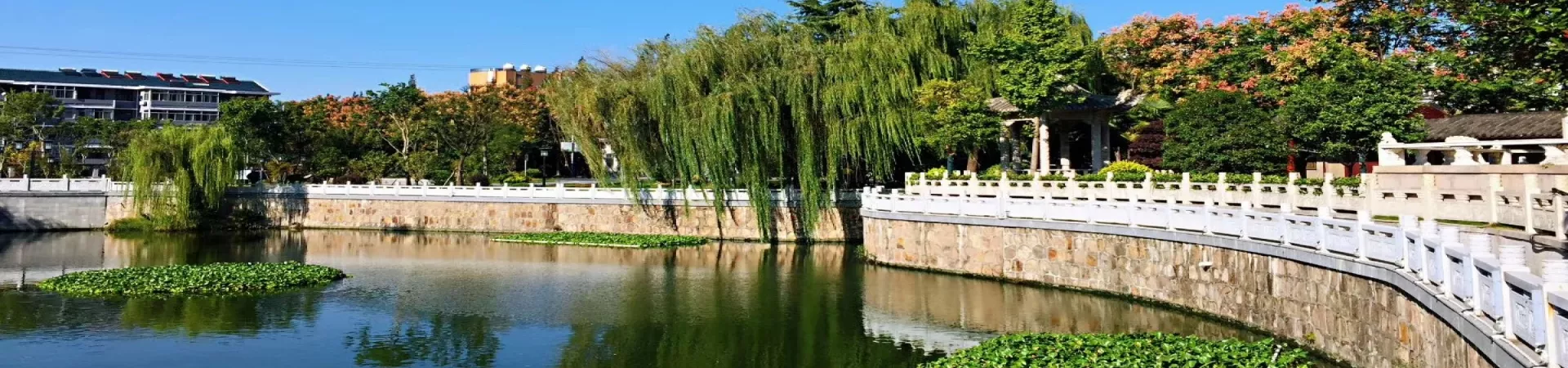
The garden's name, "Shuihui," meaning "water-painting" or "water-rendering," perfectly encapsulates its central design principle and aesthetic soul. Here, water is not merely an element; it is the primary medium, the canvas, and the artist.
A. The Primacy of Water and Reflection The garden's layout masterfully utilizes expansive ponds, winding streams, and tranquil pools that weave through the entire complex. The architectural philosophy hinges on the concept of "borrowed scenery" through reflection. Pavilions, terraces, rockeries, and ancient trees are meticulously positioned along the water's edge so that their perfect doubles shimmer on the surface below. This creates a dreamlike, symmetrical world where reality and illusion blend, amplifying the sense of depth, serenity, and poetic beauty. The ever-changing play of light, shadow, and cloud upon the water ensures that the "painting" is never static, offering a unique vista with every glance and each passing season.
B. A Tapestry of Artistic and Intellectual Pursuits Shuihui Garden transcends visual beauty to function as a holistic sanctuary for the cultivated mind. It was conceived as a space to express ideals (yi yuan yan zhi) and preserve memory (yi yuan wei yi). This is evident in its seamless integration of diverse cultural arts within the natural landscape. The garden itself is structured like a three-dimensional poem or an unfolding handscroll painting. Throughout the grounds, one encounters spaces and subtle cues dedicated to the refined arts: quiet studios evoking the pursuits of poetry (shi) and prose (wen); secluded spots suitable for playing the guqin (qin); courtyards that invite a game of chess (qi); and environments inspiring calligraphy (shu) and painting (hua). Collections of antiquities and artifacts (bogu) would have been displayed, and the garden's design naturally accommodates the appreciation of traditional opera and music (quyi). This dense layering of cultural purpose solidifies its identity as a true scholar's retreat, where every stone, plant, and building corner whispers of intellectual and artistic engagement.
III. Practical Information for Your Visit
A. Location and Transportation Shuihui Garden is located in Rugao, a county-level city under the administration of Nantong, Jiangsu Province. * By Public Bus: Visitors can take the Rugao Bus No. 101 or the Rugao Tourist Bus Line 1 directly to the "Shuihui Yuan" (Shuihui Garden) bus stop. The garden entrance is within short walking distance from the stop.
B. Admission and Operating Hours * Admission Fee: Currently, entry to Shuihui Garden is free of charge. This policy makes this cultural treasure highly accessible to all visitors. * Opening Hours: The garden is generally open from 8:00 AM to 5:30 PM daily. Last admission is typically at 5:30 PM. It is advisable to allocate approximately 1 to 3 hours for a thorough exploration of the garden's scenery and historical sites.
C. Contact Information For the most current information, especially regarding special events or temporary changes in schedule, you may contact the garden at: * Telephone: 0513-68161666 or 0513-87621560
IV. Experiencing the Legacy: Traces of Mao Xiang and Dong Xiaowan
Walking through Shuihui Garden is, in many ways, walking in the footsteps of its legendary inhabitants. The romance between the talented scholar Mao Xiang and the gifted beauty Dong Xiaowan is one of Chinese history's most poignant love stories. Fleeing the chaos of the fallen Ming dynasty, they sought refuge and created a life of artistic companionship within this garden. Their spirit permeates the atmosphere. Visitors can imagine Dong Xiaowan's presence in the delicate herb gardens she might have tended, or Mao Xiang composing poetry in a waterside pavilion. The garden became their world—a place of shared study, music, and literary creation, a testament to their deep bond. This human narrative adds an invaluable emotional and historical dimension to the physical beauty of the site, transforming a visit from simple sightseeing into an encounter with a timeless Chinese cultural ideal. It serves as a powerful reminder that the garden was not just built for display, but for living—a haven where nature, art, and profound personal feeling were inextricably woven together.