Sik Park
Subtitle: A Sanctuary of History and Horticulture: Exploring Nantong's Zhang Jian Memorial Park
Introduction: The Legacy of a Visionary
Nantong, a city often hailed as the cradle of modern Chinese industry and urban planning in the late Qing and early Republican eras, owes much of its foundational character to one extraordinary individual: Zhang Jian. A scholar who achieved the prestigious title of "Zhuangyuan" (top scholar) in the imperial examinations, Zhang Jian transcended the traditional path of a literati to become a pioneering industrialist, educator, and social reformer. His final resting place, known today as Se Garden (啬园), stands not merely as a cemetery but as a profound testament to his life and a serene, green heart within the broader Langshan Mountain Scenic Area. More than a historical site, it is a beautifully landscaped park where visitors can contemplate the legacy of a man who shaped a city while enjoying a peaceful retreat from urban bustle.
The Historical Core: From Mausoleum to Memorial Park
The story of Se Garden is inextricably linked to the passing of its honoree. Zhang Jian, also known by his literary name "Se An" (啬庵), passed away on August 24, 1926. His funeral was held on November 1st of the same year, and he was interred in this specially designated garden. Initially, the site was fittingly called "Se Gong Mu" (啬公墓), or the Tomb of Master Se, directly referencing his alias. The garden's purpose was clear: to create a dignified and perpetual memorial for Nantong's greatest benefactor.
The family narrative deepened in 1935 with the death of Zhang Jian's son, Zhang Xiaoruo (Zhang Xiaoru), a noted diplomat and scholar in his own right. He was laid to rest east of his father's tomb, adding another layer of familial and historical significance to the grounds. This father-son pairing transforms the space from a single hero's shrine into a poignant family narrative emblematic of a transformative period in Chinese history. Over time, "Se Garden" evolved from a private mausoleum into a public commemorative park, its name softening from "tomb" to "garden," reflecting its dual role as a place of remembrance and public recreation. As a key component of the Langshan Mountain Scenic Area, it contributes to a larger cultural and natural tapestry that draws visitors to Nantong.
A Visitor's Guide: Experiencing Se Garden
For the modern visitor, Se Garden offers a multifaceted experience blending history, horticulture, and tranquility. Navigating and planning a visit is straightforward, allowing you to focus on immersion.
1. Planning Your Visit: Hours and Admission The garden is open to the public daily from 7:30 AM to 5:00 PM, with the last admission also at 5:00 PM. This schedule is consistent throughout the year, offering ample opportunity for a morning stroll or an afternoon reflection. The admission fee is set at a very accessible 13 Chinese Yuan (RMB), making it an affordable destination for all. This modest fee contributes to the maintenance of the park's pristine gardens and historical structures.
2. Navigating to the Garden Se Garden's location within the Langshan Mountain Scenic Area in Nantong's Chongchuan District makes it relatively convenient to reach. Visitors have several options: * Public Transport: Utilizing Nantong's city buses is often the most economical method. Travelers should check for the latest routes that stop near Langshan or specifically mention Se Garden. * Taxi or Ride-Hailing: For direct and convenient access, taxis or apps like Didi are excellent choices. Simply providing the driver with the name "啬园" (Se Yuan) should suffice. * Private Vehicle: If driving, parking is typically available near the scenic area entrances. It is advisable to arrive earlier during weekends and holidays to secure a spot.
The Garden Experience: Ambiance and Key Features
Upon entering Se Garden, the atmosphere shifts. The noise of the city fades, replaced by the rustling of leaves and the scent of damp earth and flowers. The landscaping is traditional yet expansive, with meandering paths leading visitors through a carefully composed environment.
1. The Central Tomb Complex The spiritual core of the park is, naturally, the tomb of Zhang Jian. The tomb itself is a solemn and dignified structure, often adorned with tokens of respect from visitors. The adjacent tomb of his son, Zhang Xiaoruo, completes this familial sanctuary. The area around the tombs is kept clear and respectful, encouraging quiet contemplation. Informational plaques in Chinese provide details about Zhang Jian's monumental achievements—from founding the Dasheng Cotton Mill, which revolutionized local industry, to establishing Nantong's first normal school, museum, and library, effectively crafting a modern civic infrastructure.
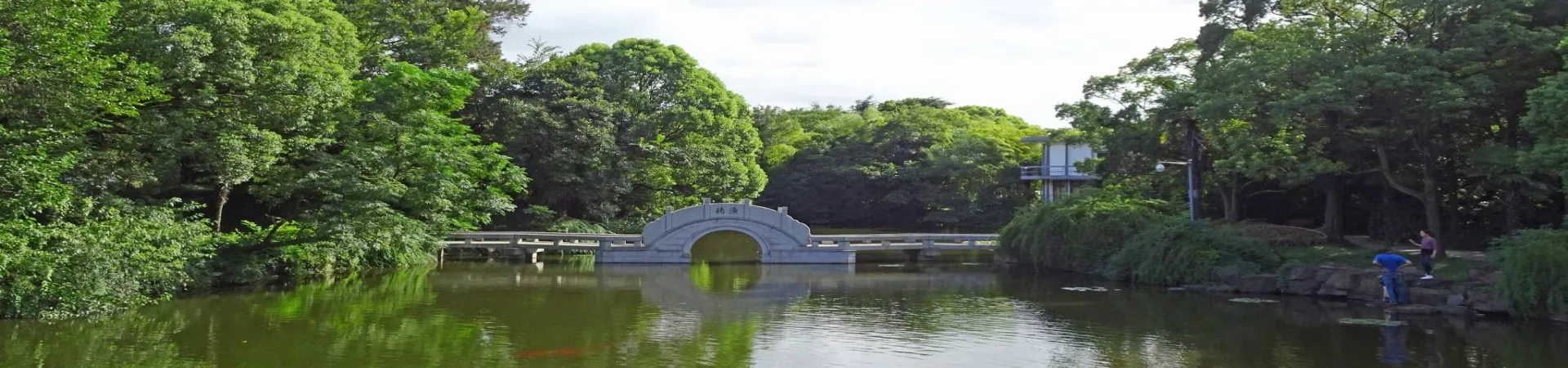
2. The Landscape and Botanical Collection True to its name as a "garden," the site flourishes with diverse plant life. The design incorporates elements of classical Chinese garden aesthetics, with ponds, bridges, rockeries, and pavilions strategically placed to create harmonious vistas. The vegetation changes with the seasons: vibrant azaleas and cherry blossoms in spring, dense, cooling canopies of green in summer, fiery maple leaves in autumn, and serene, stark beauty in winter. This botanical richness makes every visit unique and provides countless opportunities for photography and peaceful relaxation.
3. Architectural and Memorial Elements Scattered throughout the grounds are various pavilions, stone tablets, and memorial arches. These structures often bear inscriptions related to Zhang Jian's philosophy and contributions. One might find his famous pragmatic quotes about industry and education etched in stone, serving as open-air lessons in his visionary thinking. These architectural features are not merely decorative; they are integral to the narrative, guiding visitors through the physical and ideological landscape Zhang Jian helped to shape.
In essence, a visit to Se Garden is more than a walk in a park. It is an engagement with the living history of Nantong. One walks the same paths once trodden by mourners and dignitaries, reflects before the tomb of a true pioneer, and enjoys the tranquil beauty of a landscape that honors his memory. It is where the past is respectfully preserved and continuously revisited, not in a dusty museum, but in the vibrant, growing, and ever-peaceful embrace of nature.