Nantong Museum
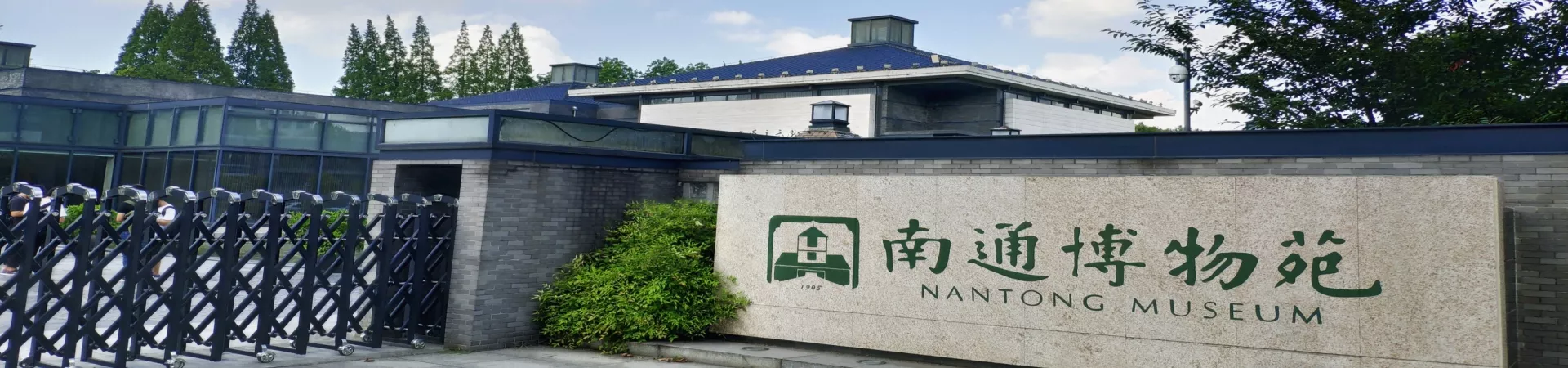
Subtitle: A Journey Through Time: Exploring Nantong Museum, China's Pioneer in Modern Museology
Introduction: The Cradle of Chinese Museums
Nantong Museum stands not merely as a cultural institution within Jiangsu Province but as a living monument to China's intellectual and industrial modernization at the dawn of the 20th century. Founded on December 9th of the 30th year of the Guangxu Emperor's reign (January 14, 1905), by the renowned national industrialist and scholar, Zhang Jian, it holds the distinguished title of the earliest museum established by the Chinese people that remains preserved to this day. Its creation was a radical departure from tradition, embodying Zhang Jian's visionary philosophy of using education and public cultural engagement as pillars for societal strengthening. Located in the heart of Nantong city, the museum complex is more than a repository of artifacts; it is the physical manifestation of a pivotal era where Chinese thinkers looked to blend indigenous heritage with global scientific and cultural currents. A visit here is a direct encounter with the seeds of China's modern public cultural consciousness.
Founder's Vision: Zhang Jian and His Legacy
The Industrialist as a Social Reformer Zhang Jian (1853-1926), a top scholar in the imperial examinations who turned to industrial entrepreneurship, was a figure of monumental importance in late Qing and early Republican China. His success in establishing the Dasheng Cotton Mill provided the economic foundation for his grand social experiments in Nantong, which he aimed to transform into a model city. For Zhang, a museum was not an accessory but a necessity—a "school for society" where citizens could visually comprehend natural history, human artistry, and industrial progress. The Nantong Museum was thus conceived as an integral part of a larger educational ecosystem that included schools, a library, a theater, and botanical gardens.
Integrating Nature, History, and Industry Uniquely for its time, Zhang Jian's original concept for the博物苑 (Bó Wù Yuàn), aptly translated as "Museum Garden," was holistic. It seamlessly blended indoor exhibition halls with sprawling outdoor gardens, living plant collections, and historical monuments. This design encouraged visitors to draw connections between geological specimens, botanical species, historical relics, and contemporary industrial products. This interdisciplinary approach was revolutionary, aiming to foster a well-rounded, inquisitive public mind capable of contributing to national renewal.
Architectural and Spatial Harmony: A Museum in a Garden
The Layout of the Original Complex The museum's grounds are historically divided into three conceptual areas: the northern, central, and southern sections. The northern part was primarily dedicated to educational facilities and administrative buildings. The central zone housed the core exhibition halls, such as the South Hall (Nan Guan) and North Hall (Bei Guan), which displayed natural specimens and historical artifacts, respectively. The southern area was developed into a picturesque Chinese-style garden, with pavilions, ponds, and curated plant life, serving as a living exhibit and a place for contemplation.
A Blend of Chinese and Western Architectural Elements The architecture within the museum complex reflects the transitional period of its founding. While the overall garden layout follows traditional Chinese landscaping principles emphasizing harmony with nature, several early exhibition buildings incorporate Western architectural features, such as verandas, arched windows, and functional interior layouts suited for public display. This fusion symbolizes the museum's core mission: to be a bridge between Chinese tradition and new knowledge from abroad.
Collections and Exhibitions: Windows into Diverse Worlds
Historical and Cultural Artifacts The museum's holdings are vast and varied, a testament to Zhang Jian's wide-ranging interests. Its historical collections include significant artifacts from local archaeological sites, ancient ceramics, bronzes, coins, and calligraphy. Particularly notable are items related to the culture of the Nantong region and the life of Zhang Jian himself, providing deep insights into the local history and the museum's founding context.
Natural History Specimens True to its founding principles, the museum maintains an important collection of natural history specimens. These include regional flora and fauna, mineral samples, and fossils. These collections were initially intended for public education in the sciences, demystifying the natural world and encouraging empirical study.
Thematic and Special Exhibitions Beyond its permanent displays, Nantong Museum actively curates special exhibitions that delve into specific themes, such as traditional Nantong handicrafts (like blue calico printing), modern Chinese art, or temporary loans from other institutions. These dynamic exhibitions ensure that repeat visitors always have something new to discover, connecting the museum's historic mission with contemporary cultural dialogues.
Practical Information for Visitors
Location and Transportation Nantong Museum is situated at 19 Hao South Road, Chongchuan District, Nantong City, Jiangsu Province. For travelers from nearby cities like Suzhou, the most convenient route is often by road.
- Driving Directions from Suzhou: Take the Dushu Lake Avenue to Nanhuan East Road, proceed onto the Changtai Expressway (G2W/G42), then transfer to the Shenhai Expressway (G15). Exit at the toll gate for "Tongzhou/Rudong/Airport/Yangkou Port," and follow the ramp onto Waihuan North Road. Enter the Jianghai Avenue elevated road, continue onto Jianghai Avenue, then turn onto Gongnong North Road. Follow this to Qingnian East Road, then onto Qingnian Middle Road, turning south onto Nan Street, and finally onto Hao South Road, where the museum is located. Ample navigation apps are highly recommended for real-time guidance.
Visiting Details
- Opening Hours: The museum is open from 9:00 AM to 5:00 PM, Tuesday through Sunday, with last admission at 4:30 PM. It is closed to the public on Mondays for maintenance. These hours are consistent throughout the year.
- Admission: As policies can change, it is advisable to contact the museum directly for the most current information regarding ticket prices, potential free admission days, or required advance reservations.
- Contact: For any inquiries, visitors can call +86-513-85516233.
The Enduring Significance: More Than a Museum
Walking through the serene gardens and historic halls of the Nantong Museum, one experiences a dual narrative. It is a narrative of objects—of pottery shards, preserved specimens, and historical documents. More profoundly, it is a narrative of ideas. The museum stands as a testament to the power of civic-minded vision. It challenges the modern visitor to consider the role of culture in society, just as Zhang Jian did over a century ago. Its preservation allows us to touch the tangible beginnings of China's public museum movement, making it an essential destination not only for history and culture enthusiasts but for anyone interested in the story of modern China's cultural awakening. Every path in its garden and every display in its halls whispers the legacy of a man who believed that understanding the past and the natural world was the key to building a better future.