Nantong Langshan Scenic Area
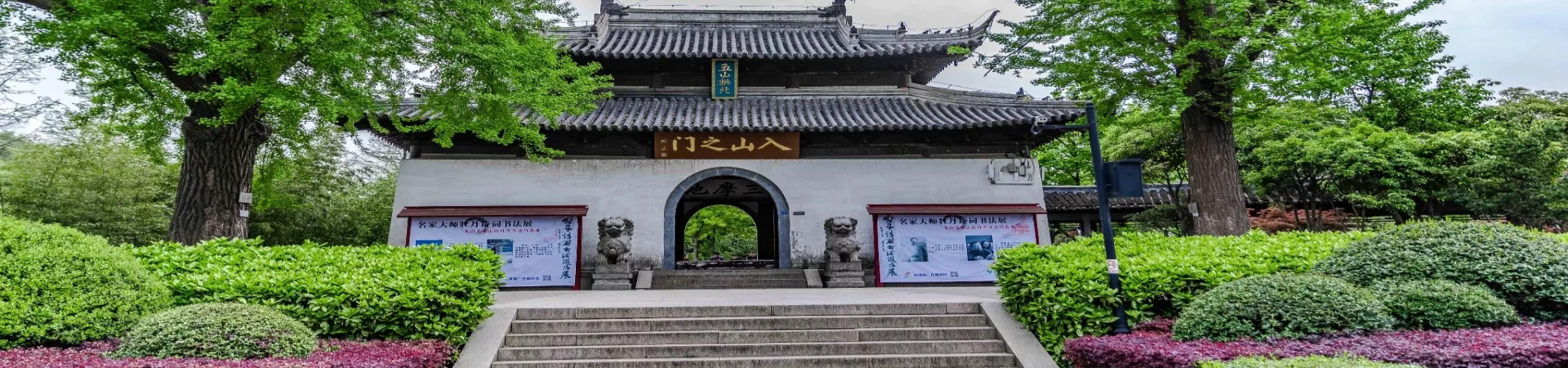
A Visitor's Guide to Nantong's Langshan Scenic Area
Nestled on the northern bank of the mighty Yangtze River, approximately six kilometers south of Nantong city in Jiangsu province, the Langshan Scenic Area stands as a remarkable geological and spiritual oasis. This provincial-level scenic area encompasses five distinct hills—Junshan, Jianshan, Langshan, Ma'anshan, and Huangnishan. Rising abruptly from the vast, flat Jianghai Plain, these five peaks present a dramatic and beautiful silhouette against the riverine landscape. Their lush, verdant forms, often described as resembling five pieces of emerald-green jade inlaid along the Yangtze, have earned the area the poetic nickname "A Natural Potted Landscape of Water and Stone."
The Spiritual Heart: Langshan as a Buddhist Sanctuary
Beyond its natural beauty, Langshan Hill holds profound religious significance. It is revered as one of China's "Eight Minor Buddhist Mountains" and is recognized as the sacred bodhimanda (place of enlightenment) of Mahasthamaprapta Bodhisattva. This status attracts countless pilgrims and devotees throughout the year, making it a site of enduring and vibrant incense smoke. Langshan is widely celebrated for its spiritual potency, carrying the dual honors of "The Most Efficacious Famous Mountain" and "The First Mountain of the River and Sea."
The hill's deep-rooted Buddhist culture is centered around the Guangjiao Temple, a nationally key monastery perched at its summit. Within this temple resides a uniquely venerated figure: the Great Sage Bodhisattva (Da Sheng Pu Sa). This statue is distinctive as the only Bodhisattva in Southeast Asia depicted wearing imperial dragon robes. Legend holds that this Bodhisattva is an incarnation of Guanyin (Avalokitesvara), embodying boundless compassion and a commitment to relieving suffering. A deeply held folk belief asserts that the Great Sage Bodhisattva grants the wishes of all who pray sincerely, with a particular saying noting that his divine light "shines upon the distant before shining upon the near," emphasizing his far-reaching benevolence.
Exploring the Five Peaks and Key Sites
While Langshan is the spiritual core, the broader scenic area offers diverse landscapes and vistas across its five hills. Each possesses its own character: * Langshan: The focal point for Buddhist pilgrimage, home to the Guangjiao Temple complex and panoramic views of the Yangtze River. * Junshan: Known for its shape resembling a crouching elephant, it is also called Elephant Hill. From above, its topography and the surrounding waters are said to naturally form a Bagua (Eight Trigrams) diagram. * Jianshan, Ma'anshan, and Huangnishan: These hills contribute to the area's collective scenic charm, offering forested paths, quiet spots for contemplation, and different angles from which to appreciate the river panorama.
A visit typically involves a climb up Langshan (accessible by foot or cable car) to explore the temple, burn incense, and enjoy the sweeping views from the top. The interconnected trails and sights across the hills can easily occupy a full half-day or more for a thorough exploration.
Essential Visitor Information
Planning Your Visit * Recommended Duration: A minimum of 3 hours is suggested to explore Langshan Hill and its main temple adequately. A full day allows for a more leisurely pace to experience multiple hills within the scenic area. * Operating Hours: The scenic area is open daily from 07:00 to 16:30, with last admission at 16:30. * Contact: For the latest information, you may contact the management at 0513-85708306 or 0513-85705215.
Ticket Information Admission to Langshan Hill requires a separate ticket. Please note that policies are subject to change, and verification at the ticket office is always recommended. * Standard Ticket: 70 RMB per adult. * Concessionary Ticket (Half-price): Available for: * Minors aged 6 (not inclusive) to 18 (inclusive). * Seniors aged 60 (inclusive) to 64 (inclusive) upon presentation of valid ID. * Full-time undergraduate students and those in lower educational levels with valid student ID. * Free Admission: Granted to: * Children under 1.4 meters in height or aged 6 and below. * Seniors aged 65 and above with valid ID. * Active military personnel, retired veteran cadres, and individuals with disabilities upon presentation of valid certificates.
Nearby Attractions in Nantong
To enrich your trip to Nantong, consider visiting these notable sites located in the vicinity: * Shuihui Garden: A classical Chinese garden renowned for its ingenious design where water and architecture blend seamlessly. Its scenery, with autumn-hued hills and flowers reflected in the ponds, is said to resemble a living painting. * Nantong Horticultural Expo Garden: This park was created for a provincial garden exposition with the theme "The Charm of Landscapes, The Style of the River and Sea." It showcases distinctive classic garden landscapes from 13 cities within Jiangsu province. * Junshan Scenic Area: Part of the five-hill complex, it's worth highlighting for its unique elephant-like shape and the aforementioned natural Bagua formation. * Oriental Longevity Park (East Longevity Park): A theme park dedicated to the culture of longevity, presenting a collection of historical and cultural exhibits that celebrate and explore this aspect of local tradition.