Mount Wuyi Scenic Spot - Water Curtain Cave Scenic Spot
Subtitle: A Journey into the Heart of Wuyi's Majestic Cliffs and Spiritual Heritage
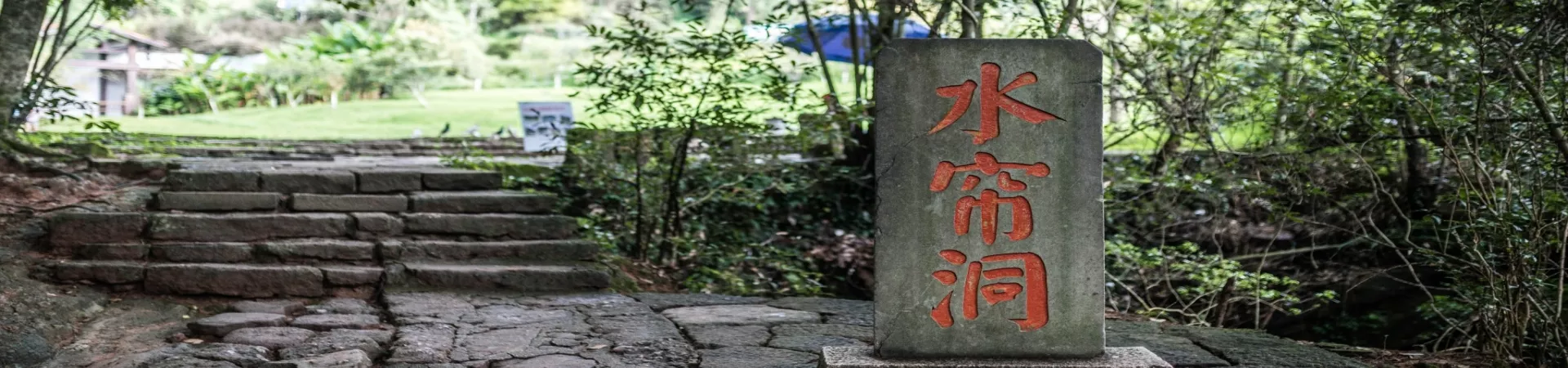
1. Introduction to the Water Curtain Cave Nestled on the eastern face of Danxia Zhang within the Wuyishan Scenic Area, the Water Curtain Cave, originally known as Tangyao Cave Heaven, stands as the largest rock cavern in the region and has long been celebrated as the "Most Spectacular Site in the Mountains." This geological marvel is not merely a cave but a grand, naturally formed amphitheater. Its imposing cliff face, stretching dozens of meters both in height and width, features a distinctive overhang—protruding at the top and receding at the base—to create a vast, sheltered hollow. The cavern is remarkably spacious and bright, capable of accommodating a thousand visitors at once. Its most enchanting feature is the delicate veil of water that gives the cave its name. A clear spring from the mountain peak cascades down the high cliff, its droplets scattering in the wind like a misty rain, creating the mesmerizing poetic scene often described as "a thousand-foot crimson cliff brushed by a rain of sunshine, ten thousand pearls of dew painting a hanging curtain."
2. Historical and Cultural Tapestry Within the Cave The true significance of the Water Curtain Cave extends far beyond its physical grandeur, lying in its profound integration with Chinese philosophical and religious history. Sheltered within this colossal rock shelter are several unique temple structures, built directly against the cliff face without the use of a single tile, their architecture in perfect harmony with nature.
2.1. Sanxian Temple (The Three Sages Temple) This temple is dedicated to three revered Confucian scholars of the Song Dynasty: Liu Zihui, Zhu Xi, and Liu Gong. Zhu Xi, in particular, was a monumental neo-Confucian philosopher who taught and wrote in the Wuyi area. This site served as a center for scholarly discussion and reflection, embodying the Confucian ideals of learning and virtue amidst the serenity of nature.
2.2. Sanjiao Temple (The Three Teachings Temple) Reflecting a period of syncretic thought in Chinese history, this temple uniquely enshrines figures from China's three major philosophical and religious traditions: Confucius (representing Confucianism), Laozi (representing Daoism), and Sakyamuni (representing Buddhism). Its presence here highlights the historical interplay and coexistence of these influential schools of thought.
2.3. Qingwei Dongzhen Taoist Temple As a site of Taoist practice, this temple adds another layer to the cave's spiritual landscape, dedicated to the pursuit of Daoist truths and immortality.
2.4. Inscriptions on the Cliff Face The rock walls surrounding the cave are a canvas of history, covered with numerous moya cliff carvings from various dynasties. Among them, the two large, celebrated characters "Huo Yuan" (活源), meaning "Living Source" or "Source of Vitality," are the most famous. They are believed to have been inspired by Zhu Xi's writings and poetically allude to both the ever-flowing spring and the wellspring of knowledge and moral character.
3. Practical Visitor Information
3.1. Transportation and Access Getting to Wuyishan: The primary gateways are via train to Shaowu Railway Station in Fujian Province or Shangrao Railway Station in Jiangxi Province. From either station, travelers can transfer to a direct bus to the Wuyi Mountain scenic area. The bus journey takes approximately 1.5 hours from Shaowu and about 2 hours from Shangrao. Hiking to the Water Curtain Cave: There are two popular hiking routes to reach the cave: * From the north mountain area, enter from the Furong Rock at the Guilin Road intersection, proceed through Huiyuan Hollow, and then take the sloping path near the ticket booth upwards to the right. * Alternatively, a trail leads upwards from the famous Da Hong Pao (Big Red Robe) tea tree site, connecting several of the mountain's key attractions.
3.2. Admission Details There is no separate entrance fee for the Water Curtain Cave. Access is included in the general Wuyishan Scenic Area entrance pass. The passes are valid for consecutive days and are priced as follows: * One-day Ticket: 140 RMB * Two-day Ticket: 150 RMB * Three-day Ticket: 160 RMB Additionally, a mandatory sightseeing bus fee is required for transportation between sites within the vast scenic area: * One-day Bus Pass: 70 RMB * Two-day Bus Pass: 85 RMB * Three-day Bus Pass: 95 RMB
3.3. Opening Hours Operating hours vary by season: * March 1st to May 31st: 06:30 - 18:00 (all day) * September 1st to November 30th: 07:00 - 17:00 (all day) It is advisable to check for any potential changes in hours during the summer (June-August) and winter (December-February) seasons, which may have different schedules.
4. The Visitor Experience A visit to the Water Curtain Cave is a multi-sensory journey that typically requires 1 to 3 hours, depending on one's pace and depth of exploration. The approach along the forested paths builds anticipation. Upon arrival, visitors are first met with the sight and sound of the shimmering water curtain. Stepping into the cave's immense shade brings a sense of cool tranquility. The scale of the cavern allows one to appreciate the small, elegant temples clinging to the rock, their simplicity contrasting with the raw power of the cliff. Reading the ancient cliff carvings, especially the prominent "Living Source," connects the natural spectacle directly to centuries of cultural contemplation. The site is a powerful testament to how natural beauty in China has historically been interpreted and enhanced through the lens of philosophy, poetry, and spiritual pursuit, making it far more than just a scenic stop but a place for quiet reflection on the confluence of nature and human thought.