Jiuqu Creek
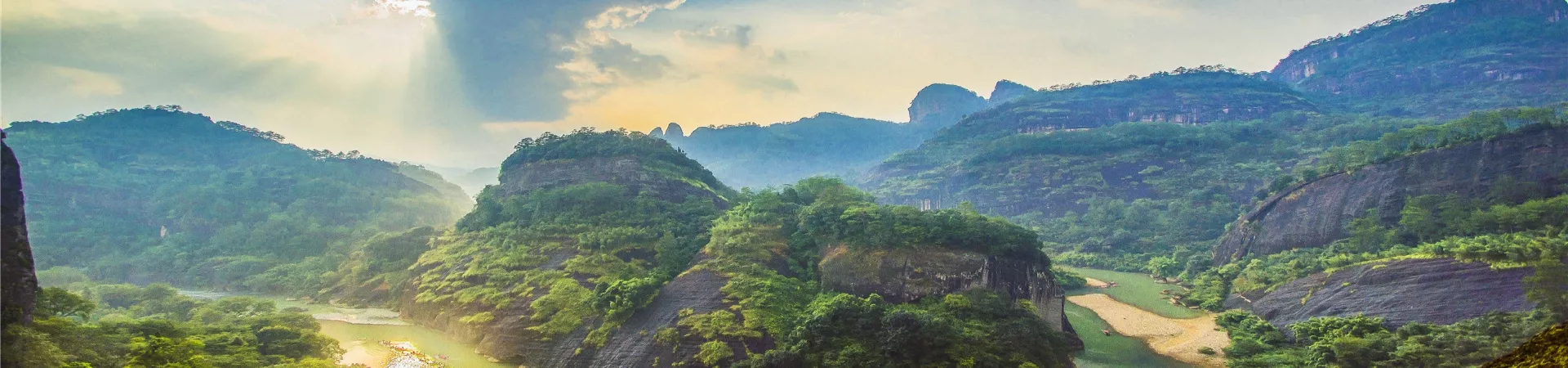
A Journey Through Time and Landscape: The Enchanting Nine-Bend River of Wuyi Mountain
Nestled within the deep valleys and majestic peaks of the Wuyi Mountain range in Fujian Province, China, flows the serene and poetic Nine-Bend River (Jiuqu Xi). Its name, derived from its most distinctive characteristic, translates literally to "Nine Bends Stream," perfectly capturing the essence of its winding, meandering path through a landscape steeped in natural beauty and cultural lore. This river is not merely a body of water but the lifeblood of the Wuyi Mountains, a UNESCO World Heritage Site, offering visitors a tranquil yet profoundly moving journey through a realm where geology, ecology, and human history converge in harmonious splendor.
The Allure of the Meanders: Geography and Formation * A Symphony of Bends and Curves The primary charm of the Nine-Bend River lies in its graceful, snake-like course from west to east. Carved over millennia by tectonic shifts and persistent water flow, the river navigates around towering sandstone danxia landform cliffs and through lush, secluded gorges. Each of the nine major bends presents a unique vista, a self-contained picture frame of nature's artistry. The Chinese saying "every bend contains novel interest, every curve hides exquisite scenery" rings utterly true here. The riverbed itself varies playfully, with shallow, rushing rapids transforming suddenly into deep, calm, emerald-green pools, adding auditory and visual rhythm to the journey.
- A Landscape Painted in Legend and Culture The river's geography is inseparable from its cultural imprint. Most notably, the fourth bend (Si Qu) holds a special place in modern popular culture. It served as a filming location for the iconic 1986 television adaptation of Journey to the West, specifically the scene depicting the dramatic birth of the White Dragon Horse. This connection infuses the landscape with a layer of mythical narrative, allowing visitors to gaze upon the cliffs and waters and imagine the legendary tales unfolding. Beyond this, the entire Wuyi region has been a cradle of Neo-Confucianism and a source of inspiration for poets, painters, and philosophers for over a thousand years, with the Nine-Bend River often at the center of their contemplations.
Experiencing the Nine-Bend River: The Bamboo Raft Journey * The Traditional Mode of Exploration The quintessential, and indeed the only, way to fully appreciate the majesty of the Nine-Bend River is by embarking on a bamboo raft ride. These traditional, flat-bottomed rafts, poled skillfully by local boatmen, offer an unobstructed, immersive perspective. The journey typically covers a significant stretch of the river, allowing visitors to passively glide through the heart of the scenery.
Two Classic Itineraries There are two popular starting points for this aquatic adventure. The most common route begins at Xingcun (Star Village) in the upstream area, allowing the raft to drift gently downstream with the current. This direction provides a naturally unfolding sequence of vistas. Alternatively, one can start from the Wuyi Palace (Wuyigong) area and travel upstream, which involves more active poling and offers a different perspective on the landscapes. Whichever route is chosen, the entire experience typically lasts around 1.5 to 2 hours, a compact yet utterly comprehensive immersion into the area's beauty.
A Dynamic Panorama of Natural Wonders From the vantage point of the raft, the world of Wuyi Mountain unfolds in all directions. Sheer, rust-colored cliffs rise vertically from the water's edge, adorned with hardy shrubs and clinging vines. Mysterious caves and rock formations with evocative names like "Jade Maiden Peak" or "Great King Peak" punctuate the skyline. The crystal-clear water reflects the surrounding greenery and the vast sky, creating a mesmerizing palette of colors. The boatmen often double as guides, sharing stories, pointing out hidden rock profiles, and explaining the ecological and historical significance of the passing sights.
Essential Visitor Information * Admission and Access Access to the Nine-Bend River is included within the general admission ticket to the Wuyi Mountain Scenic Area. There is no separate fee specifically for the river itself. Visitors must purchase the overarching Wuyi Mountain ticket, which grants access to multiple attractions, including the river and its raft embarkation points.
Operating Hours and Scheduling The bamboo raft operations are conducted within specific time slots to manage flow and ensure safety. The river is open for tours daily, with two primary sessions:
- Morning Session: 07:00 - 09:30 (Last boarding at 09:30)
- Afternoon Session: 12:10 - 15:20 (Last boarding at 15:20) It is highly advisable to arrive early within these windows, especially during weekends and holiday periods, to secure a spot on a raft. The total time recommended for the entire visit, including transportation to the dock, waiting, the raft ride itself, and exploration of the surrounding areas, is a minimum of 3 hours.
Planning Your Visit Given the popularity of the raft ride, advance booking or early arrival is crucial. The experience is weather-dependent; operations may be suspended in cases of heavy rain or high water levels for safety reasons. Visitors should wear comfortable, non-slip shoes, sun protection (hats, sunscreen), and consider a light waterproof layer. Bringing a camera is essential, though protective gear for electronic devices against water splashes is recommended. The boatmen's commentary is typically in Chinese, but the visual spectacle transcends language barriers.
The Nine-Bend River of Wuyi Mountain offers more than just a scenic boat ride; it is a passage through a living Chinese landscape painting. It is an opportunity to disconnect from the modern pace and reconnect with a timeless, serene natural order, where every bend in the river reveals not just a new view, but a deeper sense of peace and wonder.