Jade Maiden Peak
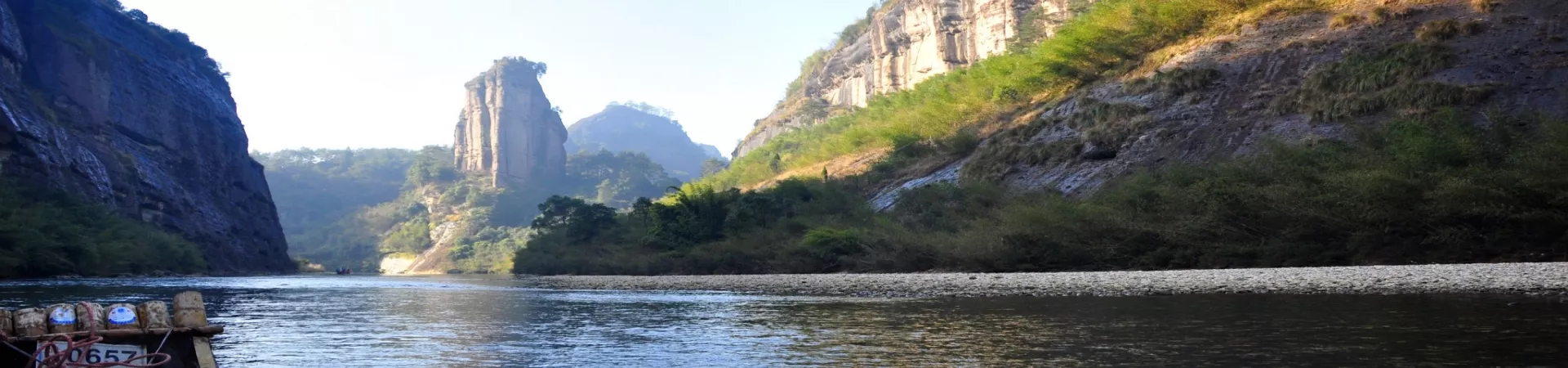
The Jade Maiden Peak: A Timeless Sentinel of Wuyi's Romantic Landscape
Nestled within the breathtaking expanse of the Wuyi Mountains, a UNESCO World Heritage Site renowned for its dramatic karst scenery and profound cultural history, lies a pinnacle of natural sculpture and enduring legend: the Jade Maiden Peak (Yunü Feng). This iconic formation is not merely a rock; it is the central character in a timeless love story etched into the very soul of the landscape, offering visitors a profound connection to both the aesthetic and mythological heart of China.
1. Geological Poetry and Mythological Roots 1.1. A Silhouette of Elegance Rising abruptly to a height of several dozen meters on the southern bank of the Nine-Bend Stream (Jiuqu Xi), particularly within view of its second bend, the Jade Maiden Peak commands attention. Its distinct profile is the source of its name. From the tranquil waters below, especially when viewed from the traditional bamboo rafts that glide along the stream, the peak uncannily resembles a slender, graceful maiden standing in serene contemplation. The summit is adorned with clusters of wildflowers, akin to blossoms pinned in hair, while the rain-smoothed, moss-tinted surface of the limestone rock face gleams with a soft, jade-like luminescence, giving the "maiden" an ethereal, sculpted quality.
1.2. The Eternal Romance with the Great King Peak The peak's narrative significance is inseparable from its physical counterpart across the stream—the imposing Great King Peak (Dawang Feng). Together, they form Wuyi's most famous mythological pair. Local legend weaves a tale of a forbidden love between the Jade Maiden, a celestial being, and the Great King, a mortal emperor. Their union was thwarted by the Iron Monk (Tieban Daoren), who petrified them into the two peaks facing each other eternally across the flowing water. This story of steadfast love and longing infuses the scenery with a palpable emotional depth, transforming a geological wonder into a symbol of eternal devotion.
2. Experiencing the Jade Maiden Peak 2.1. The Essential Perspective: A Bamboo Raft Journey To truly appreciate the Jade Maiden's famed silhouette and her poignant gaze towards the Great King, a bamboo raft ride along the Nine-Bend Stream is indispensable. This leisurely drift offers dynamic, unfolding views. As your raft navigates the clear, winding waters, the perspective shifts, revealing different facets of the peak. The gentle sounds of water and the skilled poling of the raft guides create a meditative atmosphere perfect for photography and reflection. It is from this vantage point that the "maiden" appears most lifelike and the romantic legend feels most vivid.
2.2. On Foot: Intimacy with the Scenery For those wishing to connect with the site more closely, disembarking at the Jade Maiden Peak stop (accessible via the park's eco-friendly sightseeing buses) allows for land-based exploration. A short walk leads to the bank directly opposite the peak. Here, you can linger, study the details of the rock face, and capture photographs from a stable platform. The area provides a peaceful spot to simply sit and absorb the harmonious beauty of the peaks, the stream, and the surrounding lush vegetation.
2.3. The "Dressing Table" and Cliff Inscriptions Adding a layer of cultural intrigue to the site is a large, round boulder situated to the east of the Jade Maiden Peak. Known as the "Dressing Table" or "Mirror Terrace," it is said to be where the celestial maiden would adorn herself. Enhancing this poetic notion is a massive cliff carving on the rock face—the characters "镜台" (Jìng Tái), meaning "Mirror Terrace." This inscription is celebrated as the largest example of cliff calligraphy within the Wuyi Mountain range, a testament to the deep historical and literary engagement this landscape has inspired over centuries.
3. Practical Visitor Information 3.1. Access and Transportation The Jade Maiden Peak is located within the core scenic area of Wuyi Mountain National Park. Private vehicles generally cannot access the core sites. Visitors must first enter the main park and then transfer to the park-operated sightseeing buses. Alight at the clearly marked "Jade Maiden Peak" station. The final approach to the viewing area is a short, manageable walk.
3.2. Ticketing and Operating Hours Access to the Jade Maiden Peak is included in the comprehensive admission ticket for the Wuyi Mountain Scenic Area. The park operates on a combined ticket system that typically includes entry and bus transportation. Ticket options are: * One-day pass: Approximately 215 RMB * Two-day pass: Approximately 235 RMB * Three-day pass: Approximately 255 RMB It is advisable to check for the latest prices and purchase tickets at the official visitor centers or through authorized platforms. The site is generally open to visitors from 7:00 AM to 5:00 PM, daily throughout the year.
3.3. Suggested Duration and Planning A visit to the Jade Maiden Peak can be tailored to your schedule. A brief stop for photographs from the bank may take 30-45 minutes. However, to fully experience its context, it is highly recommended to combine the visit with the classic Nine-Bend Stream bamboo raft tour, which lasts about 1.5 to 2 hours and provides the quintessential viewing experience. Allocating 1 to 3 hours for the combined rafting and land visit is ideal for a relaxed and comprehensive appreciation.
4. The Peak's Place in the Wuyi Tapestry The Jade Maiden Peak transcends its role as a scenic viewpoint. It is a cultural touchstone—a subject of ancient poetry, a central figure in local folklore, and an enduring muse for artists. Its form exemplifies the sublime beauty of South China's karst topography, while its story speaks to universal human themes. Visiting the peak is more than sightseeing; it is an engagement with a landscape where nature and narrative are seamlessly fused. It stands as an essential, evocative highlight in any journey through the majestic Wuyi Mountains, leaving an impression not just of visual splendor, but of poetic resonance.