Langzhong Gongyuan
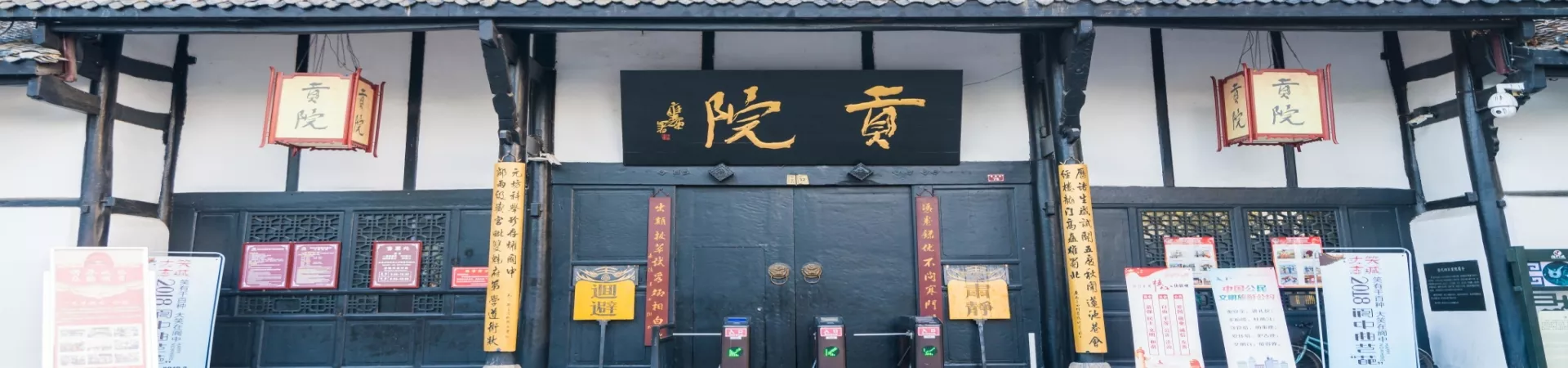
Subtitle: A Journey into Imperial China's Examination Hall: The Langzhong Gongyuan
1. Introduction: A Portal to the Past
Nestled within the ancient streets of Langzhong Old Town in Nanchong, Sichuan, stands the Langzhong Imperial Examination Hall, known as the Gongyuan. This remarkably preserved complex is not merely a museum; it is one of only two surviving examination compounds from China's imperial era, offering an unparalleled, tangible connection to the millennia-old keju (civil service examination) system that shaped Chinese bureaucracy, culture, and society for centuries. Stepping through its gates is to walk in the footsteps of countless scholars who embarked on a journey seeking honor, prestige, and a chance to serve the empire.
2. Historical Significance and Architectural Layout
2.1. Origins and Preservation Originally built during the Qing Dynasty and reconstructed in the Jiaqing period (1796-1820), the Langzhong Gongyuan has survived the centuries with exceptional integrity. Its preservation offers a complete architectural blueprint of a standard provincial-level examination venue from the Qing era. The complex was meticulously designed to facilitate the rigorous, isolated, and highly regulated examination process.
2.2. Architectural Composition The layout follows a traditional axial plan, consisting of a series of gates, halls, and specialized structures: * Main Gate and Corridors: Visitors enter through the mountain gate into a distinctive covered corridor, over 50 meters in length. This卷棚式 (juǎn péng shì) corridor, with its gracefully curved roofs, features wooden railings adorned with "Flying Immortal Chairs" (飞仙椅), providing a moment of tranquility before encountering the austere examination grounds. * The Examination Cells (Kaofang): Flanking the main courtyard are two rows of individual examination cells. Each small, spartan room is separated from the next and decorated with simple carved woodwork. These cells, numbered according to the ancient sequence from the Thousand Character Classic—Heaven (天), Earth (地), Mysterious (玄), and Yellow (黄)—were the candidates' world for the duration of the exam. Each cell has a single small door for entry and exit, emphasizing isolation and security. * The Main Hall (Zhengting): Directly opposite the entrance stands the two-story main hall, the architectural and functional heart of the Gongyuan. This was the command center where exam officials would roll-call candidates, distribute examination papers, and maintain vigilant supervision over the entire courtyard. * Rear Sections: Beyond the main hall lie secondary halls and the后院 (hòu yuàn), or rear courtyard, which housed the斋舍 (zhāi shè), or dormitories, for candidates. The entire complex was encircled by rows of号房 (hào fáng), additional examination rooms or service quarters, creating a self-contained and secure compound.
3. The Visitor Experience: More Than a Museum
3.1. Immersive "Ancient Examination" Performance The Langzhong Gongyuan brilliantly bridges history and modern tourism through its daily interactive performances. Twice each day, at 8:30 AM and 3:00 PM, the hall revives its original purpose with a staged "Ancient Imperial Examination." For a nominal fee of approximately 20 RMB, visitors can participate as mock candidates. They don traditional scholar attire, receive a reproduction exam paper, and experience a condensed version of the tension and ceremony—from roll call in the main hall to writing in the confined cells under the watchful eyes of "officials." This immersive activity provides a profound, personal understanding of the candidate's ordeal, far beyond what static displays can offer.
3.2. Practical Information for Planning Your Visit
3.2.1. Ticket Information: * Single Entry Ticket: 45 RMB per person for the Gongyuan only. * Core Attractions Combo Ticket (Recommended): 120 RMB per person. This excellent value ticket includes five major sites within Langzhong Old Town: the Gongyuan, Zhang Fei Temple, Huaguang Tower, Zhongtian Tower, and the Feng Shui Museum. * Ten-Attraction Super Pass: 130 RMB per person. This expansive pass covers the five core sites plus the Folk Exhibition Hall, Dafo Temple, Jinping Mountain, Tengwang Pavilion, the Red Army Memorial Hall, and the Three Kingdoms Cultural Industry Park.
3.2.2. Opening Hours: * Summer Schedule (June 1 - August 31): 8:30 - 18:30. Last admission at 18:00. * Winter Schedule (December 1 - February 28/29): 9:00 - 18:00. Last admission at 17:45. * The site is open seven days a week. It is advisable to confirm the performance times upon arrival.
3.2.3. Transportation and Location: The Gongyuan is located on Xuedao Street inside the pedestrian-friendly Langzhong Old Town. Once within the ancient city walls, the site is easily accessible on foot. Langzhong itself is reachable by long-distance bus or car from Nanchong or Chengdu. The nearest major transport hub is Nanchong Gaoping Airport.
3.2.4. Suggested Duration and Contact: A thorough visit, including viewing the architecture, participating in or watching the examination performance, and exploring the exhibits, typically requires 1 to 3 hours. For the latest information, visitors can contact the venue via the general inquiry number: 400-100-9255.
4. The Gongyuan in Context: Understanding the Keju System
A visit to the Gongyuan is greatly enriched by understanding its purpose. The keju system, established in the Sui Dynasty and perfected over 1300 years, was a meritocratic (though immensely demanding) pathway for male scholars to attain official positions. Examinations were held at county, provincial, and national levels. The provincial exam, for which this Gongyuan was built, was a grueling multi-day event. Candidates were locked into their tiny cells, bringing only food, ink, and bedding, to write essays on Confucian classics, policy analysis, and poetry. Success here meant the prestigious title of Juren and the right to sit for the national exam in Beijing. The architecture itself—the isolated cells, the elevated main hall for surveillance—reflects the system's dual goals of selecting talent and preventing cheating, a testament to the examination's supreme importance in imperial China. The Langzhong Gongyuan, therefore, stands as a powerful monument to intellectual pursuit, social mobility, and the enduring bureaucratic foundations of traditional Chinese statecraft.