Langzhong Ancient City - Han Huanhou Temple
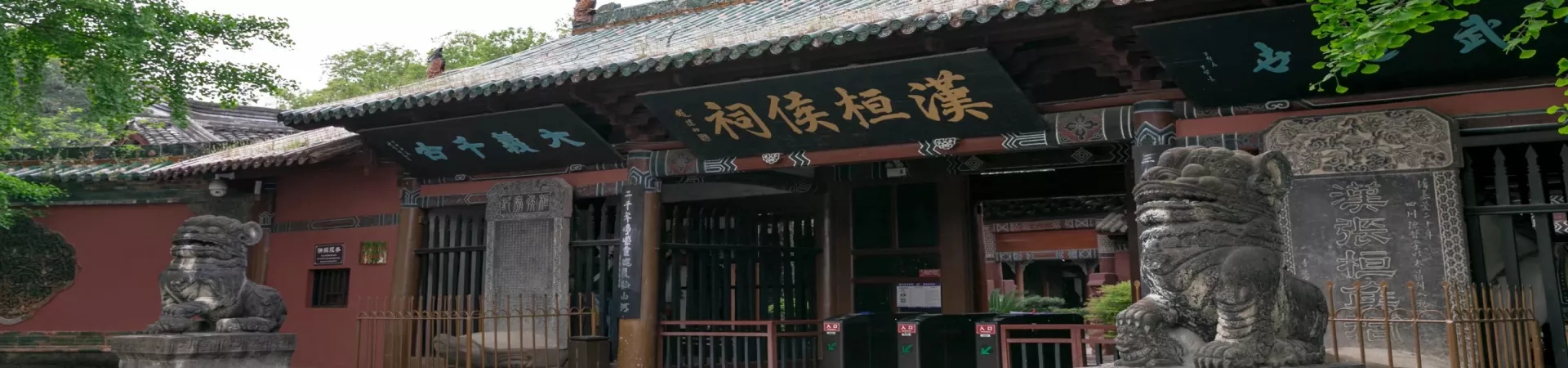
Subtitle: A Journey Through Time at the Temple of Marquis Huan in Langzhong
1. Introduction: The Heart of Langzhong's Three Kingdoms Legacy Nestled within the ancient walls of Langzhong Old Town, the Temple of Marquis Huan, universally known as Zhang Fei Temple, stands as the central anchor of the West City scenic area. More than just a historical site, it is a radiant jewel on the cultural tourism route dedicated to the Three Kingdoms period, offering visitors a profound and tangible connection to China's legendary past. This temple complex serves not only as a memorial to a great warrior but also as a living museum, encapsulating centuries of history, folklore, and local tradition within its walls and in its surrounding, atmospherically preserved neighborhood.
2. Historical Significance and Architectural Resilience 2.1. From Warrior to Marquis: The Legacy of Zhang Fei The temple is dedicated to Zhang Fei, a towering general of the Shu Han kingdom during the Three Kingdoms era (220-280 AD). Renowned for his fierce loyalty, martial prowess, and tempestuous character, Zhang Fei was posthumously given the title "Marquis Huan," hence the temple's formal name. For centuries, it has been a site of reverence, commemorating his life and his governance of the Langzhong region.
2.2. Destruction and Rebirth: A Testament to Cultural Preservation The temple's journey through history has not been without tribulation. It suffered significant damage during the Cultural Revolution, a period when many cultural relics faced destruction. However, its story is one of remarkable resilience. Following two major restoration efforts, the temple has been meticulously rebuilt. The restoration process involved carefully curating and displaying surviving historical artifacts. Furthermore, to recapture its scholarly spirit, contemporary renowned literati were invited to inscribe new couplets for the temple's pillars, seamlessly blending past significance with present-day cultural continuity.
3. Exploring the Temple and Its Environs 3.1. The Temple Complex: Layout and Key Features While the architectural details of the main halls, statues, and steles form the core of the visit, the temple's ambiance is deeply enriched by its integration into the fabric of Langzhong Old Town. The surrounding area retains a strong, authentic historical atmosphere, with traditional architecture and cobbled streets that transport visitors back in time.
3.2. Cultural Encounters Around the Temple The experience extends beyond the temple gates into the lively context of the old town: * To the Left (West): Exiting the temple and turning left, visitors may, if fortunate, encounter local folk artist Ma Bin, who crafts delicate and colorful dough figurines (mian ren). This offers a chance to acquire a unique, handmade souvenir rooted in Langzhong's folk art traditions. Proceeding further along West Street leads to the Sihai Pavilion, a structure graced with a name plaque inscribed by the great Song dynasty poet and scholar, Su Shi. * To the Right (East): A turn to the right from the temple entrance brings you to the prestigious Langzhong Middle School, a nationally recognized key secondary school. This proximity provides a subtle yet interesting contrast, allowing a glimpse into the region's enduring emphasis on education and its contemporary cultural vitality.
4. Practical Visitor Information 4.1. Admission Fees and Ticket Options The temple offers flexible ticketing to suit different itineraries: * Single Temple Ticket: 40 RMB per person. * Five-Core-Attraction Pass (120 RMB): Includes Zhang Fei Temple, the Imperial Examination Hall (Gongyuan), Huaguang Tower, Zhongtian Tower, and the Feng Shui Museum. * Ten-Attraction Pass (130 RMB): A comprehensive pass covering the five core sites plus the Name Exhibition Hall, Dafo Temple, Jinping Mountain, Tengwang Pavilion, the Red Army Memorial Hall, and the Three Kingdoms Cultural Industry Park. * Tourist Shuttle: 20 RMB per person for convenient access within the scenic area.
4.2. Opening Hours and Best Time to Visit The temple is open daily from 09:00 to 17:00 throughout the year. Allocating 1 to 3 hours is recommended for a thorough exploration of the temple grounds and its immediate surroundings.
4.3. Special Notes on Concessions Visitors should note the specific concession policy for seniors: individuals under 65 years old are eligible for free admission on all days except national statutory holidays. During the 11 designated statutory holiday days each year, these seniors can enjoy a 50% discount on the entrance ticket upon presenting valid identification (e.g., ID card). The statutory holidays include: * New Year's Day (1 day, January 1st) * Spring Festival (3 days, Lunar New Year's Eve to the 2nd day of the lunar new year) * Qingming Festival (1 day, the day of Qingming) * Labor Day (1 day, May 1st) * Dragon Boat Festival (1 day, the day of the festival) * Mid-Autumn Festival (1 day, the day of the festival) * National Day (3 days, October 1st to 3rd)
4.4. Transportation and Accessibility Zhang Fei Temple is located inside the pedestrian-friendly Langzhong Old Town. The most authentic and practical way to reach it is on foot after arriving at the old town itself. Access to Langzhong Old Town is available via long-distance bus or train services to Langzhong city, followed by a short local transfer to the ancient city gates.