Former Residence of Zeng Guofan
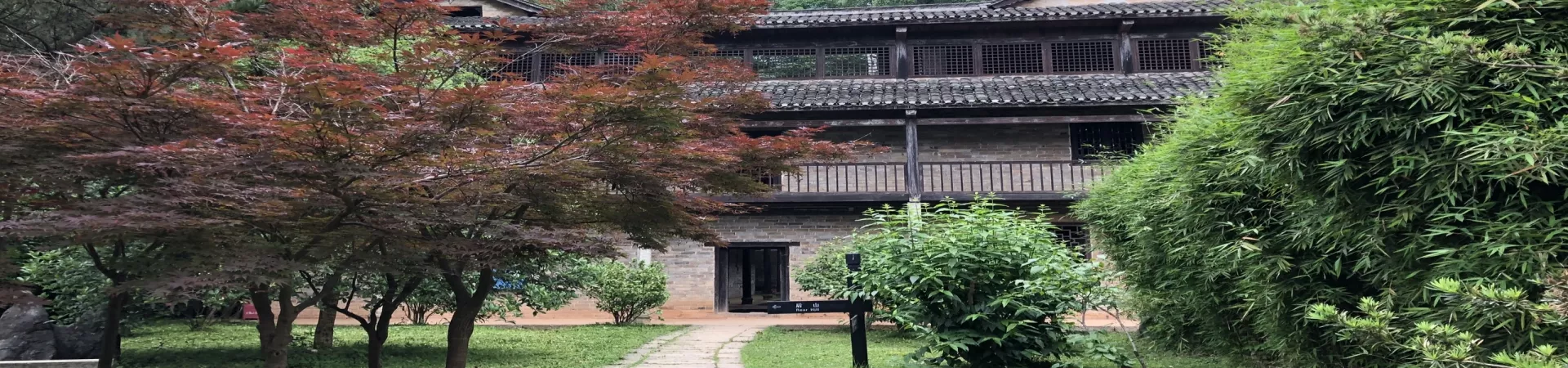
Subtitle: A Journey into the Legacy of a Qing Dynasty Statesman: Zeng Guofan's Former Residence in Loudi
1. Introduction to Zeng Guofan and His Hometown
Nestled in the tranquil countryside of Heye Town, Shuangfeng County (historically part of Xiangxiang), within the prefecture-level city of Loudi in Hunan Province, lies a remarkable cultural and historical complex centered on one of the most influential figures of late Qing Dynasty China: Zeng Guofan. As a towering statesman, military strategist, and Confucian scholar, Zeng played a pivotal role in suppressing the Taiping Rebellion and in initiating the Self-Strengthening Movement. His former residence, Fuhou Tang, stands not merely as a family dwelling but as a profound testament to his philosophy, scholarly pursuits, and the era he helped shape. The broader "Zeng Guofan's Hometown Tourist Area" encompasses approximately 100 square kilometers, featuring ten major ancestral homes ("Ten Halls") of the Zeng family, including Fuhou Tang, Baiyu Tang, Huangjin Tang, and others, alongside the former residences of modern revolutionary figures like Qiu Jin and Cai Chang. At the heart of this expansive cultural landscape is Fuhou Tang, the premier and core attraction, renowned as one of the few well-preserved "Countryside Marquis' Mansions" in all of China.
2. Fuhou Tang: The "Countryside Marquis' Mansion"
2.1. Architectural Layout and Historical Significance Constructed in the 4th year of the Tongzhi Emperor's reign (1865), Fuhou Tang is an architectural masterpiece that seamlessly blends functional residence with elegant garden aesthetics. Encompassing a total area of over 40,000 square meters with a built-up area of approximately 10,000 square meters, the complex is modeled on the classic Beijing siheyuan (courtyard house) layout while incorporating distinctive Hunanese local elements and serene landscaped gardens.
The approach to the mansion is graced by a crescent-shaped pond (banyue tang), a traditional feature believed to gather positive energy and provide a reflective, tranquil foreground. Beyond the imposing entrance gatehouse, the complex unfolds in a harmonious arrangement. The principal structure is the "Eight Fundamentals Hall" (Baben Tang), which served as the main living quarters. The name derives from Zeng Guofan's core family motto centered on eight foundational principles for life and study, reflecting his deep Confucian values.
2.2. The Crown Jewel: The Celebrated Private Library The most exceptional and celebrated feature of Fuhou Tang is its trio of dedicated library buildings: the Gongji, Puji, and Fangji Libraries. This collection formed one of the largest and most significant private libraries in Qing Dynasty China, housing an astounding collection of over 300,000 volumes. The libraries were not mere repositories but active centers of scholarly activity for the Zeng family. Their exceptional preservation makes this library complex one of the most complete and largest surviving examples of a private scholarly library from imperial China, offering invaluable insight into the intellectual life and cultural preservation efforts of the era's literati-official class.
2.3. Garden Landscapes and Ancillary Structures The mansion's integration with nature is a key aspect of its charm. A picturesque lotus pond adds to the scenic beauty. Extending into the wooded hills behind the main compound are several elegant pavilions and retreats, including the Niaohe Lou (Bird and Crane Tower), the Qiting (Chess Pavilion), and the Cunpu Ting (Preserving Simplicity Pavilion). These structures provided spaces for contemplation, leisure, and communion with nature, embodying the ideal of the scholar-gentleman.
A particularly significant earlier structure within the grounds is the Siyun Guan (Longing for Clouds Studio). Built personally by Zeng Guofan in 1857 during a period of mourning for his father, this studio served as his personal retreat for reflection, study, and writing during a critical juncture in his life, adding a deeply personal layer to the site's history.
3. Practical Visitor Information
3.1. Ticketing and Fees The site operates on a tiered ticketing system: * Combined Ticket (Fuhou Tang + Baiyu Tang): Adults: 55 RMB; Children/Students/Seniors: 30 RMB. * Fuhou Tang Ticket Only: Adults: 50 RMB; Children/Students/Seniors: 25 RMB. * Baiyu Tang Ticket Only: 14 RMB. These rates are generally applicable throughout the year. It is always advisable to confirm prices at the time of your visit.
3.2. Operating Hours The residence is open to visitors daily from 8:30 AM to 5:30 PM. These hours are typically maintained year-round, but occasional adjustments for maintenance or special circumstances are possible.
3.3. Contact Details For direct inquiries, visitors can contact the management via telephone at 0738-6011912.
4. Cultural Status and the Broader Tourist Area
In recognition of its immense historical and architectural value, Fuhou Tang was designated as a National Key Cultural Relics Protection Unit by the State Council in 2006. This highest level of protection underscores its importance to China's heritage.
While Fuhou Tang is the centerpiece, a comprehensive visit to Zeng Guofan's Hometown allows for a deeper exploration of the family's legacy. The other "halls," such as Baiyu Tang (his birthplace) and Dafu Di (a grand official's residence complex), each tell different parts of the family's story across generations. The inclusion of sites related to Qiu Jin and Cai Chang further connects this landscape of traditional scholarship and officialdom to the waves of modern revolutionary change that followed, offering a multifaceted historical narrative within a single region.
Exploring this area is therefore more than a tour of old buildings; it is an immersion into the world of a pivotal historical figure, an appreciation of Qing-era scholarly architecture and garden design, and an understanding of the intellectual and familial traditions that shaped a critical period in Chinese history. The serene "Countryside Marquis' Mansion" and its surrounding sites stand as a quiet yet powerful monument to an era of profound transition.