Zhencheng Building
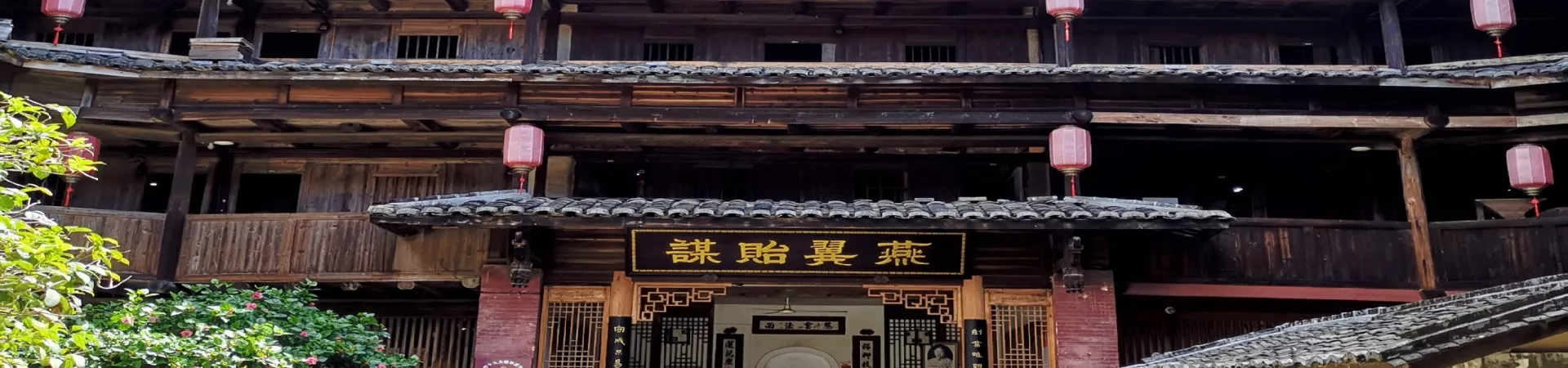
Subtitle: A Masterpiece of Hakka Culture and Architectural Ingenuity
Introduction
Nestled within the lush, rolling hills of Yongding County in Longyan, Fujian Province, lies the Hongkeng Cultural Village, a sanctuary preserving one of China's most unique architectural wonders: the Hakka Tulou. Among these remarkable earthen structures, many of which are designed based on the principles of the Bagua (Eight Trigrams), one stands out as the quintessential symbol of this heritage—Zhencheng Lou. This building is not merely a residence; it is a profound physical manifestation of traditional Chinese philosophy, communal living, and sophisticated defensive design, offering visitors an unparalleled glimpse into the history and resilience of the Hakka people.
Architectural Philosophy: The Bagua in Form and Function
The most striking feature of Zhencheng Lou is its architectural blueprint, deeply inspired by the ancient Bagua diagram. This isn't merely decorative; it forms the core organizational and spiritual principle of the entire structure.
- Layout of the Trigrams: The main entrance of the building corresponds to the "Xun" trigram (symbolizing wind and penetration), while the rear door aligns with the "Qian" trigram (symbolizing heaven and creativity). This orientation reflects a harmony with natural forces and cosmological beliefs.
- Structural Division: The outer ring of the tulou is four stories high, comprising a total of 48 rooms. These rooms are meticulously divided into eight sections, each representing one of the eight trigrams. Consequently, each trigram section contains six rooms.
- Independent yet Interconnected Units: Each trigram section functions as a largely self-contained vertical unit, equipped with its own staircase. This design fostered a sense of family or clan subdivision within the larger communal whole. However, the sections are not isolated; they are connected to each other through archways at each floor level.
A Fortress Community: Defensive Ingenuity and Social Harmony
The design of Zhencheng Lou brilliantly addresses the historical needs of the Hakka people for both defense and social cohesion.
- The "Vat-Overturning" Defense Mechanism: The architectural genius is most evident in its defensive strategy. In the event of an intrusion, the heavy gates between the trigram sections could be swiftly closed, effectively trapping any would-be thief inside a specific section. This clever tactic, described vividly as "catching a turtle in a jar" (瓮中抓鳖), allowed residents to isolate and neutralize a threat without jeopardizing the entire community. The thick, windowless lower walls made of rammed earth, combined with this internal compartmentalization, rendered the tulou a formidable fortress.
- Communal Living Spaces: Beyond defense, the layout promoted a tightly-knit communal lifestyle. The central open courtyard served as the heart of daily life—a place for communal gatherings, ceremonies, drying crops, and a shared water source. The ground floor typically housed kitchens and common areas, the second floor was used for storage, and the upper floors contained the private living quarters. This vertical arrangement within the circular structure ensured equality and constant interaction among all families.
Practical Visitor Information
To fully appreciate Zhencheng Lou, planning your visit with the following details in mind is essential.
Getting There
- From Yongding County: Buses to Hongkeng Tulou Cultural Village depart from Yongding Bus Station. The fare is approximately 15 RMB per person, with services running about every 40 minutes. The journey takes around one hour.
- From Xiamen: Direct long-distance buses from Xiamen's Hubin South Road Bus Station to Xiayang will pass by the Hongkeng stop. The scenic area ticket office is located right by the roadside. After purchasing your ticket, it's a short 500-meter walk to the tulou complex.
- Combined Visits: Hongkeng Village is relatively close (about 20 kilometers) to the famous Nanjing Tulou cluster. Visitors often combine trips to both sites. Local transportation like motorcycles can cover the distance in roughly 15 minutes.
Admission and Hours
- Ticket Information: Admission to Zhencheng Lou is typically covered under a combined ticket for the Hongkeng Cultural Village, priced around 90 RMB per person. This value ticket also includes access to other core tulou in the vicinity, such as the imposing Kuiju Lou, the elegant Fuyu Lou, and the small, round Rusheng Lou, allowing for a comprehensive exploration of different tulou styles.
- Opening Hours: The site is generally open to visitors daily from 6:30 AM to 7:30 PM. It is advisable to confirm the latest hours locally, as they can be subject to seasonal adjustments.
The Visitor Experience
Walking through the grand entrance of Zhencheng Lou is a step back in time. The sheer scale of the circular courtyard, surrounded by the orderly, wooden balconies of the upper floors, inspires awe. Visitors can explore the intricate wooden carvings adorning the ancestral hall at the center, climb the narrow staircases to experience the perspective from the upper floors, and observe traces of daily life that persist within its walls. The blend of monumental scale, philosophical depth, and lived-in history makes Zhencheng Lou far more than a museum piece; it is a testament to a community's enduring spirit and architectural brilliance.