Qiaofu Building
The Scholarly Legacy of Qiaofu Lou: A Tapestry of Tradition and Achievement
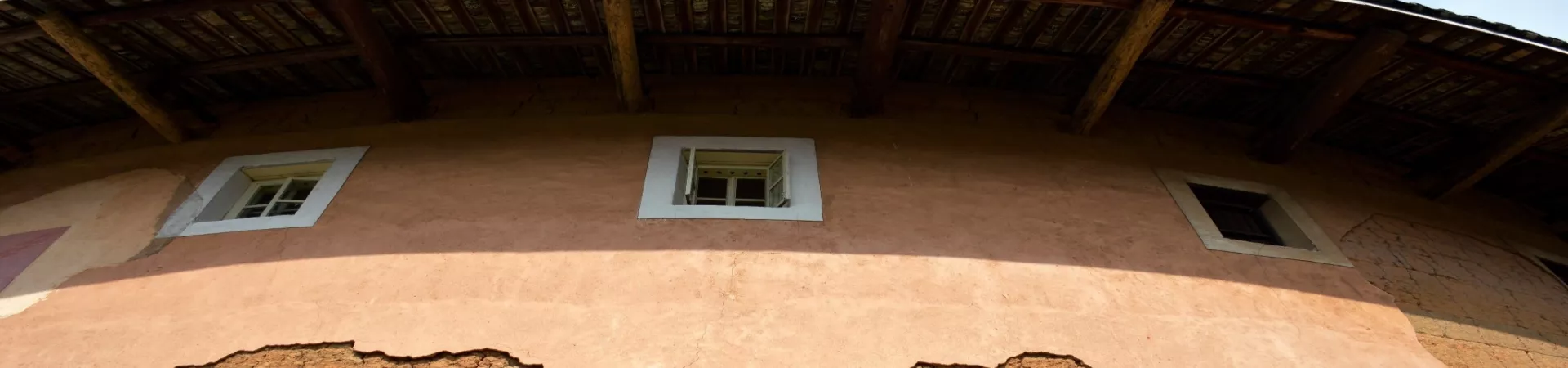
Nestled within the Gaobei Tulou Cluster in Longyan, Fujian, Qiaofu Lou stands as a profound testament to the Hakka people's architectural ingenuity and, more remarkably, their deep-seated reverence for education and scholarly pursuit. While the surrounding "king of tulou," Chengqi Lou, often commands immediate attention for its sheer scale, Qiaofu Lou offers visitors a uniquely intimate and inspiring narrative, one woven from family legacy, academic excellence, and warm hospitality.
The "Building of Doctoral Laureates"
Beyond its earthen walls and sweeping tiled roofs, Qiaofu Lou's most distinguished feature is its intellectual heritage. It is affectionately and widely known as the "Building of Ph.D. Holders" or "Doctoral Building." This title is not merely honorary; it is a factual celebration of an extraordinary academic record. From within this single communal dwelling, an astounding eleven doctoral degrees have been earned by its descendants. This remarkable achievement highlights the enduring Hakka values that prioritize learning and scholarly advancement above all.
Adding a further layer of distinction to this record is the story of one particular graduate: a female medical doctor. In the context of the building's history and the broader societal norms of her time, her accomplishment was particularly pioneering, breaking barriers and setting a powerful example. This legacy transforms the building from a static historical site into a living monument to the power of education and the pursuit of knowledge across generations.
An Encounter with Living History: The Gatekeeper
The soul of Qiaofu Lou is personified by its 83-year-old gatekeeper, often a descendant or longtime custodian of the building. Defying the impersonal nature of many tourist sites, he embodies the famed Hakka hospitality. It is customary for him to rise and greet visitors personally as they enter, offering a warm welcome and often sharing anecdotes about the building's history, its scholarly families, and daily life within a tulou. This human connection provides an invaluable, authentic dimension to the visit, making the history tangible and heartfelt. Engaging with him is not just a polite exchange but a direct bridge to the living culture of the tulou.
Architectural Harmony: Form and Function
Qiaofu Lou exemplifies the "tonglang shi" or internal corridor-style layout, a common design among Fujian tulou. Its circular structure houses multiple families, with wooden interior galleries connecting all rooms on each floor, fostering a profound sense of community and mutual support. This architectural design facilitated the close-knit environment where scholarly ambitions were nurtured collectively.
The most striking architectural feature within is its ancestral hall (Zutang). Here, the building's narrative of blending tradition with external influence takes physical form. The hall is a masterful example of East-meets-West fusion. While maintaining the sacred purpose of honoring ancestors—a cornerstone of Hakka and Chinese tradition—its decorative elements incorporate Western architectural motifs. Visitors might find intricate carvings, plasterwork, or color schemes that reflect European stylistic influences, likely introduced by the building's well-traveled, educated inhabitants. This harmonious blend symbolizes the Hakka people's ability to preserve their core cultural identity while adaptively engaging with the wider world.
Visitor Information for Qiaofu Lou
Getting There
- Primary Route: Qiaofu Lou is located in Gaobei Village, Yongding District.
- Public Transport: From the Yongding County Bus Station, take the "Jinfeng Line" bus bound for Gaotou (Tulou). Buses depart at approximately 7:25, 8:20, 10:30, 11:40, 13:00, 14:20, 15:15, and 16:30.
- Route Details: The bus passes through Lieshi, Qiling, Daxi, and Hukeng before reaching the Gaobei Tulou cluster. Inquire with the driver or conductor to alight at the correct stop for the main tourist entrance to the Gaobei cluster.
Admissions and Hours
- Ticket: Admission is covered under the combined ticket for the Gaobei Tulou Cluster, priced at 50 RMB per person. This ticket also includes access to the renowned Chengqi Lou, Shize Lou, Wuyun Lou, and other buildings within the Gaobei complex.
- Opening Hours: The cluster is open daily from 6:00 AM to 9:00 PM. Last admission is at 9:00 PM. These hours are generally consistent throughout the year.
Planning Your Visit
- Suggested Duration: A comprehensive visit to Qiaofu Lou and the surrounding Gaobei cluster typically requires 1 to 3 hours. Allocate sufficient time to appreciate the architectural details of Qiaofu Lou, converse with the gatekeeper, and explore the contrasting styles of the neighboring earth buildings.
- Contact: For specific inquiries, you may contact the local management at 0597-5572316 or 18959053763.
A visit to Qiaofu Lou is ultimately a journey into a narrative of aspiration and identity. It allows one to walk the same corridors that fostered generations of scholars, to witness the architectural dialogue between East and West, and to receive a greeting from a keeper of history. It stands as a powerful reminder that these earthen structures were never just fortresses for physical safety, but also nurturing grounds for the mind and spirit, whose legacy continues to resonate powerfully today.