Nanxi Earth Buildings
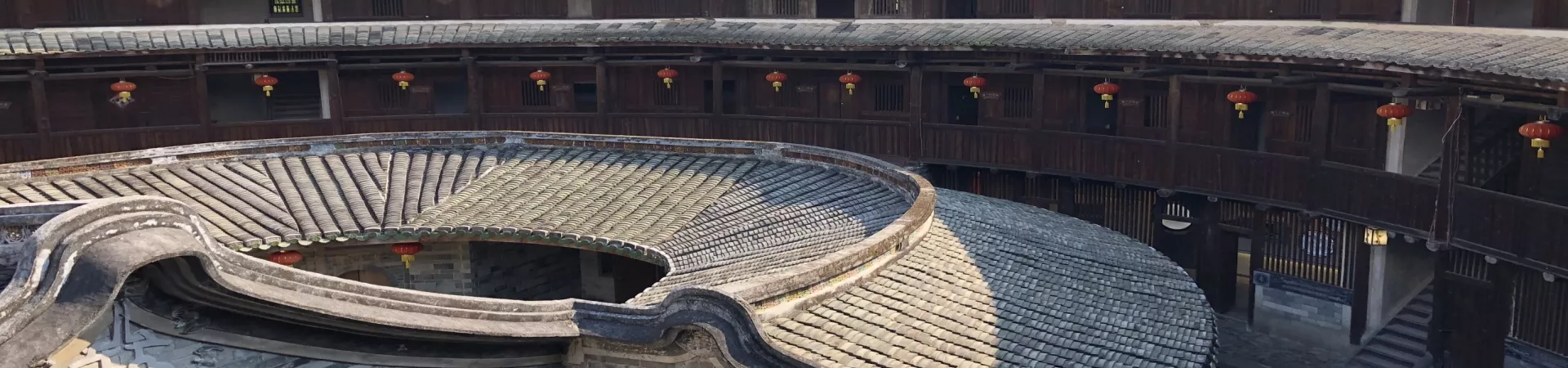
The Nanxi Tulou Cluster: A Journey into the Heart of Fujian's Earthen Heritage
Nestled within the lush, rolling hills of Longyan City in Fujian Province, the Nanxi Tulou Cluster represents one of the most serene and authentic expressions of Hakka architectural genius. Unlike some of the more frequented tulou sites, Nanxi offers a sense of undisturbed discovery, where these monumental earthen buildings harmonize perfectly with the terraced fields, winding streams, and misty valleys. A visit here is less about checking off a list and more about immersing oneself in a living cultural landscape that has endured for centuries.
The Panoramic Vista: A Breathtaking First Encounter
For the most impactful introduction to Nanxi, the journey often begins not at a building's entrance, but from a vantage point high above. Local guides unanimously recommend starting at the mountain-top viewing platform. The approach itself, through local vegetable plots and vibrant rice paddies, sets the stage. Upon reaching the platform, visitors are rewarded with a spectacular panorama of the entire Nanxi valley.
From this eagle's-eye view, the true scale and integration of the tulou cluster becomes apparent. Dozens of large and small tulou—those distinctive, fortified communal homes—dot the valley floor, forming a complete and organic community. Your gaze follows the gentle curves of the Nanxi River, tracing how the tulou are strategically placed along its banks. In the farther distance, smaller groups of two or three tulou play a game of hide-and-seek amidst the dense foliage and undulating terrain, their earthen walls appearing and disappearing with the shifting light and mist. This initial, sweeping view encapsulates the profound relationship between Hakka society and its environment: defensive, communal, and deeply respectful of nature's contours. It is important to note that reaching this ideal viewpoint usually requires private transportation, as there is no direct shuttle service, which can make independent travel challenging for first-time visitors.
Architectural Marvels: Icons of the Nanxi Cluster
Descending from the platform into the valley brings you face-to-face with individual structures, each with its own character and history. The Nanxi cluster is celebrated for housing some of the most renowned and architecturally distinct tulou in all of Fujian.
The "Big Three" Masterpieces:
- Zhenfu Lou: Often hailed as the most elegant and refined of the circular tulou, Zhenfu Lou is admired for its exquisite wooden carvings, detailed interior courtyard layout, and its picturesque setting right on the banks of the Nanxi River. It exemplifies the harmonious fusion of grandeur and grace.
- Yanxiang Lou: Known as the "Scholarly Tulou," Yanxiang Lou has produced numerous scholars and officials throughout its history. Its design emphasizes scholarly pursuit, with exceptional acoustics in its ancestral hall and a unique circular courtyard that fosters a quiet, contemplative atmosphere.
- Huanji Lou: This circular tulou is famous for its extraordinary acoustic properties. A whisper in the center of its vast courtyard can be heard clearly on the opposite side, a feature that never fails to astonish visitors. Its name, meaning "Surrounding Extremes," reflects its robust and imposing circular form.
The Unconventional Shapes:
- Dongcheng Lou (The Octagonal Tulou): A dramatic departure from the common circular or square plans, Dongcheng Lou is a rare octagonal tulou. Its unique geometry creates fascinating interior angles and spaces, showcasing the adaptability and innovative spirit of Hakka builders.
- Qingyang Lou: This square tulou presents a formidable appearance with its sharply pointed, outward-facing corners. This design, reminiscent of a fortress bastion, highlights the defensive priorities in tulou architecture, offering a stark and powerful contrast to the more common rounded forms.
Exploring these buildings allows for a deeper appreciation of the variations within the tulou typology—from circular harmony and square fortitude to rare polygonal experiments—all unified by the rammed earth construction technique.
Practical Information for Your Visit
To ensure a smooth and enriching experience at the Nanxi Tulou Cluster, careful planning regarding transportation and timing is essential.
Transportation Options: * By Public Bus: The most economical method is to take a local bus from Yongding District to Shijia. From the drop-off point, you will need to arrange local transport (such as a motorcycle taxi or a short walk) to reach specific tulou or the viewing platform. * By Private Car/Taxi: For flexibility and convenience, especially to access the mountain viewing platform and multiple scattered tulou efficiently, hiring a car or taxi from the nearby town of Hukeng is highly recommended. The cost for a round-trip or half-day charter is approximately 60 RMB, which is often a worthwhile investment for small groups.
Admission and Hours: * Ticket: A general admission ticket for the Nanxi Tulou Cluster costs 50 RMB per person. This typically provides access to the key tulou open to the public within the valley. * Opening Hours: The site is open daily from 7:00 AM to 7:00 PM. The last admission is at 7:00 PM. It is advisable to arrive with ample time before closing to fully explore the buildings and the surrounding landscape. The soft light of early morning or late afternoon also provides exceptional conditions for photography.