Chengqilou
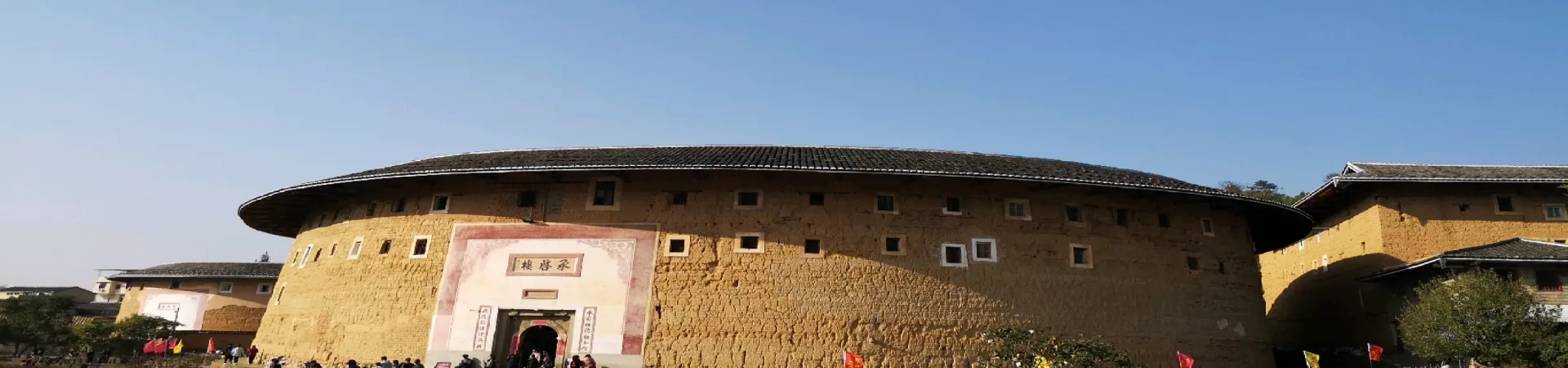
Subtitle: A Journey Through Time: Unveiling the Architectural Majesty and Living Heritage of Chengqilou, the King of Tulou
1. An Icon in Miniature: The Stamp That Spoke Volumes
In 1986, a tiny yet profound ambassador carried the image of an architectural wonder from the remote mountains of Fujian, China, to the far corners of the globe. It was the year the Chinese Ministry of Posts and Telecommunications issued its "Chinese Folk Dwellings" stamp series, and featured prominently was the colossal, concentric form of Chengqilou. This postage stamp, a mere square inch of paper, became the vehicle that announced the majesty of the "King of Tulou" to the world. For many, this was the first glimpse of a structure so grand in scale and unique in conception that it seemed almost mythical. That small stamp did more than just depict a building; it encapsulated a story of communal living, defensive ingenuity, and a cultural lineage stretching back centuries, inviting the world to look closer at the Hakka heartland in Longyan.
2. The Sovereign of Circular Fortresses: Decoding the "King of Tulou"
2.1. A Monumental Scale: "Four Stories, Four Rings, Four Hundred Rooms" The local Hakka ballad that sings "高四层,楼四圈,上上下下四百间" ("Four stories high, four rings round, four hundred rooms up and down") is no exaggeration. It is the foundational statistic that justifies Chengqilou's regal title. Constructed over half a century and finally completed in 1709, this wooden-framed earth building represents the pinnacle of tulou architectural evolution. Its sheer size is the first element to command awe. The structure rises four imposing stories, with the outermost ring being over 60 meters in diameter and 12 meters tall. The concentric layout comprises four rings in total: the outermost ring houses the living quarters, the second ring serves as a transitional space, the third functions as a communal hall and library, and the innermost, central ring is the ancestral hall—the spiritual core of the clan. At its peak, it sheltered over 80 families, more than 600 members of the Jiang clan, functioning as a vertical village contained within a single, formidable fortress.
2.2. The Philosophy of "Circles Within Circles": Harmony and Defense The design principle of "圆中圆,圈套圈" ("circle within circle, ring enclosing ring") is the genius behind its form. This concentric layout is a physical manifestation of Confucian ideals of clan unity and hierarchical order, radiating from the shared ancestral heart. More practically, it was a masterpiece of medieval defensive planning. The massive, inward-sloping walls—up to 1.8 meters thick at the base—were made of compacted earth, lime, sand, and bamboo strips, making them resilient to earthquakes, fire, and even cannon fire. The only entrance was a heavy, iron-clad gate. The upper floors featured overhanging galleries with small openings for archers, while the internal rings provided successive lines of retreat. It was a self-sufficient ecosystem: it had its own water wells, grain storage, livestock areas, and even a theater space, capable of withstanding lengthy sieges. This seamless blend of profound social cohesion and impeccable military logic is what makes Chengqilou a peerless masterpiece.
3. Navigating Your Visit: Practical Information for the Modern Explorer
3.1. Tickets and Access To step into this living museum, visitors must purchase a Tulou Cluster Ticket, priced at 50 RMB (applicable year-round, Monday through Sunday). It is important to note that there is no separate ticket available for Chengqilou alone; access is included as part of the broader Gaobei Tulou Cluster通票 (through ticket). This ticket grants you entry to several notable tulou in the immediate vicinity, making it an excellent value for experiencing the diversity of these structures. Planning your visit around this cluster ticket is essential.
3.2. Opening Hours and Suggested Duration Chengqilou is officially listed as having "All Day" opening hours throughout the year. However, this generally refers to external access to the village compound. For entry into the building's interior courtyards and main halls, standard daylight hours apply (typically from approximately 8:00 AM to 5:30 PM). The interior of the tulou is still home to many residents, and it is respectful to avoid disturbing them very early in the morning or late in the evening. To fully absorb the scale, detail, and atmosphere of Chengqilou, a visit of 1 to 3 hours is recommended. This allows time not only to marvel at the architecture from the central courtyard but also to walk the circular corridors, engage with local residents (who often offer guided narratives from a family perspective), and appreciate the intricate wood carvings and couplets that adorn the ancestral hall.
4. Beyond the Walls: The Living Pulse of Chengqilou
Entering Chengqilou today is not merely an architectural tour; it is an immersion into a living, breathing community. The "历经沧桑三百年" ("three hundred years of vicissitudes") mentioned in the verse are etched into its weathered walls but also animate its daily life. While the lower-floor rooms that once housed livestock are now often converted into small shops or tea-tasting stalls, the upper floors remain active family residences. The sound of chatter, the aroma of Hakka cooking, and the sight of laundry drying in the annular courtyard are integral to the experience. This ongoing human habitation is what separates Chengqilou from a static monument; it is a dynamic cultural organism. Visitors witness the ingenious ventilation and lighting systems in action, feel the coolness of the earthen walls in summer, and observe how the open central courtyard serves as a communal square for social gatherings, festivals, and daily life—a function unchanged for generations. This vibrant continuity makes a visit here a dialogue with history, where the past is not sealed behind glass but is an active participant in the present.