Liuzhou East Gate City Tower
Subtitle: A Sentinel of Stone and History: Unveiling the East Gate Tower of Liuzhou
Nestled against the eastern flank of the ancient city walls, where the land meets the gentle flow of the Tuojiang River, stands the East Gate Tower, a silent yet eloquent testament to the architectural prowess and historical narrative of Liuzhou. Originally named "Shengheng Men," or the Gate of Ascending Constancy, this structure is not merely an entrance but one of the four pivotal defensive portals that once defined the fortified perimeter of Fenghuang Ancient City. Its presence anchors the city's eastern approach, offering a tangible connection to an era when such gates regulated life, commerce, and security.
1. Historical Foundations and Architectural Genesis The story of the East Gate Tower begins in the 54th year of the reign of the Kangxi Emperor in the Qing Dynasty, corresponding to the year 1715. Its construction was a deliberate act of urban fortification, reflecting the strategic importance of the city during a period of imperial consolidation. The tower was designed to be both a formidable barrier and a symbolic gateway, embodying the dual principles of defense and dignified access that characterized traditional Chinese city planning. The choice of its original name, "Shengheng," further underscores its intended role as a bastion of enduring stability and prosperity for the city it protected.
1.1. Structural Composition and Defensive Design The tower's formidable nature is immediately apparent in its robust construction, which utilizes distinct materials for different sections, each chosen for specific properties of strength and durability.
1.1.1. The Gate Arch and Portal The foundational gateway itself is a masterclass in defensive architecture. The arch, forming the primary passage, is a perfect semi-circle with a clear width of 3.5 meters and a height of 4 meters. The lower section of this gateway is constructed from massive blocks of purplish-red sandstone, a material known for its hardness and resistance to weathering. The gateway's most striking features are its two massive wooden doors. For added protection against battering rams and fire, these doors are completely sheathed in iron plates. These plates are then meticulously secured using round-headed iron nails, driven in close formation, creating a surface that is as impenetrable as it is visually imposing. This ironclad facade served as the first and most critical line of defense against direct assault.
1.1.2. The Rampart Walls: A Layered Fortification Flanking the gate and extending from it are the city walls, engineered with remarkable precision. The entire curtain wall is built using uniformly shaped and finely dressed red sandstone slabs, ensuring consistency and strength. The wall has a total thickness of 0.8 meters. Its construction technique is a sophisticated composite: * The Base Structure: The inner and outer faces of the wall are built up using long sandstone blocks bonded with lime mortar. * The Core Filling: The cavity between these stone faces is filled with a mixture of crushed stone and clay. This filler material was not simply poured in but was "layer upon layer tamped solid," a labor-intensive process that eliminated voids and created a monolithic, shock-absorbing core. * The Crown Upgrade: At the top of the wall, the core material changes, showcasing an evolution in building techniques. Here, the filler is a "three-in-one earth" – a composite of lime, river pebbles, and yellow clay. This mixture, approximately 0.33 meters thick, would set harder and provide a more stable base for the walking surface. This surface is then paved with red sandstone block stones, completing the patrol pathway along the battlement.
2. The Tower Superstructure: Form and Function Rising majestically above the stout stone gateway is the wooden tower itself, reaching a height of 11 meters. This elevated structure transformed the gate from a simple passage into a command and observation post.
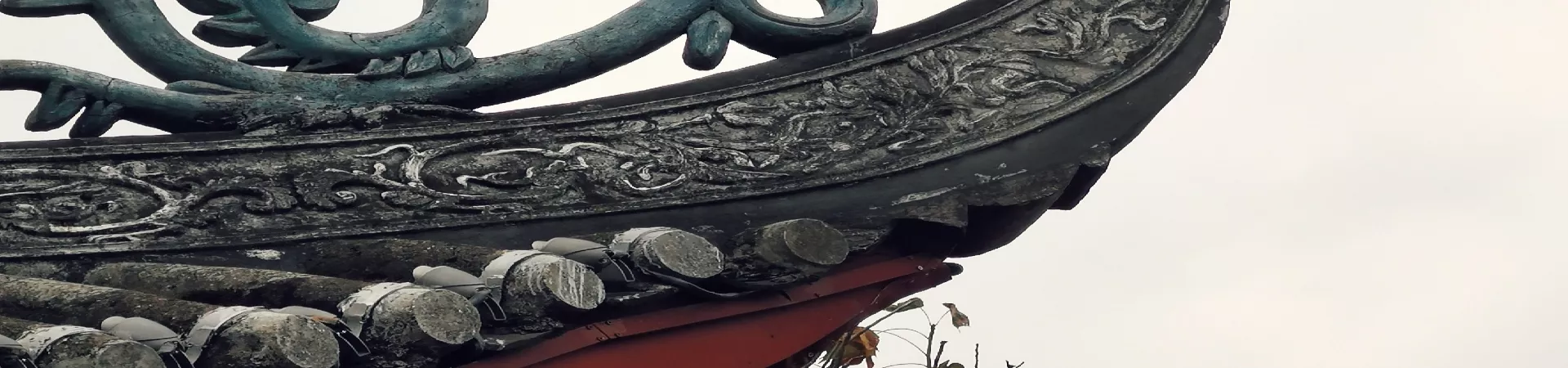
2.1. Defensive Features and Aesthetic Grandeur The tower's military function is integrated into its design. Directly above the main gateway, eight gun ports (or arrow slits) are strategically positioned. These openings allowed defenders to rain down projectiles on any enemy force attempting to breach the iron-clad doors below, providing a lethal secondary layer of defense. Architecturally, the tower is a beautiful example of traditional Chinese timber-frame construction. It is crowned by a Xieshan-style roof, one of the most important roof forms in Chinese architecture, often used for significant buildings. This roof is characterized by its nine ridges and multi-inclined surfaces. The design is further enhanced by the addition of a waist eave, creating a complex, layered silhouette. The roof corners sweep upwards into elegant "flying eaves," which are not merely decorative; they serve to throw rainwater far from the walls and, symbolically, to reach towards the heavens. This combination of sturdy defensive elements and graceful, upward-curving lines creates a visage that is both "exquisitely crafted and awe-inspiringly grand," blending martial strength with cultural refinement.
3. Practical Information for the Modern Visitor While the East Gate Tower no longer serves its original martial purpose, it stands open as a monument for exploration and contemplation.
3.1. Visiting Hours The site is accessible to visitors 24 hours a day, every day of the week, throughout the entire year. This perpetual accessibility allows for visits at different times to capture varying moods – the soft light of dawn, the bustling energy of the day, or the atmospheric glow under evening illumination.
3.2. Admission Details For the most current information regarding ticket pricing, potential discounts, or any special access requirements, it is recommended that visitors consult directly with the scenic area management. Policies may be updated, and direct inquiry ensures accurate planning for your visit.