Lushi Ancient Town
Subtitle: A Journey Through Time in the Tea-Horse Road's Hidden Gem
1. Introduction: The Forgotten Crossroads of Yunnan
Nestled deep within the mountainous embrace of Lincang City, in China's southwestern Yunnan province, lies the ancient town of Lushi. Far from the well-trodden tourist circuits, Lushi is not merely a destination; it is a portal. It serves as a remarkably preserved testament to a vanished era of commerce and cultural exchange, standing as a silent guardian of history on the legendary Southern Silk Road, more intimately known in these parts as the Ancient Tea-Horse Road. For centuries, this rugged network of trails was the lifeline of Southwest China, where caravans laden with precious Pu'er tea from Yunnan's fertile hills journeyed perilously to Tibet and beyond, returning with horses, salt, and exotic goods. Lushi, perched strategically on this route, flourished as a vital hub. Today, it offers the discerning traveler an unparalleled opportunity to step back in time, wandering through layers of history etched into its cobblestones, weathered wooden facades, and the very air, which still seems to carry whispers of muleteers and the faint, earthy scent of aged tea.
2. The Historical Tapestry: From Caravan Rest Stop to Cultural Relic
2.1. The Pulse of the Tea-Horse Road Lushi's raison d'être was the Tea-Horse Road. During the Ming (1368-1644) and Qing (1644-1912) dynasties, the town reached its zenith. Its narrow, winding streets would have been a cacophony of sounds: the clatter of hooves on stone, the shouts of caravan leaders, the bustling trade in tea bricks, and the myriad languages of merchants from distant lands. The town provided weary travelers with crucial respite—inns (known as diandiao), tea houses, blacksmiths, and saddle shops lined its main thoroughfare. It was a place of commerce, camaraderie, and cultural fusion, where Han, Yi, Dai, and other ethnic groups interacted, leaving an indelible mark on the town's character.
2.2. Architectural Chronicle in Wood and Stone The town's physical form is its most eloquent historian. Unlike many reconstructed "ancient towns," Lushi's architecture is authentically aged, bearing the patina of centuries. The layout follows the natural contours of the mountain ridge, with a main street snaking along the crest and smaller alleys cascading down the slopes like ribs.
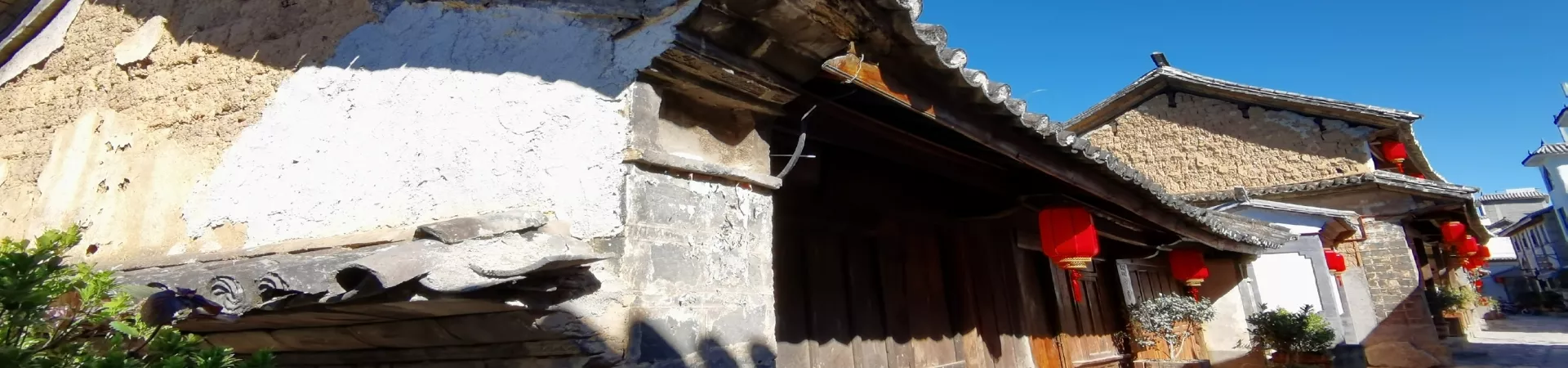
2.2.1. The Qing and Republican-Eay Legacy The majority of the surviving structures date from the late Qing dynasty and the Republican era (early 20th century). The architecture is a distinctive hybrid style. It incorporates elements of traditional Yunnan siheyuan (courtyard houses) but adapts them to the commercial purpose and steep terrain. Shop-houses with wide, inviting frontages for business and residential quarters at the rear are common. Intricately carved wooden eaves, lattice windows, weathered signboards, and sturdy stone foundations speak of a community built on practical resilience and modest prosperity.
2.2.2. Defensive Design and Urban Layout Lushi's design also reveals its historical vulnerability. The town's entrance was once guarded by heavy gates, now gone but remembered. The compact, maze-like structure of the alleys provided natural defense. This strategic layout underscores its role not just as a commercial center but as a fortified oasis in a remote and often perilous region.
3. The Visitor's Experience: Immersion in a Living Museum
3.1. Timeless Exploration: Opening Hours One of Lushi's most compelling features is its unrestricted access. The town itself is an open-air museum, and as such, it is open to visitors 24 hours a day, every day of the year, from January 1st to December 31st. There are no gates to close, no tickets for the historic streets. This policy allows for incredible freedom. You can witness the soft morning mist weaving through the rooftops, explore the sun-dappled lanes at noon, or experience the profound, almost mystical quiet of the town under a star-lit sky. The ever-changing light offers different perspectives on its ancient beauty.
3.2. Key Sites and Sensory Discoveries A walk through Lushi is a journey of spontaneous discovery. While there are no grandiose temples or palaces, the charm lies in the details.
3.2.1. The Ancient Street (Gu Jie) Follow the main flagstone-paved street. Feel the grooves worn smooth by countless footsteps and hoof-prints. Peek into courtyards where daily life continues, observe the traditional wooden architecture up close, and imagine the storefronts bustling with antique commerce.
3.2.2. The Old Stage and Public Squares Locate the old stage, a simple yet central platform where operas and community gatherings were once held. The adjacent squares were the heart of public life, and standing there, one can easily envision the town congregating for news and entertainment.
3.2.3. Panoramic Vistas Make the effort to climb to the higher alleys or the edges of the town. You will be rewarded with breathtaking panoramic views of Lushi's tiled roofs cascading down the hillside, framed by the endless, rolling green mountains of Lincang. This vista perfectly illustrates the town's harmonious and strategic relationship with its dramatic environment.
3.2.4. Local Encounters and Craftsmanship Engage with the few remaining local artisans or shopkeepers. You may find small workshops producing traditional handicrafts or family-run stalls selling local wild honey, walnuts, or, of course, varieties of Lincang tea. These interactions provide a genuine connection to the town's living heritage.
4. Context and Journey: Beyond the Town Walls
4.1. Lushi in the Greater Lincang Region Understanding Lushi enhances an appreciation for the wider Lincang area, one of the world's most celebrated origins for Pu'er tea. A visit to Lushi can be profoundly complemented by exploring the surrounding tea mountains, visiting modern tea factories, or participating in a tea ceremony. The town is the historical key that unlocks the region's primary cultural and economic narrative.
4.2. The Journey There Reaching Lushi is part of the adventure. The journey from Lincang city or the nearby airport involves traversing scenic but winding mountain roads. This remoteness has been both a curse—limiting modern development—and a blessing, preserving the town's authenticity. Travelers should come prepared for a step back in time, with modest expectations for modern amenities, and a focus on historical and cultural immersion.
4.3. A Note on Preservation and Tourism Lushi stands at a delicate crossroads. Increased recognition brings visitors and needed economic support, but the core challenge is preserving its fragile, authentic state against the pressures of modernization. Current efforts focus on maintaining structural integrity without Disneyfying its essence. As a visitor, practicing respectful, low-impact tourism—observing local life discreetly, supporting small local businesses, and leaving no trace—is crucial to helping Lushi retain the very magic that draws people to it. It remains a place where history is not performed, but patiently resides, waiting to be quietly discovered.