Gumo Village
Subtitle: A Journey to the Timeless Charm of Gumocun, Where Ancient Watermills and Walnut Groves Whisper Stories
Introduction: The Hidden Hamlet of Yunnan Nestled deep within the mountains of Lincang City, in Fengqing County, Yunnan Province, lies the enchanting village of Gumocun (古墨村). This remote settlement, approximately 120 kilometers from the county seat and about 7 kilometers west of Shili Township, is a destination that feels suspended in time. Far from the bustling tourist trails, Gumocun offers an authentic glimpse into a harmonious way of life that has been carefully preserved for generations. It is a place where the rhythm of nature sets the pace, and the village's accolades—including recognition as a "Chinese Traditional Village," a "2013 China Summer Resort Town," and an awardee in the "Hand in Hand 2014 Most Beautiful Villages and Towns in China"—speak to its unspoiled beauty and cultural significance. For the discerning traveler seeking serenity, cultural depth, and a profound connection with history, Gumocun is a revelation.
The Architectural Poetry: Stone Slate Houses and Ancient Watermills The soul of Gumocun is etched into its very structures. The village's most captivating features are its exceptionally well-preserved ancient watermill complex and its unique slate-house dwellings.
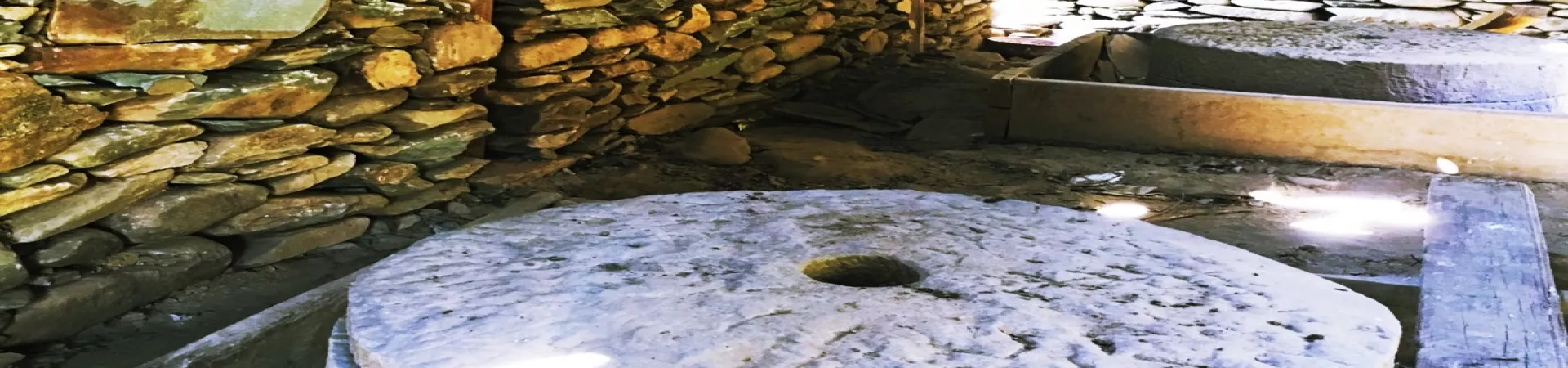
A Symphony of Water and Stone: The Mill System Wandering through Gumocun, the constant, gentle murmur of flowing water provides a soothing soundtrack. This water is the lifeblood of the village's historical industry, channeled through a sophisticated network of aqueducts to power a series of ancient watermills. These mills, constructed from local stone and wood, stand as magnificent testaments to pre-industrial engineering. Their large wooden wheels, turned by the clear mountain streams, once hulled rice and ground grain for the community. Today, they remain largely operational, not as necessities but as cherished living monuments. Observing these mills offers a tangible link to the village's agricultural past and showcases a sustainable model of resource use that is deeply respectful of the natural environment.
Living Heritage: The Slate Roof Dwellings Complementing the mills is the village's distinctive architectural style. The traditional residences of Gumocun are masterpieces of rustic adaptation, built primarily from the region's abundant stone. Their most striking feature is the roofing: layered slabs of local slate that create durable, weather-resistant, and aesthetically harmonious covers. These slate roofs, aging to various shades of grey and green, blend seamlessly into the surrounding rocky landscape, as if the village grew organically from the mountain itself. The cool interiors of these houses offer a respite from the day, and their sturdy construction speaks of a practical wisdom passed down through centuries. Together, the watermills and slate houses form a cohesive cultural landscape that is both functional and profoundly beautiful.
The Verdant Embrace: Walnut Forests of Gumocun Beyond its man-made wonders, Gumocun is cradled by a breathtaking natural environment dominated by one key element: the walnut tree. The village is renowned for its prolific walnut production, with vast groves creating a lush, green tapestry across the hills.
An Ancient Grove: Scale and History The scale of this arboreal heritage is astounding. Over 6,000 mu (approximately 400 hectares) of land on the slopes surrounding the village and along the banks of the Liulang River are covered in walnut trees. Among these, more than 4,000 ancient walnut trees are estimated to be over a century old. These venerable giants, with their gnarled trunks and expansive canopies, are not merely crops; they are living patriarchs of the landscape. They have witnessed the village's history unfold, providing sustenance, shade, and economic stability for generations. Walking beneath their branches is to walk through a living archive.
A Seasonal Tapestry The walnut groves dictate the visual and agricultural calendar of Gumocun. In spring, the trees burst forth with fresh, green catkins. Summer brings a dense canopy of leaves, providing cool, dappled shade. Autumn is the season of harvest, where the air is filled with the activity of gathering nuts, and the ground is littered with fallen leaves in hues of gold and brown. In winter, the intricate, skeletal branches of the trees create a stark and elegant silhouette against the mountain sky. This cyclical transformation ensures that Gumocun offers a uniquely beautiful experience in every season.
Practical Information for the Visitor To fully immerse oneself in the tranquility of Gumocun, a bit of planning is essential.
Accessibility and Journey Reaching Gumocun is part of its adventure. The journey from Fengqing county town involves navigating scenic but winding mountain roads. Visitors should prepare for a travel time of several hours by car. This relative inaccessibility is precisely what has safeguarded the village's character. It is advisable to arrange private transportation or hire a local driver familiar with the routes.
Visiting Schedule and Experience Opening Hours: The village itself is accessible to visitors 24 hours a day, every day of the year. There are no gates or formal opening times restricting access to its lanes and public spaces. The most rewarding way to experience Gumocun is to allocate sufficient time for leisurely exploration. A day trip allows for a good overview, but an overnight stay—in a local guesthouse, perhaps one adapted from a traditional slate house—is highly recommended. This allows one to witness the soft morning light over the slate roofs, hear the evening sounds of the village, and truly absorb its peaceful atmosphere. Visitors are encouraged to wander without a strict agenda, following the sound of water to the mills, getting lost in the lanes between stone houses, and taking gentle hikes into the surrounding walnut forests. Respect for the local residents' privacy and the pristine environment is paramount; this is a living community, not a museum exhibit.