Fushou Palace
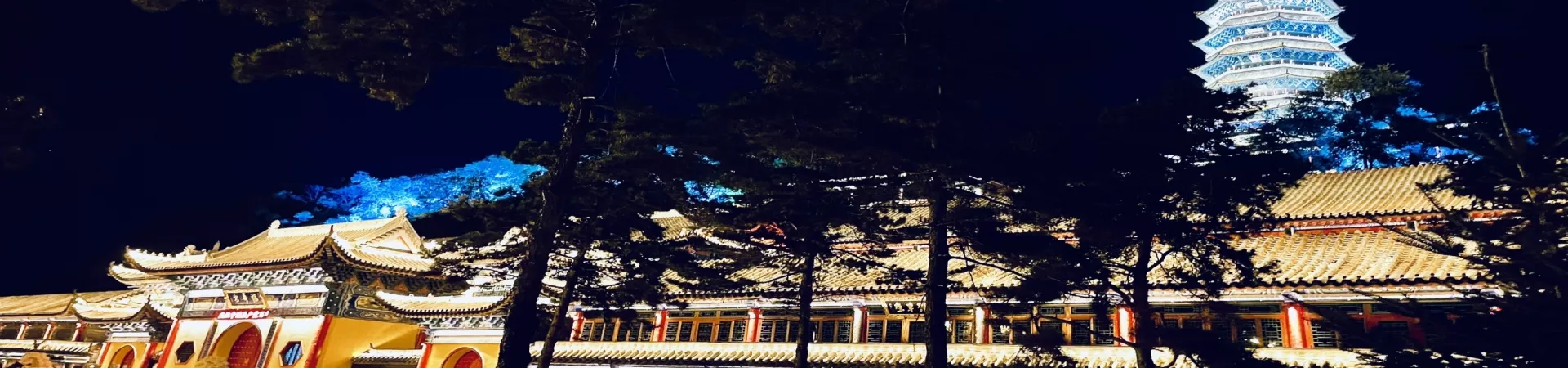
Subtitle: A Sanctuary of Serenity and Cultural Heritage in Liaoyuan
Introduction: The Spiritual and Architectural Gem of Jilin
Nestled amidst the rolling landscapes of Liaoyuan City in Jilin Province, China, the Fushou Palace (福寿宫) stands as a profound testament to Taoist philosophy, architectural artistry, and the pursuit of harmony. More than just a temple, it is a comprehensive cultural complex that offers visitors a unique journey into tranquility, spiritual reflection, and awe-inspiring human achievement. While deeply rooted in traditional Chinese religious thought, its most striking feature is a breathtaking modern marvel that has become synonymous with the site itself. A visit to Fushou Palace is an immersive experience, engaging the senses and the soul through its peaceful courtyards, intricate halls, and a commanding presence that overlooks the city.
1. Historical Roots and Philosophical Foundation
The Fushou Palace is primarily a Taoist temple, with its foundations and core ethos deeply embedded in the ancient Chinese philosophy and religion of Taoism. The name "Fushou" itself is highly auspicious, combining the characters for "Fortune" (福) and "Longevity" (寿), two of the most cherished blessings in Chinese culture. This sets the tone for the entire complex, which is dedicated to deities and principles associated with well-being, health, and a balanced life.
The temple complex is designed according to traditional principles that emphasize harmony between humanity and nature. The layout of its classical halls, the orientation of its structures, and the placement of gardens and open spaces all follow the concept of achieving balance with the natural environment. Visitors walking through the older sections of the palace can feel a palpable sense of peace, encouraged by the scent of incense, the soft echoes of temple bells, and the dignified atmosphere of worship halls dedicated to Taoist immortals. These areas serve as a living museum of Chinese spiritual practice, where rituals have been preserved and the architectural details—from sweeping roofs to carved beams—tell stories of myth and devotion.
2. The Crown Jewel: The Guanyin Hall and its Monumental Pagoda
Without question, the defining feature of the Fushou Palace, and what distinguishes it from countless other temples across China, is the awe-inspiring Guanyin Hall. This structure is not a traditional low-rise temple hall but a monumental, pagoda-style tower dedicated to Guanyin, the Bodhisattva of Compassion. This inclusion reflects the syncretic nature of many Chinese religious sites, where Taoist and Buddhist elements coexist harmoniously.
2.1 Architectural Marvel and Symbolism The Guanyin Hall is a masterpiece of modern religious architecture. Soaring to a majestic height, its multi-eaved pagoda form dominates the Liaoyuan skyline. The structure is an elegant tiered tower, each level representing a step closer to spiritual enlightenment. Its design incorporates traditional Chinese pagoda aesthetics but on a grand, monumental scale rarely seen. The exterior, often gleaming under the sun, symbolizes the radiant compassion of Guanyin, casting a protective gaze over the city and its inhabitants.
2.2 The Interior: A Realm of Divine Grandeur The true wonder unfolds within. The interior of the Guanyin Hall is a single, vast, and breathtaking space. Its most staggering feature is the colossal statue of the Thousand-Handed and Thousand-Eyed Guanyin that stands within. Crafted with exquisite detail, this golden statue is a sight of profound spiritual and artistic significance. The "thousand hands" symbolize the Bodhisattva's boundless capacity to reach out and help all beings, while the "thousand eyes" represent her infinite wisdom and ability to see the suffering in the world. The sheer scale and artistry of the statue, set within the towering hollow of the pagoda, create an atmosphere of overwhelming reverence and wonder. It is a powerful focal point for meditation and prayer, leaving a lasting impression on every visitor.
3. The Visitor Experience: Panoramic Views and Contemplative Spaces
A visit to Fushou Palace is a multi-sensory journey that combines cultural education with physical exploration.
3.1 The Ascent and the Panorama The Guanyin Hall is designed for an interactive experience. Visitors can ascend through the interior levels of the pagoda, often via staircases or elevators. With each level, new perspectives of the intricate interior and the unfolding statue reveal themselves. The ultimate reward awaits at the top observation decks. From this vantage point, one is treated to a panoramic, 360-degree view of Liaoyuan City and the surrounding Jilin countryside. The contrast between the serene, spiritual world inside the pagoda and the vibrant, modern cityscape outside is striking and thought-provoking. It physically embodies the Taoist ideal of being "in the world but not of it," offering a moment of detachment and peaceful reflection high above the everyday hustle.
3.2 Exploring the Comprehensive Grounds Beyond the iconic pagoda, the broader temple grounds warrant leisurely exploration. Winding paths lead visitors through serene gardens featuring manicured greenery, tranquil ponds, and symbolic rockeries. Traditional Taoist ritual halls, where ceremonies are still performed, offer glimpses into living religious traditions. Architectural elements like moon gates, spirit screens, and ancient stelae are scattered throughout, each with its own cultural narrative. These areas provide quieter spaces for contemplation away from the main attraction, allowing for a more intimate connection with the site's spiritual purpose.
4. Cultural Significance and Modern Pilgrimage
The Fushou Palace has transcended its role as a local temple to become a regional cultural landmark. It represents a successful fusion of deep historical tradition with visionary contemporary construction. For Taoist and Buddhist devotees, it remains an active site of pilgrimage and worship, especially during significant religious festivals and the Lunar New Year, when the temple buzzes with ceremonial activity.
For domestic and international tourists, it serves as a premier destination for understanding Chinese religious syncretism, architectural ambition, and the enduring search for peace and longevity. It is a place where one can admire the ambition of a towering pagoda, find solace in a quiet garden corner, and gain insight into the philosophical concepts that have shaped Chinese civilization for millennia. The Fushou Palace does not merely display culture; it invites participation in an experience of awe, tranquility, and cultural continuity, making it an indispensable stop in the heart of Northeast China.