Lugu Lake Scenic Area - Boao Island
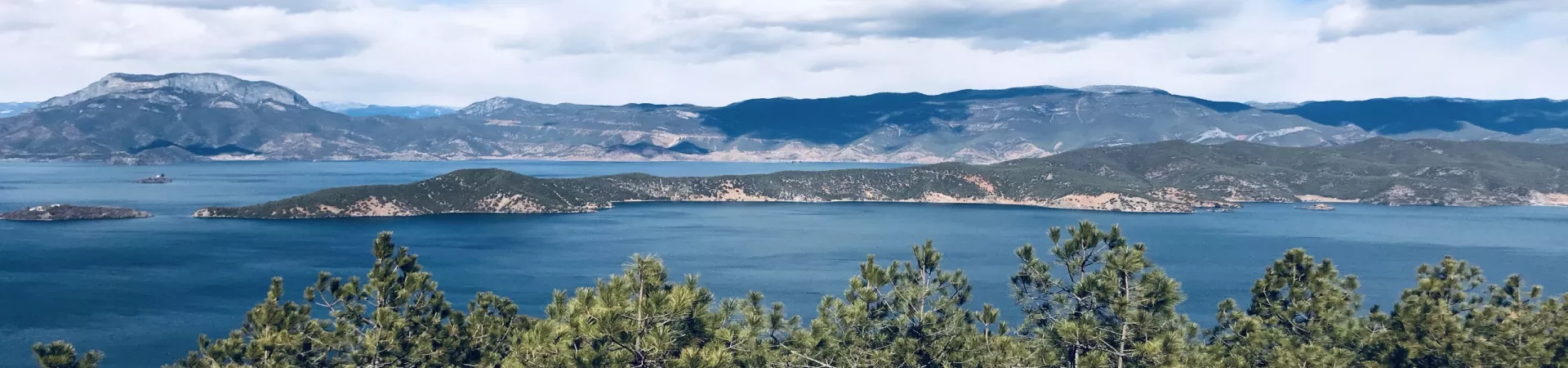
The Island of a "Princess": Bowa Island and a Story Frozen in Time
Nestled within the ethereal beauty of Lugu Lake, straddling the border between Sichuan and Yunnan provinces, lies Bowa Island (博凹岛). More than just a scenic spot, this small island is a poignant capsule of history, a testament to a bygone era of local rule and a cross-cultural love story that ended in solitude. For visitors to the Lugu Lake area, a trip to Bowa Island offers a unique blend of natural tranquility and deep, reflective history.
The Historical Legacy: A Chieftain's Palace
The central narrative of Bowa Island is inextricably linked to the last Zuosuo Tusi (左所土司), or local chieftain, of the region. In the mid-20th century, he constructed a luxurious private palace on this secluded island. This was not merely a retreat; it was a specially built residence for his wife, Xiao Shuming (肖淑明). The story of Xiao Shuming is what transforms the island's ruins from mere stone and mortar into a site of emotional resonance.
The Story of Xiao Shuming: The Han Chinese "Princess"
Xiao Shuming's tale is one of dramatic displacement and quiet endurance. Originally a Han Chinese girl from Ya'an, Sichuan, she was married to the Mosuo chieftain at the tender age of 16. She was brought to the remote shores of Lugu Lake, a world culturally and geographically distant from her homeland. To provide her with a familiar and dignified living space, the chieftain built the complex on Bowa Island. Here, amidst the stunning lake scenery, Xiao Shuming spent her entire youth and much of her adult life. She became known locally as a "princess," bridging two very different worlds. However, her story was ultimately one of isolation within a gilded cage, separated from her native culture and living through the twilight years of the Tusi system.
Exploring the Island Today: Ruins and Reflection
Today, the "luxurious palace" stands in evocative ruins. Visitors arriving by boat will find remnants of sturdy stone walls, outlines of courtyards, and fragments of a life that once was. Wandering through these quiet ruins with the knowledge of their history is a profoundly moving experience. The phrase "the landscape remains unchanged, but the people and affairs are completely different" perfectly captures the atmosphere. The majestic lake and mountains that surround the island are constant, a stark contrast to the vanished world of chieftains and the personal saga of Xiao Shuming. It is a place that invites contemplation on the passage of time, the shifts in history, and the personal costs of larger political and social transitions.
The Layout and Remnants
While the structures are dilapidated, the layout suggests its former significance. You can discern the sections that might have been living quarters, ceremonial spaces, and gardens designed to offer solace and a view of the lake. The architecture, though in ruins, hints at a blend of Han Chinese and local Mosuo influences, a physical manifestation of Xiao Shuming's own position between cultures.
The Atmosphere and Views
The overgrown paths and crumbling walls are softened by the island's natural beauty. The silence is broken only by the lapping of lake waves and birdsong. Climbing to the higher points of the island rewards visitors with breathtaking, panoramic views of Lugu Lake's sapphire-blue waters and the forested hills that rise from its shores. This serene beauty makes the human story embedded within it all the more poignant.
Practical Visitor Information
Getting There
Transportation: Access to Bowa Island is exclusively by boat. Visitors can hire private wooden pig trough boats (a traditional Mosuo canoe) or join group tours from various points around Lugu Lake, such as Luoshui Village or Lige Village. The boat ride itself is an integral part of the experience, offering stunning perspectives of the lake and the island approaching from the water.
Admission and Hours
Ticket: Admission to Bowa Island is included in the general entrance ticket for the Lugu Lake scenic area. There is no separate fee for the island. Opening Hours: The island is accessible daily from 8:00 AM to 6:00 PM.
Suggested Visit Duration
Time Reference: Planning for 1 to 3 hours is recommended. This allows sufficient time for the boat transfer, a leisurely walk around the island to explore the ruins, moments for quiet reflection, and photography of the spectacular landscapes.
Additional Tips
- Best Time to Visit: Early morning or late afternoon offers the softest light for photography and a more peaceful atmosphere, potentially avoiding larger tour groups.
- What to Bring: Wear comfortable walking shoes suitable for uneven terrain. Bring sun protection (hat, sunscreen), water, and consider a light jacket as weather on the lake can change.
- Cultural Respect: Please remember that the site, though in ruins, is a place of historical and personal significance. Treat the remnants with respect as you explore.
A journey to Bowa Island is more than a simple sightseeing stop. It is an immersion into a layered narrative where the natural sublime meets a haunting human history. It challenges visitors to look beyond the picturesque surface of Lugu Lake and ponder the deep, complex stories that are woven into the very fabric of this remarkable region.