Baiya Grand Canyon
Subtitle: A Guide to Baixia Grand Canyon: Guangxi's Hidden Natural Masterpiece
1. Introduction to Baixia Grand Canyon Nestled within Hemu Township, Wuxuan County, in the city of Laibin, lies the provincial-level scenic area of Baixia Grand Canyon. Approximately 38 kilometers from the county seat, this 13.66-square-kilometer geological wonder represents a quintessential example of Danxia landform, characterized by its striking reddish sandstone cliffs and peaks reaching up to 1,200 meters in elevation. Often hailed as "a world-rare spectacle of canyon scenery," it offers visitors a profound escape into pristine nature, combining dramatic landscapes with serene, ecological richness.
2. The Natural Splendor and Ecology 2.1. Landscape and Geological Features The core of the experience is the main canyon, stretching 10 kilometers with 37 bends, creating a mesmerizing natural corridor. The terrain is defined by perilous, soaring peaks and narrow cliffs that seem to press against the sky. Hundreds of side canyons branch off, each adding to the sense of exploration and grandeur. The area's distinct Danxia topography provides a stunning visual palette of red rock formations against lush greenery.
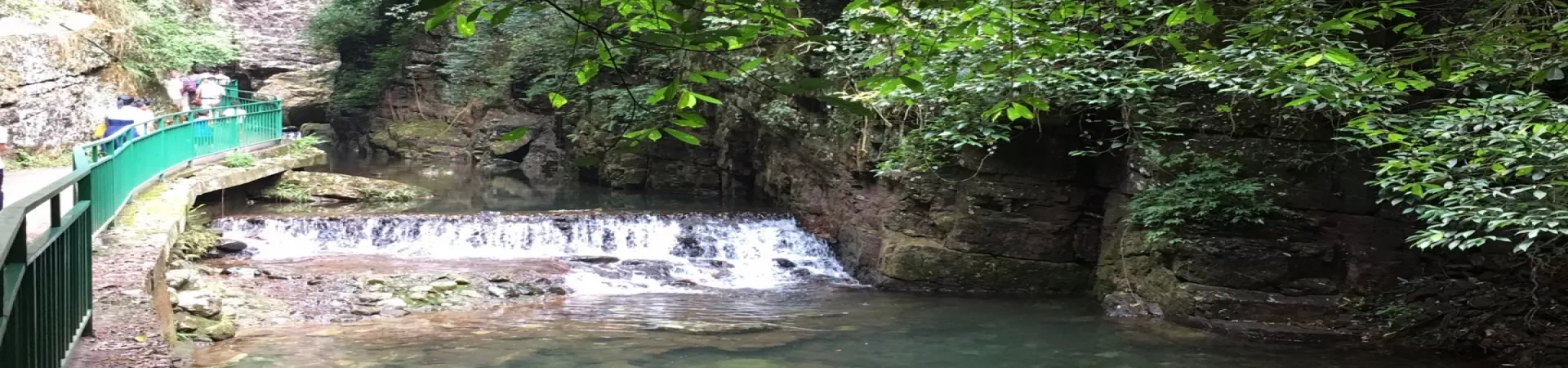
2.2. Hydrographic Wonders: Streams, Pools, and Waterfalls A clear, winding stream meanders through the canyon, its waters perennial and pure. This freshwater originates from springs, completely free of impurities, and is locally believed to have benefits for skin beautification and digestion. The hydraulic spectacle is marked by over ten notable waterfalls and seven deep, tranquil pools. The waterfalls, ranging from the delicate to the powerful, are central attractions.
2.3. Flora and Fauna: A Biodiversity Haven The canyon is blanketed in dense, primordial forests where ancient vines drape from towering trees. The air is perfumed by a rich variety of flowers and plants, including precious tree species such as tree ferns, red chinkapin, white chinkapin, fragrant flower wood, and Tsoongiodendron odorum. This pristine habitat supports rare animals like lizards, monkeys, and the giant salamander (Chinese giant salamander, colloquially known as "baby fish"). The ecosystem contributes to an exceptionally high concentration of negative oxygen ions, with annual temperatures averaging a pleasant 16–24°C (61–75°F), making the air refreshing and invigorating.
3. Key Attractions and Historical Point 3.1. Signature Waterfalls The canyon's waterfalls are poetically named and uniquely captivating: * "Goddess Scattering Flowers" Waterfall: A graceful, often multi-streamed cascade reminiscent of a celestial being dispersing blossoms. * "Mandarin Ducks" Waterfall: Likely featuring two parallel or intertwined streams, symbolizing a pair of mandarin ducks, a traditional emblem of love and fidelity. * "Western King" Waterfall & "Heavenly King" Waterfall: These falls carry names of grandeur and power, suggesting impressive drops and volume, possibly linked to local history or legends.
3.2. Historical Site: Xiao Chaogui's Former Residence Adding a layer of cultural significance is the former residence site of Xiao Chaogui, the "Western King" of the Taiping Heavenly Kingdom rebellion in the 19th century. This historical footnote connects the natural beauty with a pivotal chapter in China's history, offering a point of interest for history enthusiasts.
4. Practical Visitor Information 4.1. Location and Accessibility Baixia Grand Canyon is strategically located in central Guangxi, ensuring convenient access. The Laibin area is well-connected by major infrastructure: * Rail and Road: The Hunan-Guangxi Railway and the Nanning-Liuzhou Expressway run north-south through Laibin. * Waterway: The Hongshui River flows east-west through the region. * Proximity to Major Cities: It is situated near several key urban centers: approximately 156 km from Nanning (the regional capital), 60 km from the industrial hub of Liuzhou, and within reach of Guilin, Wuzhou, and Guigang. * Air Travel: The nearest major airports are Nanning Airport (about 180 km south) and Guilin Liangjiang International Airport (roughly 200 km north).
4.2. Admission and Operating Hours * Ticket Price: 30 RMB per person per entry (covers the main entrance). * Opening Hours: 08:00 - 19:00 daily. The last admission is at 17:00. These hours apply year-round from January 1st to December 31st.
4.3. Contact Information For inquiries, visitors can contact the scenic area at: 0772-5213233.
5. The Visitor Experience A journey into Baixia Grand Canyon is an immersive engagement with the elements. Visitors can hike along the stream, marvel at the powerful waterfalls and serene pools, and breathe in the fragrant, oxygen-rich air. The play of light throughout the day—with morning mists and evening glow often adorning the cliffs—creates a dynamic and photogenic environment. It is a destination that caters not just to sightseers but to those seeking leisure, relaxation, and a genuine connection with an unspoiled natural world. The combination of majestic geology, vibrant ecology, and historical resonance solidifies its status as a rare and valuable destination for tourism and recreation in Guangxi.