Site of the military academy of Yunnan Army
Subtitle: A Historical Journey Through China's Modern Military Education
1. Introduction and Location Nestled in the heart of Kunming city, the Old Site of the Yunnan Military Academy stands as a silent yet powerful testament to a pivotal era in modern Chinese history. Its strategic location on Cuihu West Road, adjacent to the serene Cuihu Park and the prestigious Yunnan University, forms a perfect cultural and scenic triangle for visitors. This proximity allows tourists to seamlessly blend a historical expedition with the enjoyment of natural beauty and academic ambiance, making it a cornerstone of any comprehensive Kunming itinerary. The area encapsulates a unique blend of early 20th-century revolutionary fervor, scholarly pursuit, and tranquil urban retreat.
2. Historical Significance and Founding The academy's story begins in 1909, during the tumultuous final years of the Qing Dynasty. Founded as part of a national movement to modernize China's military forces, it was rapidly recognized as one of the "Three Major Military Academies" in the country, alongside its counterparts in Baoding and Fengtian. Its mission extended far beyond basic military training; it became a crucible for progressive thought and revolutionary ideology. The institution's greatest legacy lies in its illustrious student body. It served as the alma mater for a generation of leaders who would shape China's destiny, most notably Marshal Zhu De and Marshal Ye Jianying. Under the guise of military education, the academy nurtured the minds that would later play critical roles in the Xinhai Revolution, the National Protection War against monarchical restoration, and ultimately, the founding of the People's Republic of China. Its history is, therefore, inextricably linked to the nation's struggle for transformation and sovereignty.
3. Architectural Features and Aesthetic Appeal The academy's physical structure is a historical artifact in itself. The well-preserved complex is a quintessential example of early Republican-era architecture. The main building is an elegant, two-story yellow structure that radiates a solemn yet graceful charm. Its distinctive color and symmetrical design make it a photogenic landmark, especially under the brilliant Kunming sunlight, where the facade glows warmly against the blue sky. The architectural style reflects a period of transition, blending traditional Chinese courtyard layout with Western-influenced structural elements and decorative simplicity. This aesthetic harmony between form and history provides visitors with a visually immersive experience before they even step inside, offering countless opportunities for poignant photography that captures the essence of early modern China.
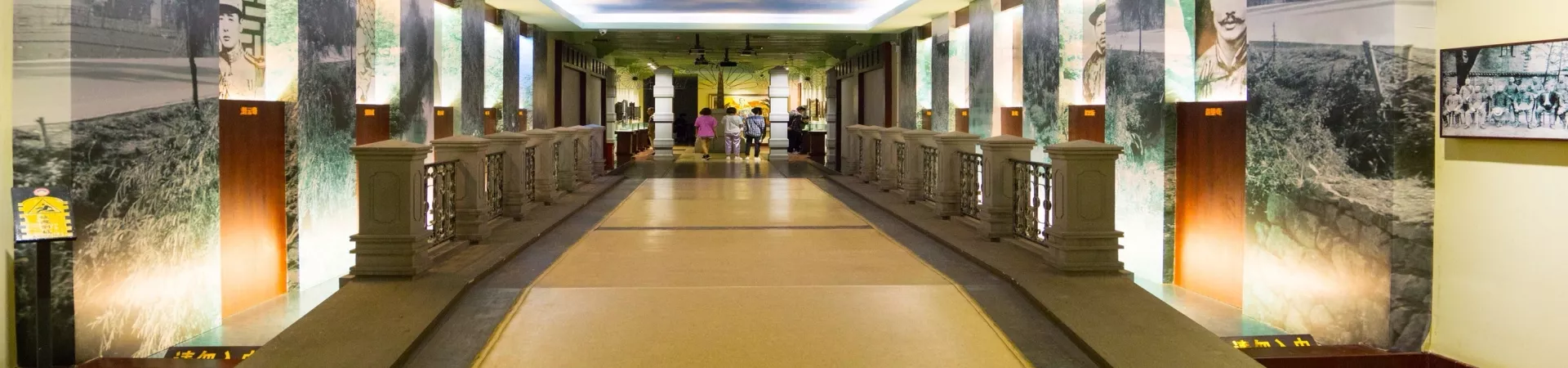
4. Interior Exhibitions and Collections Stepping through its gates transports visitors back in time. The interior has been meticulously conserved and converted into a comprehensive museum. Key functional spaces from its operational days have been restored to offer an authentic glimpse into the cadets' daily lives. Visitors can walk through the Grand Lecture Hall (Auditorium), where future generals once absorbed lessons on strategy and politics, and peer into the Arsenal, which housed the tools of their trade. The core of the visit lies in the systematic permanent exhibitions. These are divided into several compelling sections: 4.1. The Academy's History: This section details the founding principles, curriculum, daily routines, and the overall development of the academy, highlighting its pedagogical innovations and its role as a center of excellence. 4.2. The Double Ninth (Chong Jiu) Uprising: A dedicated exhibition explores the academy's direct involvement in the 1911 uprising in Kunming, a significant local event that contributed to the broader Xinhai Revolution, which ultimately overthrew the Qing Dynasty. 4.3. The National Protection War: Another section focuses on the academy's critical role in the 1915-1916 war against Yuan Shikai's attempt to declare himself emperor, underscoring its commitment to republican ideals.
These exhibitions employ a rich array of artifacts, including historical documents, personal effects of famous alumni, photographs, military equipment, and detailed explanatory panels, providing a multi-faceted understanding of this influential institution.
5. Practical Visitor Information For those planning a visit, the following practical details are essential. The site operates with free admission, making it an accessible cultural experience for all. Opening hours are from 9:00 AM to 4:00 PM, Tuesday through Sunday, with the last entry at 4:00 PM. It is closed to the public on Mondays for maintenance. A thorough exploration of the exhibitions and architecture typically requires 1 to 3 hours. The site is easily accessible by public bus; visitors can take Bus 139 to Cangyuan Lane (Bus Stop) or Buses 125 or 133 to Provincial Library (Bus Stop), both followed by a short walk. For any inquiries, the site can be contacted via telephone at 0871-65395952.