Guandu Ancient Town
Subtitle: A Journey Through Time in Kunming's Ancient Waterfront Town
Introduction: Where History Meets the Lakeshore
Nestled on the southeastern fringe of Kunming City, Yunnan Province, Guandu Ancient Town stands as a living chronicle of the region's rich history and cultural confluence. More than just a collection of old buildings, it is a vibrant tapestry woven with threads of commerce, spirituality, and daily life that date back over a millennium. Its strategic position near the Dianchi Lake made it a natural hub, evolving from a royal retreat into a bustling center of trade and craftsmanship. Today, it offers visitors a rare opportunity to step away from the modern city's pace and wander through lanes where the past feels palpably present, all while engaging with a community that continues to thrive within its historic heart.
1. A Storied Past: From Royal Retreat to Bustling Market Town
1.1. Tang Dynasty Origins and Nanzhao Connections The story of Guandu begins in the Tang Dynasty (618-907 AD). During this period, the area was part of the influential Nanzhao Kingdom and later the Dali Kingdom. Its picturesque location by the vast Dianchi Lake made it an ideal and scenic resting spot for the nobility and royalty of these kingdoms on their excursions. This early association with the region's elite set the stage for its cultural and architectural development.
1.2. Ming and Qing Heyday as a Commercial Hub Guandu truly flourished during the Ming (1368-1644) and Qing (1644-1912) dynasties. It transformed into a prosperous town renowned for its advanced handicrafts and vibrant commerce. As a key market town on the southern Silk Road network, it buzzed with the activity of merchants, artisans, and travelers. The architectural legacy and urban layout visible today largely stem from this era of economic and cultural prosperity, reflecting its historical importance as a commercial crossroads in Yunnan.
2. Architectural and Cultural Treasures
2.1. The Layout: "Five Hills, Six Temples, Seven Pavilions, Eight Shrines" Guandu's cultural wealth is famously summarized by the local saying referencing its "Five Hills, Six Temples, Seven Pavilions, and Eight Shrines." This phrase hints at the astonishing density of historical and religious sites packed within the town. Exploring its labyrinthine alleys leads to constant discoveries of ancient courtyards, weathered temples, and elegant pavilions, each with its own story.
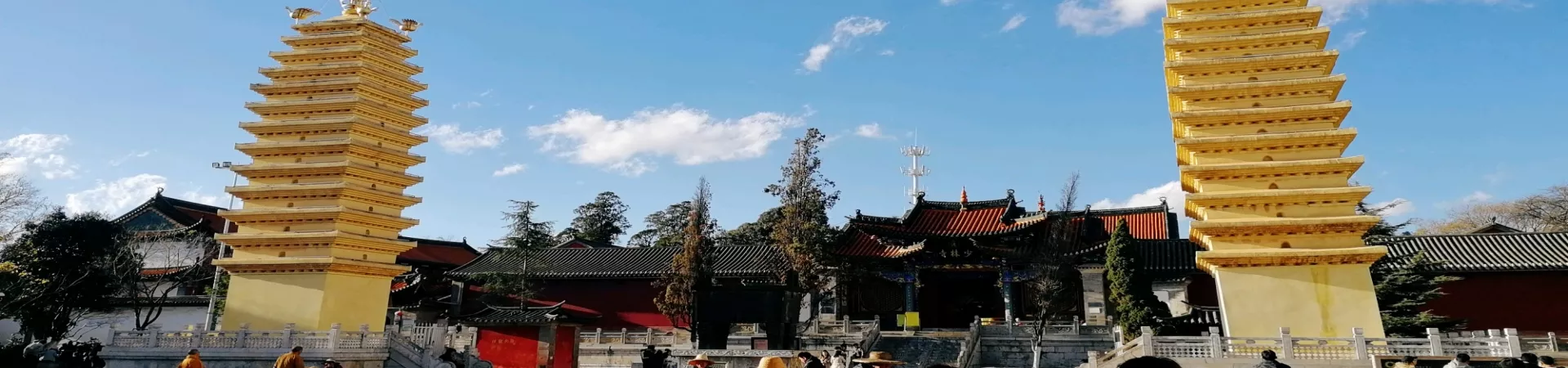
2.2. The Crown Jewel: Miaozhan Temple and the Diamond Throne Pagoda Among all its monuments, the Miaozhan Temple, revered as the foremost of the "Six Temples," holds a place of prime importance. The temple complex itself is a serene space for contemplation. However, the true showstopper stands directly before its gates: the magnificent Diamond Throne Pagoda (Jingang Baozuo Ta).
2.2.1. Architectural Significance of the Pagoda Built during the Yuan Dynasty (approximately 1457 AD), this pagoda is a stunning example of esoteric Buddhist architecture rarely found in China. It consists of a central, larger pagoda surrounded by four smaller ones, all erected on a single, squared stone platform or "throne." Elaborately carved Buddhist deities, guardians, and symbolic motifs adorn its sandstone surface. This pagoda is not only the symbolic landmark of Guandu but also a nationally recognized cultural relic, offering invaluable insight into the region's historical religious practices and artistic achievements.
3. The Guandu Experience: Sights, Sounds, and Tastes
3.1. Vibrant Streets and Artisan Culture Beyond its monumental sights, the charm of Guandu lies in its lively atmosphere. The main streets and alleys are lined with a variety of shops selling traditional Yunnan crafts, antiques, teas, and local products. Artisans can often be seen practicing age-old crafts, adding a dynamic, living element to the historical backdrop. The bustling market energy connects the present directly to its mercantile past.
3.2. The Unmissable Culinary Icon: Guandu Baba No visit to Guandu is complete without tasting its most famous culinary export: the Guandu Baba. This is not a "baba" in the Western sense, but a beloved local flatbread, sometimes called "wheat cake" by residents. These round, golden-brown pastries are baked in traditional clay ovens, yielding a slightly crispy exterior and a soft, fluffy interior.
3.2.1. Finding the Best Baba: A Local Favorite While many vendors sell the Baba, the most renowned spot is the "Yanjing Baba" (Spectacles Baba) shop located on the bustling Jingang Tower Commercial Street. Here, the art of Baba-making has been perfected. Two classic fillings are particularly sought-after: fragrant sesame (胡麻) and rich, sweet peanut. The aroma of these baking pastries fills the air, and tasting one, warm from the oven, is an essential and delicious part of the Guandu journey.
4. Practical Visitor Information
4.1. Location and Transportation Guandu Ancient Town is located in Guandu District, southeast of central Kunming. The most convenient public transportation option is to take Bus 169 and alight at either the "Guandu Ancient Town" or "Guangfukou" bus stop. From there, it is a short and straightforward walk of approximately 300 meters to the main entrance of the ancient town district.
4.2. Admission and Opening Hours One of the great advantages of visiting Guandu is that it is an open, living town. There is no entrance fee to access the historic streets, lanes, and main public areas. The town is accessible to visitors 24 hours a day, every day of the year. However, it is important to note that individual temples, museums, or specific cultural sites within the town (such as the Miaozhan Temple complex) may have their own operating hours and separate ticketing policies.
4.3. Suggested Duration and Planning To fully appreciate the atmosphere, explore the key historical sites, enjoy some local food, and browse the shops, a visit of 1 to 3 hours is recommended. For those with a deep interest in history and architecture, more time could be spent delving into the details of the various temples and courtyards. As operational details for specific attractions can change, it is always advisable to check locally for the latest information during your visit.
Information last updated: June 10, 2023.