The Japanese invasion of China Hutou Fortress Site Museum
A Museum of Remembrance: The Hutou Fortress and the Final Battle of World War II
Introduction: A Silent Witness to History Nestled in the remote northeastern region of China, near the city of Jixi in Heilongjiang province, lies a site of profound historical significance: the Museum of the Hutou Fortress Relics of the Japanese Invading Army. This specialized museum serves not merely as a collection of artifacts but as a solemn testament to a dark chapter in human history and the brutal final confrontation of World War II. It stands on the very ground where immense suffering, forced labor, and a protracted, bloody battle intersected, offering visitors a tangible connection to the past and a powerful reminder of the costs of war and aggression.
The Fortress: An Engineering Feat of Oppression 1. Strategic Ambition and Forced Construction The genesis of the Hutou Fortress is rooted in the expansionist ambitions of Imperial Japan. To secure a long-term occupation of Manchuria (Northeast China) and establish a strategic launchpad for a potential attack on the Soviet Union, the Japanese Kwantung Army embarked on a massive, clandestine military project. Between 1934 and 1939, over a grueling six-year period, hundreds of thousands of Chinese laborers were forcibly conscripted and subjected to inhumane conditions to build this permanent military installation. The human cost during its construction was staggering, with countless laborers perishing due to exhaustion, malnutrition, disease, and brutal treatment, their lives sacrificed to create a monument to invasion.
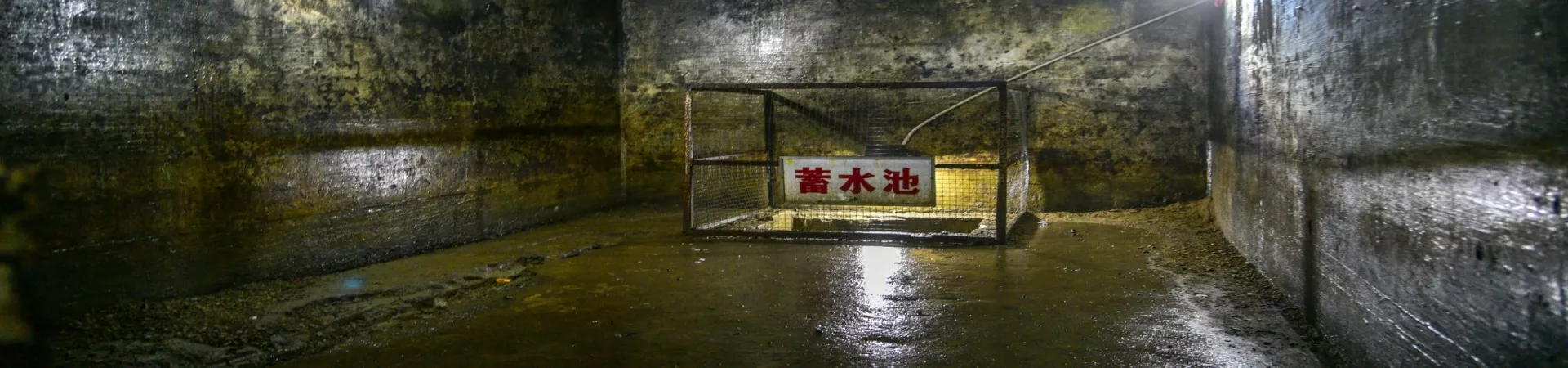
2. Scale and Structure: The "Oriental Maginot Line" The sheer scale and complexity of the fortress justified its grim nickname, the "Oriental Maginot Line." It was a vast, integrated defensive network spanning approximately 12 kilometers in width and penetrating 30 kilometers in depth. The fortress was not a single structure but a series of interconnected strongpoints: * Main Positions: The core was the Meng Hu Shan (Fierce Tiger Mountain) main阵地, housing command centers and key facilities. * Supporting Positions: This was flanked by forward positions at Hu Dong Shan (Tiger East Mountain), lateral defenses at Hu Bei Shan (Tiger North Mountain), and rear-support positions at Hu Xi Shan (Tiger West Mountain) and Hu Xiao Shan (Tiger Roar Mountain). * Above and Below Ground: The complex included extensive above-ground facilities such as military airfields and large artillery emplacements. However, its true strength lay underground. The subterranean labyrinth featured tunnels, barracks, ammunition depots, power generators, communication hubs, kitchens, and medical stations, designed to allow the garrison to withstand a prolonged siege.
The Final Battle: The End of World War II 1. The Soviet Offensive and a Delayed Surrender On August 8, 1945, fulfilling its Yalta Conference commitments, the Soviet Union declared war on Japan and launched a massive offensive into Manchuria. Japan announced its unconditional surrender on August 15, 1945, effectively ending World War II. However, isolated, cut off from communications, and perhaps unwilling to accept defeat, the Japanese garrison stationed at Hutou Fortress—the 15th Border Guard Unit of the Kwantung Army—continued to resist.
2. A Protracted and Costly Siege What followed was an exceptionally fierce and tragic battle that lasted for 11 days after the official surrender. Utilizing the fortress's formidable natural and engineered defenses, the Japanese troops fought tenaciously. The Soviet Red Army, determined to neutralize this last pocket of resistance, engaged in intense combat. The fighting was brutal, involving direct assaults, artillery barrages, and close-quarters combat in the tunnels. The Soviet forces paid a heavy price in casualties to secure the fortress.
3. The "Termination Site" of WWII The battle finally concluded on August 26, 1945, when the remaining Japanese defenders were overwhelmed. Nearly all the approximately 2,000 Japanese soldiers and military family members inside the fortress perished. Due to this protracted resistance which ended nearly two weeks after Japan's general surrender, historians and scholars worldwide have designated the Hutou Fortress as the "Termination Site of World War II," marking the very last major ground combat of the global conflict.
The Museum Today: Preservation and Education The museum built on and around the fortress ruins serves a critical role in preservation and education. Visitors can explore partially restored underground tunnels, bunkers, and command posts, gaining a visceral understanding of the fortress's claustrophobic and formidable nature. Exhibits display artifacts, photographs, documents, and maps that detail the fortress's construction, the battle, and the broader context of Japan's invasion of China. It stands as a permanent memorial to the victims of forced labor, the fallen soldiers on both sides, and a powerful educational tool advocating for peace, historical reflection, and the rejection of militarism.
Practical Information for Visitors * Suggested Visit Duration: 1 to 3 hours. This allows sufficient time to explore the museum exhibits, walk through the atmospheric underground tunnels, and reflect on the historical significance of the outdoor site. * Opening Hours: 08:00 - 16:30 daily (last admission at 16:00). The museum is open year-round, though hours are subject to change. * Admission: For the most current ticket prices and any potential discounts (e.g., for students, seniors), it is advisable to consult directly with the scenic area administration prior to your visit.