zhuge bagua village
Subtitle: A Journey into the Architectural and Ancestral Heart of a Ming-Qing Dynasty Masterpiece
Introduction: The Legacy of a Strategist Nestled in the mid-western part of Zhejiang province, approximately 18 kilometers from Lanxi City center, lies Zhuge Village—a place where history, philosophy, and architecture converge in a living tapestry. This is not merely an ancient town; it is the largest settlement of Zhuge Liang's descendants in China, with over 4,000 residents proudly carrying the lineage of the legendary Three Kingdoms period strategist. The village transcends its role as a historical relic, offering visitors a profound immersion into a unique cultural and spatial philosophy that has been meticulously preserved for centuries.
The Architectural Marvel: A Living Bagua Diagram The most defining and awe-inspiring aspect of Zhuge Village is its foundational layout, a physical manifestation of ancient Chinese metaphysical thought.
2.1. The Master Plan of Zhuge Dashi The village's extraordinary structure was designed in the late 13th century by Zhuge Dashi, the 27th-generation descendant of Zhuge Liang. He applied the principles of the Nine Palaces and Eight Trigrams (Bagua), a core concept in I-Ching philosophy, to urban planning. This was not an aesthetic choice but a strategic one, intended to harness auspicious geomancy (Feng Shui) and provide natural defense.
2.2. The Inner and Outer Bagua At the very heart of the village lies Zhong Chi, the Bell Pond. This semicircular pond, paired with a corresponding flat land section, forms a symbolic Tai Chi diagram. From this core, eight narrow lanes radiate outward, dividing the village into eight sectors that correspond to the eight trigrams. This intricate network forms the "Inner Bagua." The design's brilliance is compounded by the natural topography. Eight hills encircle the village, forming a protective embrace and a natural "Outer Bagua." This harmonious integration of human design with the surrounding landscape creates a profound sense of balance and unity, making the village a masterpiece of environmental integration.
A Walk Through Ming and Qing Dynasties Beyond its philosophical layout, Zhuge Village is a stunningly preserved archive of traditional Chinese vernacular architecture from the Ming (1368-1644) and Qing (1644-1912) dynasties.
3.1. Scale and Preservation The village boasts over 200 well-preserved ancient residences and ancestral halls. It is widely recognized as one of China's best-protected, largest in scale, most complete in form, and culturally rich ancient villages. The architectural style is quintessentially Huizhou, characterized by "blue bricks, grey tiles, horse-head gables, robust beams, stout pillars, and secluded inner chambers." The soaring horse-head gables (Ma Tou Qiang) are not only beautiful but served as firebreaks. The ornate woodcarvings on beams, door frames, and windows depict stories, symbols, and wishes for prosperity, longevity, and happiness.
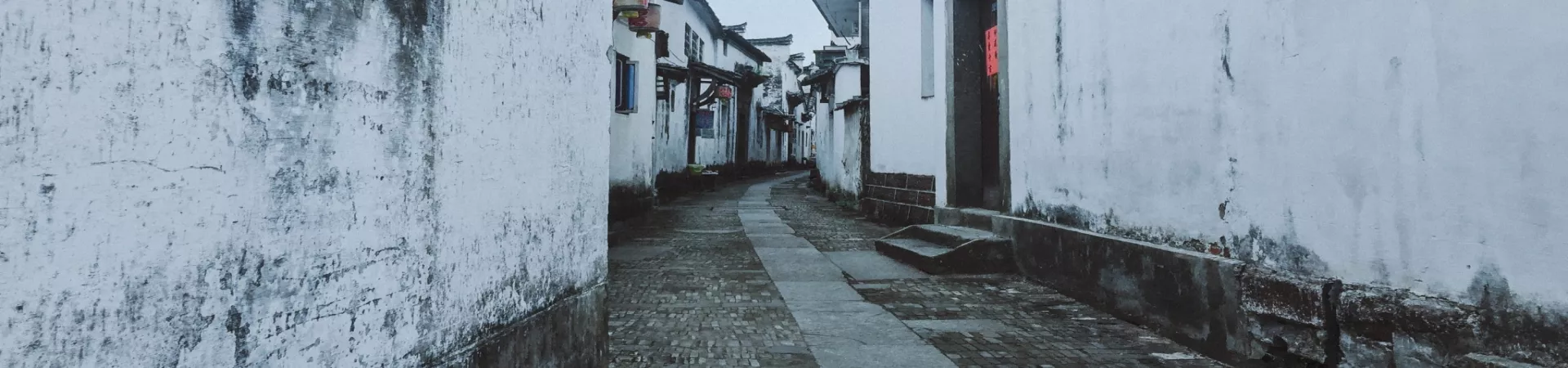
3.2. A Tapestry of Spaces The village landscape is diverse and picturesque. Visitors can wander through densely packed lanes lined with majestic, time-worn buildings, feeling the weight of history. The scene shifts around the ancient commercial center built alongside water ponds, hinting at the village's past economic vitality. Despite the complexity, every element—from the grandest ancestral hall to the humblest dwelling—contributes to a cohesive and visually stunning whole. The sense of discovery around every corner is constant.
Practical Information for Your Visit To fully appreciate Zhuge Bagua Village, planning is essential. Here are the key details to facilitate your journey.
4.1. Getting There The most straightforward way is to take public bus Lanxi 502 or Lanxi 302 and alight at Zhuge Bus Station (Zhuge Qichezhan). From there, the village entrance is within walking distance.
4.2. Admission Fees * Standard Ticket: 90 RMB (applies year-round). * Concession Ticket (Half-price): Available for: minors between 1.2m and 1.5m tall; seniors aged 60 and over (with valid ID); full-time undergraduate students and below (with valid student ID); active military personnel (with valid ID). * Free Admission: Granted to: children under 1.2m tall; individuals with disabilities (with valid ID); journalists (with valid press ID). * Note: Information is for reference; please confirm with the ticket office on the day of your visit.
4.3. Opening Hours * April 1 - October 31: 08:00 - 17:00 (last entry at 17:00). * November 1 - March 31: 08:00 - 16:30 (last entry at 16:30).
4.4. Suggested Duration A minimum of 3 hours is recommended to explore the main lanes, key halls, and the central pond without rush. To delve deeper into the architecture, visit the ancestral halls, and absorb the atmosphere at a leisurely pace, allocating half a day or more is ideal.
4.5. Contact For any inquiries, you can contact the village at: 0579-88600025.
A visit to Zhuge Bagua Village is more than a sightseeing trip; it is a step into a meticulously ordered world where the wisdom of an ancient philosopher-Strategist is etched into the very streets and walls. It is a place where history is not just told but lived and walked through, offering a serene yet intellectually stimulating escape from the modern world.