Qushuiting Street
Subtitle: A Stroll Through Time Along the Spring's Edge
Introduction: The Soul of the City of Springs Nestled in the historic heart of Jinan, the capital of Shandong Province, lies Qu Shui Ting Street (曲水亭街). More than just a lane, it is the living embodiment of the city's poetic moniker, "the City of Springs." This internationally renowned street is not a static museum exhibit but a vibrant, breathing chronicle of Jinan's past and present, where the relentless flow of spring water narrates tales of daily life across centuries. It offers visitors an unparalleled, immersive experience into the authentic charm that has defined this region for generations.
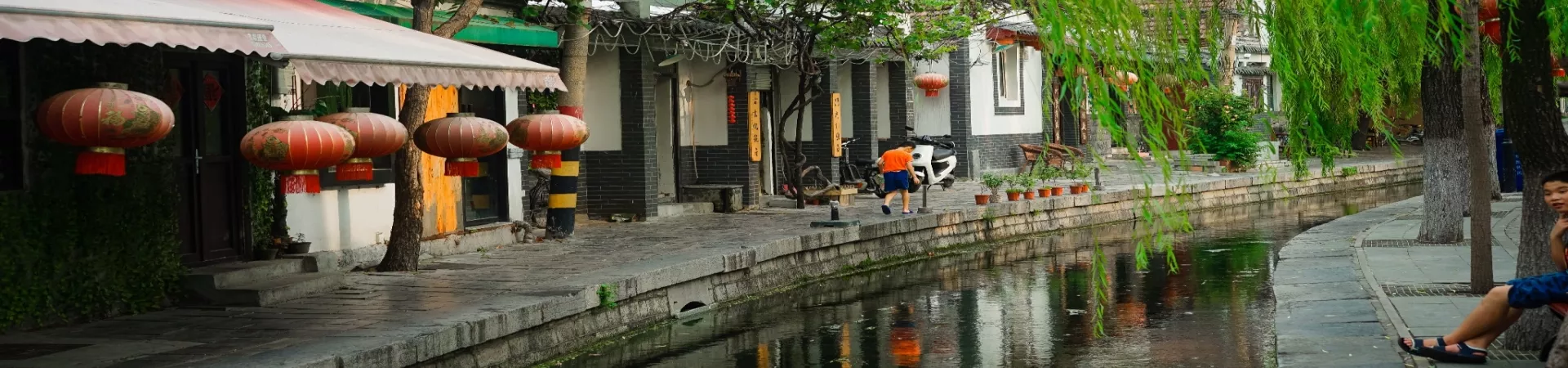
Section I: The Landscape of "Every Family with a Spring, Every Household with Willow" 1.1 The Symbiosis of Water and Dwelling The defining, mesmerizing feature of Qu Shui Ting Street is its intimate and harmonious relationship with Jinan's famed spring water. The street is gracefully bisected by the clear, gentle stream of the Qu Shui (Curving Water), a tributary sourced from the nearby Baotu Spring complex. This isn't a decorative water feature; it is the artery of the neighborhood. The architecture organically adapts to this aqueous landscape: one side of the narrow lane is lined with traditional residences featuring grey brick walls and dark red-tiled roofs, while the opposite side opens directly onto the flowing stream. This layout creates a captivating scene where the built environment and natural element engage in a constant, quiet dialogue.
1.2 A Scene Preserved from Literature The iconic view along the stream perfectly mirrors the celebrated description from Liu E's late-Qing dynasty novel, The Travels of Lao Can: "家家泉水,户户垂杨" (jiā jiā quán shuǐ, hù hù chuí yáng) – "every family has access to spring water, every household is shaded by weeping willows." Today, this is not mere hyperbole. Visitors will witness the graceful drape of willow branches brushing the water's surface, their reflection dancing on the current. The constant, soothing murmur of the stream provides a timeless acoustic backdrop, connecting the modern visitor directly to the romanticized landscape chronicled by writers and poets for hundreds of years. It is a rare instance where literary imagination and tangible reality converge seamlessly.
Section II: The Rhythm of Daily Life Along the Stream 2.1 The Stream as Community Hub Beyond its picturesque beauty, the stream on Qu Shui Ting Street remains an integral, functional part of community life. It is common to see local residents, often elderly neighbors who have lived here for decades, engaging in age-old routines by the water's edge. They may be meticulously washing vegetables, rinsing rice for the evening meal, or gently laundering clothes in the cool, fresh spring water. These activities are performed with a practiced, unhurried rhythm that stands in stark, peaceful contrast to the bustle of the modern city just blocks away. This ongoing use of the stream injects the "old street" with undeniable vitality and authenticity; it is palpably alive, not preserved behind glass.
2.2 A Transition from Quiet Mornings to Lively Evenings The character of the street evolves beautifully with the day. Mornings often belong to the locals, filled with the soft sounds of water and quiet greetings. As the day progresses, the street gradually awakens to tourism. The section closer to the bustling Furong Street often becomes more animated, with visitors admiring the scene, children excitedly pointing at the water, and photographers capturing the play of light on the ancient tiles and flowing stream. Yet, even with visitors, the essential, tranquil spirit of the place persists, anchored by the endless flow of the springs.
Section III: Exploring the Lane and Its Environs 3.1 Architectural Nuances and Historical Markers A discerning eye will appreciate the subtle details in the residential architecture—the worn stone steps leading down to the water, the wooden gates bearing faded couplets, and the simple, elegant lines of the roofs. While the street itself is the main attraction, it also serves as a gateway to a wider historical network. It connects key cultural sites like the Daming Lake scenic area to the north and the traditional shopping alley of Furong Street to the south. Wandering the smaller, interconnected alleys (hutongs) that branch off from Qu Shui Ting Street can lead to surprising discoveries: a hidden, quieter spring pool or a small, family-run teahouse.
3.2 Cultural Artifacts and Local Crafts Scattered along the street are small shops and stalls that cater to both locals and tourists. Here, one can find artisans practicing traditional crafts, perhaps calligraphers or painters inspired by the surroundings. Vendors sell local snacks, such as sweet and crispy jianbing (crepes) or Jinan-style pancakes, allowing for a culinary exploration that complements the visual feast. The most memorable souvenirs are often those tied to the water culture: beautifully packaged spring water tea or photographs of the iconic willow-and-stream scenery.
Practical Information for the Visit * Admission Fee: There is no charge to enter and walk along Qu Shui Ting Street. It is a public thoroughfare and open space. * Suggested Duration: To fully absorb the atmosphere, a visit of 1 to 3 hours is recommended. This allows time for a leisurely stroll, photography, perhaps sitting by the stream for contemplation, and exploring the adjacent hutongs or connecting to Daming Lake. * Operating Hours: The street is accessible 24 hours a day. Different times offer distinct experiences: the soft morning light is ideal for photography and observing local life, while the street under the glow of traditional-style lanterns in the evening is particularly romantic and atmospheric. * Best Approach: For the most impactful experience, start your walk from the south near the Furong Street area, allowing the quiet charm of Qu Shui Ting Street to gradually unfold before you as you amble northward towards the expansive vista of Daming Lake.