De'anli
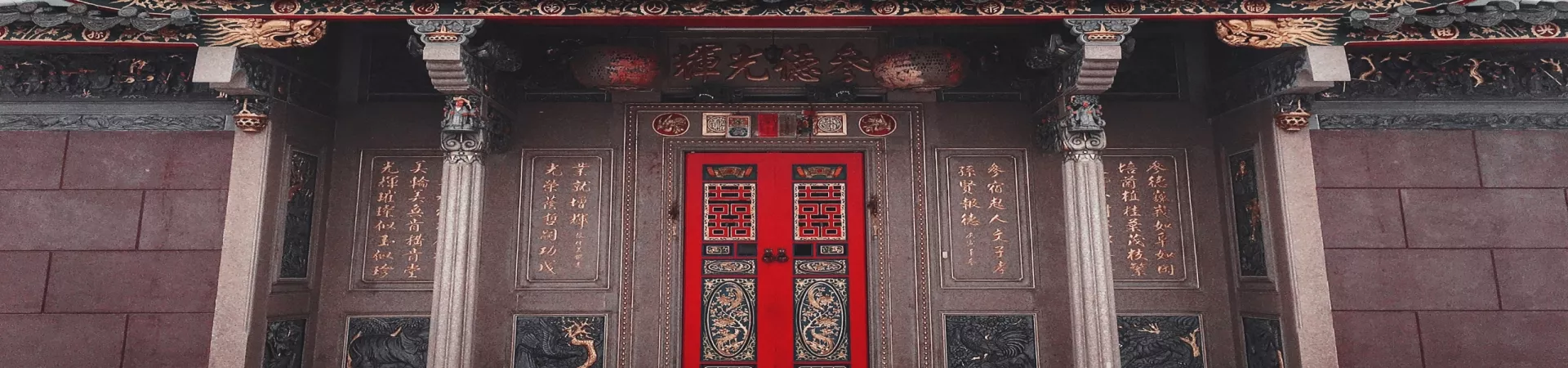
Subtitle: A Journey Through Time: Unveiling the Grandeur of De'anli, a Qing Dynasty Masterpiece in Puning
Introduction: A Colossal Legacy in Southern China
Nestled in the southeastern part of Hongyang Town, Puning City, within China's Guangdong Province, lies De'anli—an architectural marvel that silently narrates tales of power, prestige, and meticulous craftsmanship from the late Qing Dynasty. This is not merely a collection of old buildings; it is one of Guangdong's most rare and expansive residential architectural complexes from the feudal era. Originally the prestigious mansion of Fang Yao, the formidable Provincial Naval Commander of Guangdong during the Qing Dynasty, its construction began in the 10th year of the Tongzhi Emperor's reign (1871 AD). The entire compound, a testament to long-term planning and resources, took approximately two decades to complete, evolving into a sprawling estate that commands awe and respect.
Architectural Layout and Philosophy: A Tripartite Fortress
The genius of De'anli lies in its structured, phased development and profound symbolic design. The complex is distinctly divided into three interconnected yet sequential sections: the Old Fortress ("Lao Zhai"), the Middle Fortress ("Zhong Zhai"), and the New De'anli ("Xin De'anli"). This tripartite structure reflects both the expansion of the family's stature and the sophisticated architectural ideologies of the era.
The Old Fortress: "A Hundred Birds Paying Homage to the Phoenix" The oldest section, the Old Fortress, is designed according to the traditional layout principle poetically known as "Bai Niao Chao Huang" (A Hundred Birds Paying Homage to the Phoenix). This configuration features a central main hall (representing the phoenix) symmetrically surrounded by numerous smaller buildings and courtyards (the birds). It symbolizes centrality, harmony, and the reverence of subordinate elements towards the core, mirroring the social hierarchy and familial order within the commander's household.
The Middle Fortress and New De'anli: "Four Horses Pulling a Carriage" The later sections, the Middle Fortress and the New De'anli, were constructed following the "Si Ma Tuo Che" (Four Horses Pulling a Carriage) layout. This is an even grander architectural scheme characteristic of the Chaoshan region. It involves a central axial structure (the carriage) flanked by parallel rows of buildings on four sides (the horses), forming a deeply symmetrical, orderly, and expansive compound. This layout signifies power, momentum, and stability.
Scale and Defensive Features: A Village Within Walls
The sheer scale of De'anli is breathtaking, blurring the line between a private mansion and a fortified village. Encompassing a total land area of approximately 63,000 square meters, with a built-up area of around 32,000 square meters, the complex houses roughly 773 rooms across its three sections. These rooms include ancestral halls, living quarters, study rooms, ceremonial spaces, and utility rooms, forming a completely self-sufficient community. A critical defensive and aesthetic feature is the protective moat that encircles the entire compound. This moat served as a crucial line of defense in its time and now adds a serene, reflective quality to the estate's imposing presence, separating the historic world within from the modern one outside.
Practical Visitor Information
To fully appreciate De'anli, planning your visit with the following practical details in mind is essential.
Ticketing and Operating Hours The site operates with an admission fee. A general access ticket is priced at 13 RMB per person, applicable throughout the year. De'anli is open to visitors from 9:00 AM to 5:00 PM daily. It is important to note that the complex is open every day of the week without closure on Mondays or Tuesdays, offering flexibility for travel schedules.
Mandatory Reservation Policy To preserve the site and ensure a quality experience, De'anli manages visitor flow through a mandatory reservation system. Access is not granted by simply purchasing a ticket on arrival.
- Reservations must be made in advance via the official WeChat public account: "德安里景区" (De'anli Scenic Area).
- The system employs time-slot bookings to prevent overcrowding, with a cap of 100 visitors each for the morning and afternoon sessions.
- Each individual is limited to a maximum of two reservations per week.
- Reservations are valid only for the specific date and time slot selected; they expire and become void if not used as scheduled.
Transportation Guide Reaching De'anli is straightforward via public transport. Visitors can take the Puning Bus Route 2 and alight at the Daxin Shopping Mall (Daxin Shangcheng) bus stop. From there, the entrance to De'anli is within comfortable walking distance. For those driving, navigation to "De'anli, Hongyang Town, Puning" is recommended, though on-site parking availability should be checked beforehand.
Contact Details For any inquiries prior to your visit, you may contact the management via telephone at 0663-2418866 or 13376518778.
Exploring De'anli is akin to walking through a living history book. As you pass through its gateways, traverse its courtyards, and run your hands along the weathered brick and wood, you are connecting with the legacy of a pivotal historical figure and the artisans who brought his vision to life. The harmony of the "Hundred Birds" and the strength of the "Four Horses" are not just architectural concepts but palpable atmospheres that define this extraordinary cultural treasure in the heart of Guangdong.