Wuzhen Xizha Scenic Area - Yuelao Temple
Subtitle: A Quiet Sanctuary of Love and Fate in Wuzhen's Water Town
Introduction: The Unassuming Guardian of Hearts
Nestled within the bustling, canal-laced expanse of the Wuzhen Xizha Scenic Area in Jiaxing, China, lies a site of profound cultural and romantic significance that often belies its modest physical presence: the Yue Lao Temple. Unlike the grand, ornate temples that dominate many Chinese landscapes, Yue Lao Temple presents itself with a quiet, almost humble demeanor. Situated along the route frequented by the area's tourist trams, it is easy for the hurried visitor to pass by without a second glance. However, this unpretentious facade guards a reputation that resonates deeply within the hearts of countless hopeful romantics and curious travelers. The temple is a dedicated sanctuary to Yue Lao, the celestial matchmaker of Chinese mythology, who is believed to weave an invisible red thread between two individuals destined to be soulmates. It is this enduring legend that transforms this simple structure from a mere architectural point of interest into a vibrant, living testament to love, hope, and human connection.
The Atmosphere: A Canopy of Wishes and Whispers
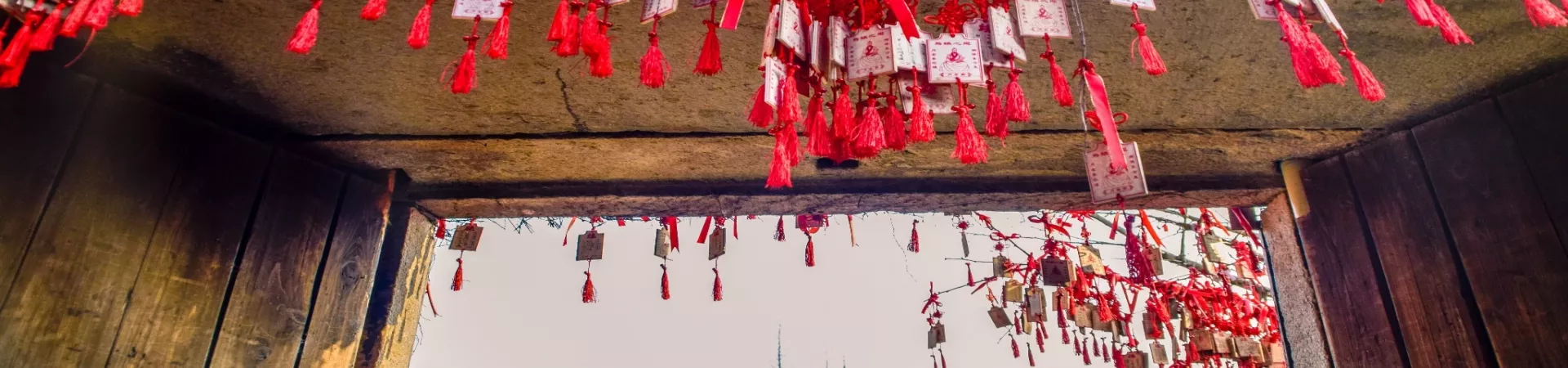
Approaching the Yue Lao Temple, the first and most striking feature is not the building itself, but the magnificent, wish-laden tree that stands sentinel before its entrance. This ancient arboreal guardian serves as the physical and symbolic heart of the site. Its sprawling branches are adorned with a breathtaking tapestry of thousands upon thousands of crimson red silk ribbons, each one a personal petition, a whispered dream, or a heartfelt prayer. The ribbons flutter gently in the breeze, creating a soft, rustling symphony of hopes. Visitors have the opportunity to participate in this beautiful tradition by purchasing a ribbon from a nearby vendor. The act of inscribing a wish—be it for finding true love, strengthening an existing bond, or seeking marital harmony—and carefully tying it to the tree is a poignant and personal ritual. The dense, red canopy overhead is a powerful visual representation of collective yearning and faith, with local lore strongly asserting the efficacy and spiritual potency of this practice. The air around the tree feels charged with positive intention, making it a profoundly moving spot for contemplation, even for those who do not partake in the ritual themselves.
Practical Information for Visitors
1. Location and Access The Yue Lao Temple is conveniently located inside the Wuzhen Xizha Scenic Area. It is situated along a main pedestrian and tram route, making it highly accessible. The most authentic way to reach it is by foot, allowing you to absorb the charm of the ancient water town's stone-paved lanes, arched bridges, and traditional riverside architecture along the way. The scenic area is well-signposted in both Chinese and English.
2. Admission and Opening Hours Access to the Yue Lao Temple is included in the general admission ticket for the Wuzhen Xizha Scenic Area. There is no separate entrance fee. The temple itself maintains specific operating hours, typically from 9:00 AM to 4:00 PM, daily throughout the year (Monday to Sunday). It is advisable to verify these times upon entry to the scenic area, as they can occasionally be subject to change for maintenance or during special events.
3. Suggested Duration and Experience A visit to the temple and its immediate surroundings is generally not a lengthy affair. Most visitors find that 30 minutes to one hour is sufficient to appreciate the wishing tree, explore the small temple interior, and soak in the atmosphere. The experience is less about architectural grandeur and more about cultural immersion and personal reflection. The interior of the temple houses a statue of Yue Lao, where visitors can make offerings or simply pay their respects in a moment of quiet reverence.
4. Additional Contacts For any specific inquiries related to the temple or the wider Xizha scenic area, the following contact numbers may be useful: 0573-88731088 or 0573-88731055.
Cultural Significance and Visitor Engagement
1. The Legend of Yue Lao Understanding the temple's role requires a glimpse into the myth it venerates. Yue Lao, often depicted as a benevolent old man under the moonlight, carries a book of marriages and a pouch of red threads. According to folklore, he ties one end of an invisible red thread around the ankle of one destined person and the other end around their future partner. This thread may stretch or tangle but never break, inevitably drawing the two together. This belief underscores every ribbon tied to the tree—each is a tangible representation of that mythical red thread, a personal appeal to the deity for his benevolent intervention.
2. A Ritual of Participation The act of writing and hanging a ribbon is the core interactive element for visitors. It transcends being a mere tourist activity, becoming a participatory cultural practice. Vendors nearby sell the ribbons, often with brushes and ink, allowing you to inscribe your wish in your own hand. The process encourages a moment of pause and sincerity amidst the often-hectic pace of touring.
3. A Photographic and Reflective Haven The visual spectacle of the wishing tree makes it one of the most photographed spots in Wuzhen Xizha. The contrast of the vibrant red ribbons against the green foliage and the aged wooden architecture provides a stunning backdrop. Beyond photography, the site offers a rare pocket of reflective calm. Whether you are seeking romantic fortune, appreciating the cultural narrative, or simply observing the heartfelt traditions of others, the Yue Lao Temple provides a unique, emotionally resonant space that highlights the human stories intertwined with China's historic landscapes. It stands as a beautiful reminder that within the grand narrative of history and architecture, it is often these intimate, faith-driven corners that hold the most enduring power.