Wuzhen East Gate
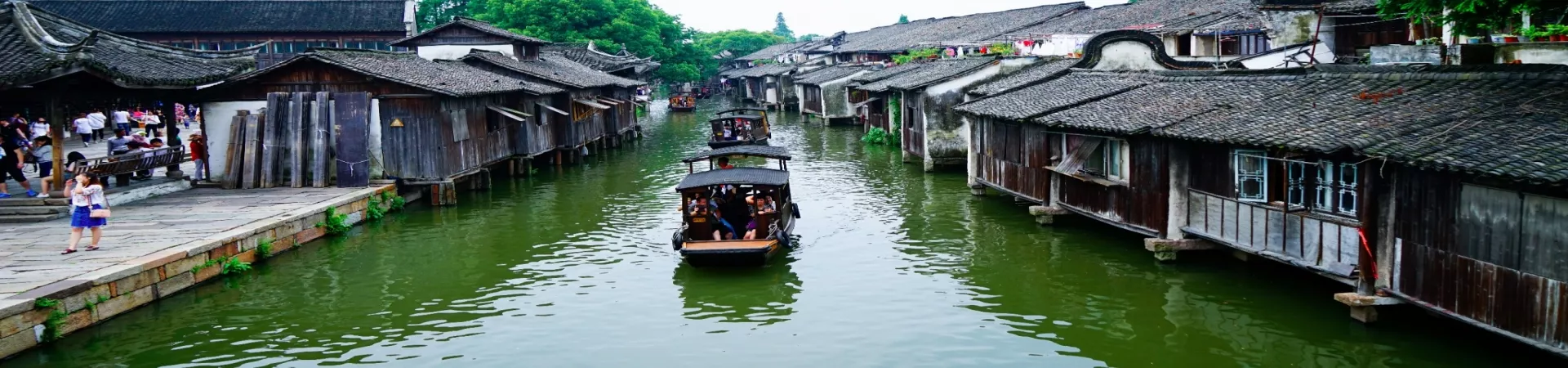
Subtitle: A Journey into the Timeless Water Town of Wuzhen's East Scenic Zone
Introduction: The Essence of a Jiangnan Water Town
Nestled in the heart of Jiaxing, Zhejiang province, the East Scenic Zone (Dongzha) of Wuzhen stands as a preeminent example of China's ancient water towns. It distinguishes itself not merely as a tourist destination but as a living, breathing museum of Jiangnan culture, offering visitors an authentic and immersive journey into a way of life shaped by centuries of history and tradition. Unlike its more extensively renovated counterpart, the West Scenic Zone (Xizha), East Scenic Zone captivates with its intimate scale, unadulterated architectural heritage, and vibrant local atmosphere. It is the ideal choice for travelers seeking to grasp the genuine essence of a Chinese water town, even if their time is limited to a day or two. Here, the past is not sealed behind glass but flows through the canals, resonates in the workshops, and lives in the daily rhythms of its residents.
The Architectural Harmony: A Symphony of Water, Bridges, and Dwellings
2.1 The Guiding Principle: Unity with Nature The fundamental charm of Dongzha lies in its exquisite and harmonious layout, a physical manifestation of the classical Chinese philosophical ideal of "harmony" (和, hé). The town is a masterpiece of organic urban planning from a bygone era, constructed in seamless unity with its aquatic environment. The design follows a simple yet profound logic: the canals form the streets, stone bridges connect the pathways, and houses are built directly along the waterways. This creates a captivating "town-on-water" aesthetic where land and liquid are inseparable.
2.2 Navigating the Labyrinth of Canals and Alleys Exploring Dongzha is best done on foot, meandering through its narrow, flagstone-paved lanes and across its myriad stone bridges. Each bridge offers a new, picturesque frame of the scene below: traditional wooden houses with whitewashed walls and dark grey-tiled roofs reflected in the tranquil green water, with occasional wooden boats gliding silently past. This interconnected network of water and land is not just scenic; it is the historical lifeblood of the town, once facilitating transport, commerce, and daily life.
A Living Cultural Tapestry: Traditions and Daily Life
3.1 Workshops, Shops, and the Pulse of Local Activity What truly sets Dongzha apart is its palpable living气息 (shēng huó qì xī, atmosphere of daily life). It remains a functioning community. As you stroll, you will encounter a fascinating array of traditional手工作坊 (shǒu gōng zuò fāng, handicraft workshops) and family-run shops. Here, artisans practice time-honored crafts in full view. You might witness the intricate process of making indigo-dyed blue calico fabric, observe the spinning of silk thread, or smell the distinctive aroma from a time-honored rice wine brewery. These are not staged exhibits but genuine trades, offering a rare glimpse into the artisanal heritage of the region.
3.2 Museums and Thematic Exhibitions Complementing the active workshops are several特色展馆 (tè sè zhǎn guǎn, special exhibition halls) and cultural sites scattered throughout the district. These venues delve deeper into specific aspects of local history and art. Key attractions include the Shadow Puppetry Theatre, where the ancient art of leather silhouette plays is kept alive through performances; the Sanbai Rice Wine Brewery, where you can learn about and sample the town's famed clear liquor; and the Xiuzhen Taoist Temple, a historic site offering insight into local religious practices. For literature enthusiasts, the Former Residence of Mao Dun provides a poignant look into the life of one of modern China's most celebrated writers, who called Wuzhen home.
3.3 Dynamic Performances and Folk Arts The cultural experience in Dongzha is dynamic. At scheduled times throughout the day, the quiet lanes and waterways come alive with traditional folk performances. One of the most breathtaking is the High Pole Boat Acrobatics, where a performer executes astonishing feats of balance and strength atop a flexible bamboo pole erected on a rocking boat—a testament to the skill and daring of local waterborne traditions. You may also encounter demonstrations of Chinese martial arts (quan) or other folk arts in designated squares, adding a layer of vibrant spectacle to the historical backdrop.
Practical Information for Visitors
4.1 Ticketing and Admission Details Planning a visit requires attention to the following practical details: * Standard Ticket Price: 110 RMB for adults. * Discounted Ticket (80 RMB): Applies to seniors aged 60 and over, active-duty military personnel, retired non-commissioned officers, and dependents of martyrs (with valid ID). * Concessionary Ticket (55 RMB): For children with a height between 1.2m and 1.5m, and full-time students (undergraduate and below) with a valid student ID card. * Free Admission: Granted to children under 1.2m or aged 6 and below, individuals with disabilities (with valid certificate), disabled military personnel, retired veteran cadres (with certificate), and licensed tour guides (with IC card). * Important Note: All ticket information is subject to change. It is highly recommended to verify the latest prices and policies directly with the scenic zone prior to your visit.
4.2 Operating Hours and Best Time to Visit The opening hours vary slightly by season: * Summer Schedule (June 1 - August 31): 08:00 - 17:30, with last entry at 16:30. * Winter Schedule (December 1 - February 28/29): 08:00 - 17:00, with last entry at 16:00. * Suggested Duration: A thorough exploration of Dongzha typically requires a minimum of 3 hours. To fully appreciate its ambiance, including visiting key sites, watching a performance, and leisurely wandering, allocating half a day is ideal.
4.3 Contact Information For the most current information, inquiries can be directed to the scenic area management via telephone at 0573-88731088.
In essence, Wuzhen's East Scenic Zone is a compact yet profoundly rich repository of cultural and architectural history. Its beauty lies in its authenticity—the gentle lapping of water against stone foundations, the murmur of daily life in its alleyways, and the enduring crafts practiced by its people. It offers a serene yet stimulating escape, inviting visitors to step out of time and into the enduring rhythm of a classic Jiangnan water town.