Hongyuantai Dyehouse
Subtitle: A Living Museum of Indigo Dyeing in Wuzhen's East Scenic Zone
1. Introduction: Stepping into a Legacy of Blue
Nestled within the historic waterways and ancient stone bridges of Wuzhen's East Scenic Zone in Jiaxing, Zhejiang, the Hongyuan Tai Dyehouse stands as a serene yet profound testament to China's rich textile heritage. More than just a static museum, it is a vibrant, operational center dedicated to preserving and showcasing the exquisite art of blue calico (蓝印花布, lán yìn huā bù) production. For any visitor to Wuzhen, a town famed for preserving the ambiance of a traditional Jiangnan water community, a visit to Hongyuan Tai offers a unique, sensory journey into the past. It connects you to an ancient craft that has colored Chinese daily life for centuries, allowing you to witness the meticulous processes firsthand, appreciate the stark beauty of indigo and white, and even take home a piece of this living history.
2. A Journey Through Time: The History of Hongyuan Tai
2.1. Origins and Legacy The story of Hongyuan Tai is deeply woven into the fabric of Wuzhen itself. Its origins trace back to the Song and Yuan dynasties (approximately 10th to 14th centuries), a period when the town flourished as a commercial hub. Initially located in the southern district (Nanzha), the dyehouse established itself as a cornerstone of local industry. The craft of blue calico dyeing, utilizing indigenous plants and resist-dyeing techniques, became synonymous with the region's artisanal output.
2.2. Relocation and Preservation In the late 19th century, during the Guangxu reign of the Qing dynasty, the dyehouse was relocated to its present, more accessible location within what is now the East Scenic Zone. This move likely coincided with the evolving commercial patterns of the town. Today, while no longer a large-scale commercial producer, the site has been meticulously preserved and adapted as an essential cultural attraction. Its transformation into a public-facing workshop and exhibition space ensures that the traditional knowledge and skills are not lost but are instead actively demonstrated and celebrated for educational and cultural purposes.
3. The Heart of the Craft: Experiencing Blue Calico
3.1. The Indigo Dyeing Process: A Step-by-Step Demonstration The core experience at Hongyuan Tai is the immersive observation of the complete blue calico creation process. Skilled artisans, often with decades of experience, perform each stage with practiced ease, offering visitors a rare glimpse into pre-industrial textile artistry.
3.1.1. Pattern Creation and Stencil Carving The process begins with design. Intricate patterns, featuring traditional motifs like flowers, birds, and symbolic characters representing good fortune, are first drawn on paper. These designs are then meticulously carved by hand into durable stencils made from layers of oiled paper or thin leather. This stage requires immense precision, as the stencil determines the final, crisp white pattern that will appear against the deep blue background.
3.1.2. Applying the Resist Paste A paste made from a mixture of soybean flour and slaked lime is carefully scraped over the stencil onto the pure white, hand-woven cotton cloth. Where the paste penetrates the cut-out areas of the stencil, it forms a protective coat that will resist the indigo dye. This results in the cloth being covered in a negative of the final design.
3.1.3. The Magic of the Indigo Vat The treated cloth is then dipped into the central element of the craft: the indigo dye vat. The deep blue color is derived from the fermented leaves of the indigo plant. Dyeing is not a single dip but a repeated process. The cloth is submerged, oxidized in the air, and then submerged again, sometimes dozens of times, to achieve the desired depth of color—a rich, luminous blue that is both vibrant and soothing.
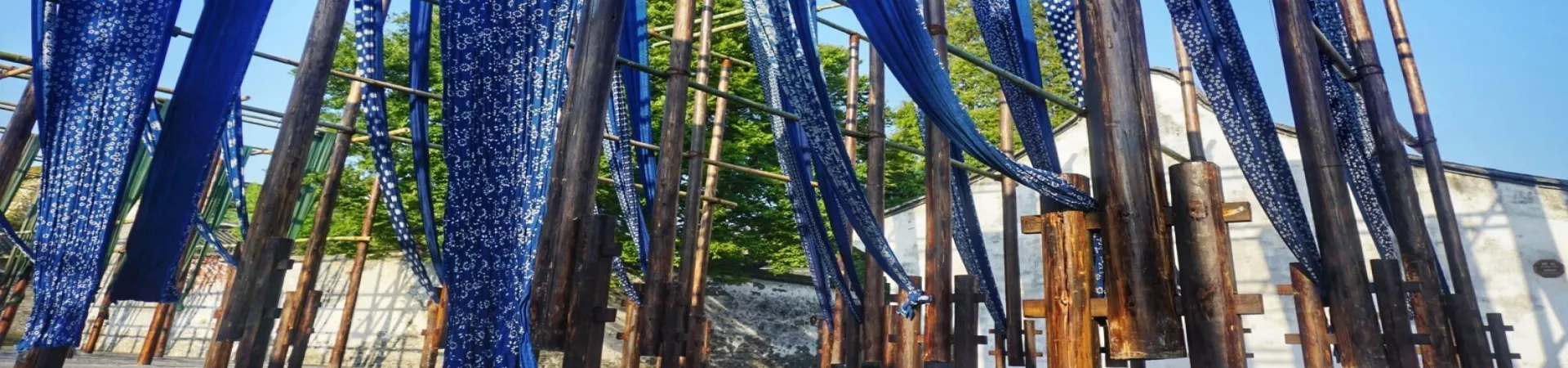
3.1.4. Revealing the Pattern After the final dyeing and thorough drying, the resist paste is scraped off. This is the moment of revelation: where the paste was, the original white fabric remains pristine, creating the iconic blue-and-white patterned cloth. The final cloth is then rinsed and dried in the open air, a picturesque sight with long bolts of blue calico fluttering gently in the breeze around the dyehouse courtyard.
3.2. A Center for Blue Calico Products Beyond the workshop, Hongyuan Tai also functions as a premier collection and distribution center for high-quality blue calico products. The adjacent shop is far from a typical souvenir outlet; it is a curated gallery of functional art.
4. Practical Information for Your Visit
4.1. Location and Access Hongyuan Tai Dyehouse is situated within the well-preserved East Scenic Zone (东栅, Dōng Zhá) of Wuzhen Ancient Town. Access is straightforward and part of the charm: the site is only reachable on foot within the pedestrianized ancient town area. A leisurely stroll along the cobbled lanes and canals will lead you directly to this working landmark.
4.2. Admission and Hours Admission to the dyehouse is included in the general entrance ticket for the Wuzhen East Scenic Zone. There is no separate fee to enter Hongyuan Tai itself. Operating hours vary seasonally: * Summer Hours (June 1 - August 31): 07:00 - 18:00 (Last admission at 18:00). * Winter Hours (December 1 - February 28/29): 07:00 - 17:30 (Last admission at 17:30). It is advisable to verify the exact closing times on the day of your visit, as they can be subject to change.
4.3. Making the Most of Your Visit 4.3.1. Timing Your Experience Plan to spend approximately 45 minutes to an hour at the dyehouse. This allows sufficient time to watch a full cycle of demonstrations, ask questions of the artisans (though note they may be focused on their work), explore the exhibition areas explaining the history and tools, and browse the shop at a relaxed pace.
4.3.2. Souvenirs and Keepsakes The on-site shop offers an exceptional opportunity to acquire authentic, hand-crafted blue calico items. These range from small, affordable tokens like bookmarks, fans, and coin purses to larger, more substantial pieces such as table runners, scarves, wall hangings, and traditional clothing. Purchasing an item here directly supports the preservation of the craft and provides a meaningful, beautiful memento of your journey into China's artisanal past.