Tongjiang Sanjiangkou Tourist Area
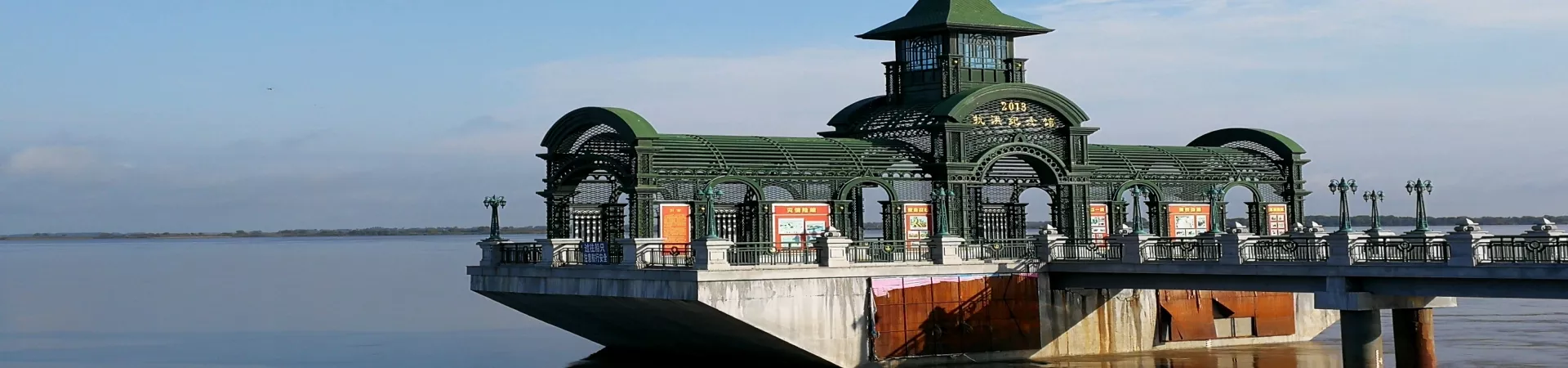
Subtitle: Where Three Mighty Rivers Converge: A Traveler's Guide to Tongjiang's Sanjiangkou
Introduction: The Confluence of History and Nature
Nestled in the far northeastern reaches of Heilongjiang Province, near the city of Tongjiang under the jurisdiction of Jiamusi, lies a geographical and cultural spectacle known as the Sanjiangkou, or "Three-River Mouth." This is not merely a scenic spot; it is a powerful, living junction where three of Northeast Asia's most significant rivers—the Heilongjiang (Amur), the Songhuajiang (Sungari), and the Heilongjiang's tributary, the Wusulijiang (Ussuri)—merge their waters. For centuries, this confluence has served as a vital crossroads for indigenous cultures, a strategic frontier, and a witness to the region's evolving history. Today, the Sanjiangkou Tourist Area offers visitors a profound experience, blending majestic natural landscapes with deep historical resonance and unique borderland culture. It is a place to witness the sheer scale of river systems, reflect on the past, and feel the palpable connection between land, water, and nation.
1. The Geographical Marvel: A Triptych of Waters
1.1. The Mighty Trifecta The primary draw of Sanjiangkou is, unequivocally, the dramatic confluence itself. The three rivers, each with distinct characteristics, meet in a broad, expansive vista. The Songhuajiang, flowing from the south, often appears with a yellowish hue, carrying sediments from its long journey. The Wusulijiang, arriving from the southeast, typically presents a clearer, darker green profile. These two streams flow side-by-side for several kilometers without immediately mixing, creating a striking, naturally divided "two-color river" effect. They then jointly pour into the vast, leaden-blue flow of the Heilongjiang, which forms the border with Russia. This tri-color spectacle is most vivid on clear, sunny days and symbolizes the harmonious yet distinct union of forces.
1.2. The Monument and the View At the heart of the scenic area stands the iconic "Sightseeing Tower" and the symbolic "Mark of the Confluence." The tower provides a panoramic, elevated perspective essential for appreciating the grand scale of the river junction. From this vantage point, the sheer width of the combined waterways and the distant Russian shoreline on the opposite bank become awe-inspiringly clear. The "Mark of the Confluence" is a popular landmark for photographs, physically representing the precise point of meeting. The area is meticulously landscaped with parks, walkways, and viewing platforms, allowing for leisurely strolls along the riverbanks.
2. Layers of History and Cultural Significance
2.1. An Ancient Crossroads Long before modern borders were drawn, the Sanjiangkou region was inhabited by indigenous groups like the Hezhen (Nanai) and other Tungusic peoples, whose lives and cultures were intimately tied to these rivers. They were master fishermen and hunters, developing rich mythologies and traditions centered on the waterways. The rivers served as highways for communication, trade, and cultural exchange among different tribes.
2.2. A Modern Frontier and Symbol In more recent history, the Sanjiangkou gained significance as a national boundary. The Heilongjiang and Wusulijiang rivers now demarcate the border between China and Russia. This imparts a strong sense of being at the edge of the nation. The area is imbued with patriotism, highlighted by attractions like the "Starting Point Square" of the Chinese Eastern Railway, which recalls historical infrastructure projects. The most potent symbol here is the "East Pole Plaza," which features a massive monument inscribed with the characters "Dong Ji Guang Chang" (Eastern Pole Plaza). It emphasizes Tongjiang's claim as one of China's easternmost points, a place where the first rays of the morning sun touch the country. This theme is further explored at nearby Fuyuan County's "Black Blind Island" (Heixiazi Island), a reclaimed territory at the confluence, which has become a symbol of national territory and resilience.
3. Practical Information for the Visitor
3.1. Location and Access The Sanjiangkou Tourist Area is located approximately 4 kilometers northeast of downtown Tongjiang City. Tongjiang itself is accessible by road (highway from Jiamusi, about a 2.5-hour drive) and by train. Jiamusi Dongjiao Airport is the nearest major air hub. From Tongjiang city center, taxis or local tour buses can easily reach the scenic area.
3.2. Opening Hours and Best Time to Visit Opening Hours: The outdoor scenic area and park are open 24 hours a day, every day of the year. This allows for flexibility in planning and the opportunity to witness stunning sunrises or sunsets over the rivers. However, specific facilities within the area, such as the Sightseeing Tower, museums, or exhibition halls, may have their own operating hours, typically from around 8:00 AM to 5:00 PM. It is advisable to check locally for any seasonal variations or maintenance closures for these indoor attractions.
The optimal time for a visit is from late spring to early autumn (May to October). During these months, the weather is pleasant, the foliage is green, and the rivers are unfrozen, making the color contrast most visible. Summer offers lush landscapes, while early autumn provides brilliant fall colors. Winters are extremely cold, with the rivers completely frozen into a vast, white plain of ice and snow—a dramatically different but equally impressive sight for those prepared for sub-zero temperatures.
3.3. Key Attractions Within the Area * The Sightseeing Tower: For the definitive aerial view. * The Confluence Marker and Eastern Pole Plaza: For symbolic photos and national pride. * Riverside Walkways and Parks: For leisurely contemplation. * Historical Monuments and Steles: Detailing the geography and history of the region. * Border Observation Points: Offering views across to the Russian side (binoculars are useful).
4. Enhancing the Sanjiangkou Experience
4.1. Suggested Activities Beyond sightseeing, engage with the environment. Take a river cruise (operational in warmer months) to get onto the water and experience the confluence from its surface. Visit the Hezhen Ethnic Museum in Tongjiang city to deeply understand the indigenous culture that thrived here. Sample local river fish cuisine, a specialty of the region. If time permits, combine the trip with a visit to the aforementioned Black Blind Island in Fuyuan for a comprehensive "easternmost point" experience.
4.2. Travel Tips * Border Regulations: This is a sensitive border area. Always carry your passport or ID. Do not attempt to approach or cross the river boundary, and avoid using drones without explicit prior permission from local authorities. * Weather Preparedness: Weather can change rapidly. Bring layers, sun protection in summer, and extremely warm clothing in winter. Sturdy walking shoes are recommended. * Accommodation: Overnight stays are best arranged in Tongjiang city, which offers a range of hotels and guesthouses. The scenic area itself is primarily for daytime exploration.
In conclusion, the Sanjiangkou Tourist Area is a destination that operates on multiple levels. It is a stunning natural phenomenon, a lesson in geography, a page from history books, and a touchstone of modern national identity. It invites visitors not just to see a sight, but to comprehend a place where landscapes are inseparable from the stories they carry.