Dongji Pagoda
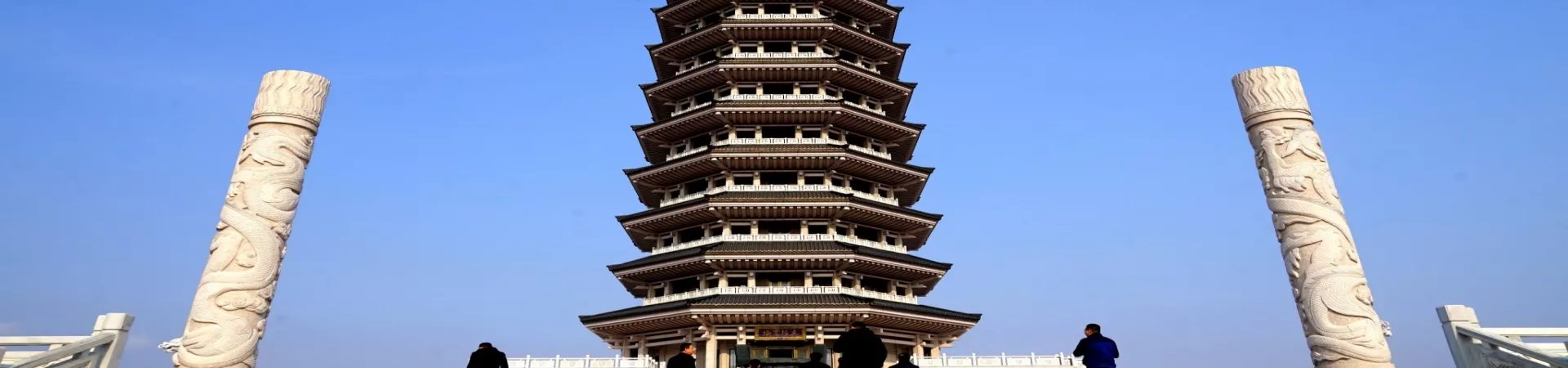
Subtitle: A Journey to the Easternmost Pagoda: Unveiling the Majesty of Jiamusi's Landmark
1. Introduction: The Sentinel of the East Rising majestically from the banks of the mighty Heilongjiang River in Jiamusi, Heilongjiang Province, the Dongji Pagoda (Eastern Pole Pagoda) stands as a monumental symbol of China's eastern frontier. More than just an architectural marvel, it represents a geographical and cultural milestone, marking one of the very first places in the vast nation to greet the morning sun. This structure is not merely a tower; it is a profound statement in stone, wood, and symbolism, designed to embody national unity, historical continuity, and the awe-inspiring spirit of the Far East. For any visitor, it offers a unique blend of grand-scale artistry, profound cultural metaphor, and breathtaking panoramic views, serving as the undisputed centerpiece of the Dongji Square complex.
2. Architectural Grandeur and Design Philosophy
2.1. Structure and Dimensions The Dongji Pagoda is an imposing figure, commanding the landscape with its total height of 81 meters. This vertical journey begins 4 meters below ground with a solemn digong (underground palace), rises through an 8-meter-tall solid base, soars through the 65.7-meter main pagoda body, and culminates in a 7.3-meter ornate spire (tasha). Encompassing a total floor area of 7,140.18 square meters, the pagoda's nine stories present a classic octagonal cross-section, a hallmark of traditional Chinese tower architecture. The space within gracefully transitions from the expansive 594.65 square meters on the ground floor to the more intimate 328.76 square meters on the topmost ninth level, guiding visitors on an ascending path that feels both grand and purposeful.
2.2. Style and Aesthetic The pagoda's design is a conscious homage to the golden ages of Chinese civilization, drawing primary inspiration from the robust and dignified styles of the Han and Tang dynasties. This choice is deeply significant, as those eras were periods of immense cultural flourishing, territorial expansion, and national confidence. The pagoda’s louge style—featuring verandas, overhanging eaves, and intricate dougong bracketing—creates a rhythmic, layered silhouette against the sky. This architectural language does not seek to replicate a specific historical building but rather evokes the timeless spirit and monumental grace of ancient Chinese watchtowers and pavilions, connecting the contemporary landscape to a proud historical lineage.
3. The Symbolic Universe of Dongji Square The pagoda does not stand in isolation; it is the central jewel in the meticulously planned cosmic diagram of Dongji Square. The entire plaza is conceived as a giant Taiji symbol, with a diameter of 171 meters, covering 31,000 square meters including its encircling road.
3.1. Iconography of Unity and Protection The two poles of the Taiji circle are anchored by majestic stone sculptures: a turtle and a qilin (a mythical hooved creature). In Chinese cosmology, the turtle symbolizes longevity, stability, and the earth, while the qilin represents benevolence, prosperity, and auspiciousness. Encircling the main plaza are 56 intricately carved bluestone pillars, each adorned with coiling dragons in relief. This number is a direct and powerful representation of the 56 ethnic groups of China, their collective strength and unity "supported" by these dragon columns. Dragons, ancient symbols of imperial power and celestial vigor, here transform into guardians of national harmony.
3.2. Layout and Peripheral Features The main plaza is constructed on two stepped terraces, creating a 4-meter elevation change that adds dramatic effect and emphasizes the pagoda's dominance. A moat-like water channel surrounds the plaza's side walls, reinforcing the imagery of a protected, sacred precinct. Beyond this water feature, a ring road frames the complex. At the four cardinal points—north, south, east, and west—this road widens into platforms featuring monumental bronze ding (ancient ritual vessels symbolizing state authority) and towering, exquisitely carved dragon pillars that seem to hold up the sky. The entire square's datum level is set at an elevation of 41 meters above sea level, a carefully chosen figure that further integrates the complex into its geographical context.
4. Practical Information for Visitors To fully experience the Dongji Pagoda and its square, planning is essential.
4.1. Visiting Hours and Access The site is open to the public daily from 8:00 AM to 5:00 PM. It is crucial for visitors to note that the last admission is at 3:00 PM, allowing a minimum of two hours to explore the vast square and ascend the pagoda. This schedule is maintained throughout the year, from January 1st to December 31st. Visitors are advised to arrive well before the 3:00 PM cutoff to ensure ample time, especially considering potential queues for pagoda entry and the desire to appreciate the extensive outdoor sculptures and layouts without rush.
4.2. The Experiential Ascent The climb through the pagoda's nine levels is a journey in itself. Each floor offers progressively wider views of the surrounding riverine landscape, the city of Jiamusi, and the endless horizons towards Russia. The interior often hosts cultural exhibitions related to the region's history, ethnic culture, and the significance of the "Eastern Pole." Reaching the top balcony provides a literal and figurative high point: standing at 81 meters above the ground, one witnesses the vastness of the Heilongjiang Basin and feels the symbolic weight of being at the nation's eastern gateway, a place where day begins.