China Heixiazi Island Wetland Park
Subtitle: A Journey to the Easternmost Wetlands: Nature, History, and Tranquility at Heixiazi Island
Introduction: Where Land, Water, and History Converge Nestled at the confluence of the Heilongjiang (Amur) and Ussuri Rivers, marking the easternmost terrestrial point of China, lies the Heixiazi Island Wetland Park. More than just a scenic natural reserve, this unique destination is a profound symbol of peaceful diplomacy and ecological wonder. The island's modern history is integral to its identity: following a 2008 border agreement, the western half of Heixiazi Island was returned to China by Russia, while the eastern half remains under Russian administration. This peaceful resolution transformed the area into a remarkable testament to bilateral cooperation, with the wetland park on the Chinese side now offering visitors unparalleled access to a pristine, riverine ecosystem that was off-limits for decades. The park is not merely a collection of marshes and waterways; it is a living landscape where the whispers of history are carried on the breeze across the reed beds, inviting exploration and contemplation.
1. A Tapestry of Natural Wonders: The Wetland Ecosystem 1.1. A Biodiverse Sanctuary The core appeal of Heixiazi Island Wetland Park is its vast, undisturbed wetland ecology. Spanning a complex network of marshes, shallow lakes, meandering river channels, and lush meadows, the park serves as a critical habitat and migratory corridor for an astonishing array of wildlife. The air thrums with the calls of hundreds of bird species. In spring and autumn, the skies and waters come alive with countless migratory birds, including majestic oriental white storks, rare red-crowned cranes, and various species of geese and ducks. The wetlands are equally vital for resident species, providing a rich feeding and breeding ground.
1.2. Landscape and Seasonal Palette The visual landscape is a dynamic masterpiece that changes with the seasons. In summer, the wetlands erupt in a sea of vibrant green, with dense reeds and lush grasses stretching to the horizon, punctuated by the brilliant hues of wildflowers. Autumn transforms the vista into a breathtaking canvas of gold, amber, and russet as the reed beds mature, creating a warm, glowing panorama under the clear blue sky. Winter covers the entire scene in a silent, pristine blanket of snow, turning the waterways into icy trails and offering a stark, minimalist beauty. The constant presence of the mighty Heilongjiang River, framing the wetlands, adds a sense of serene power to the environment.
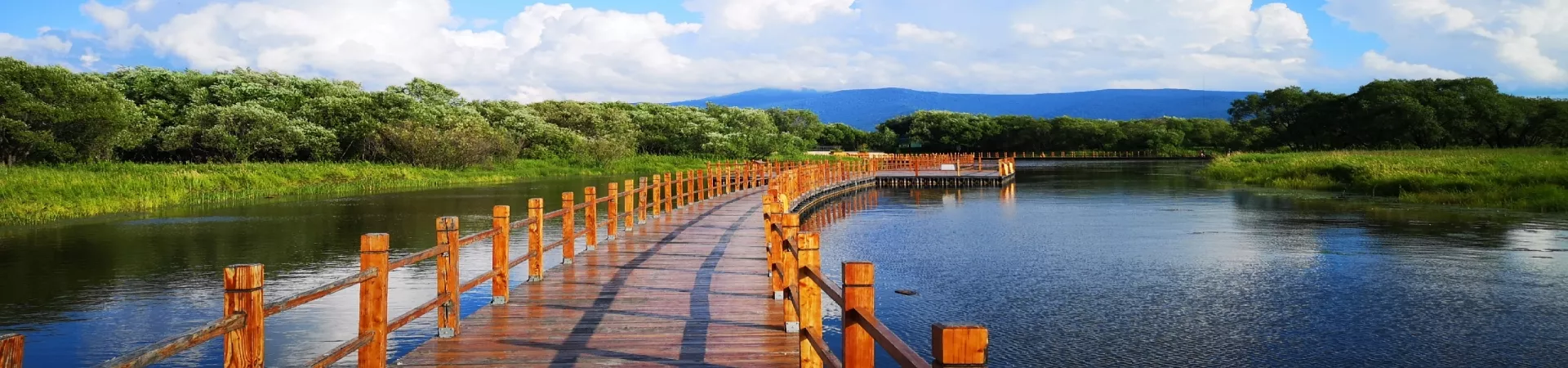
2. The Visitor Experience: Immersion and Exploration 2.1. Navigating the Wetlands To protect the fragile environment while allowing intimate access, the park has developed an extensive network of elevated wooden boardwalks and viewing platforms. These carefully constructed paths wind through the heart of the marshes, enabling visitors to walk over the water and deep into the reed beds without disturbing the habitat. The boardwalks lead to multi-story observation towers, which provide commanding 360-degree views of the wetland expanse, the winding rivers, and, on a clear day, a distant view of the Russian landscape across the water. These vantage points are ideal for birdwatching, photography, and simply absorbing the immense scale and peace of the natural surroundings.
2.2. Activities and Key Sights A visit typically revolves around mindful immersion. Key activities include: * Birdwatching and Photography: Bring binoculars and a long lens. The park is a paradise for capturing wildlife and vast landscapes, especially during the golden hours of sunrise and sunset. * The Easternmost Point Monument: A significant landmark within the park is the stele marking the "Easternmost Point of Chinese Territory." Standing here, at the tip of the nation, with the confluence of two great rivers before you, is a powerfully evocative experience, blending geographic novelty with a sense of national geography. * Educational Engagement: Interpretive signs along the boardwalks detail the wetland's ecology, its importance for migratory birds, and the unique history of Heixiazi Island itself, enriching the visit with context.
3. Essential Practical Information for Your Visit 3.1. Admission and Operating Hours The park maintains specific opening hours to manage access effectively. It is open daily from 08:00 to 16:30, with the last admission granted at 15:30. Visitors should plan their arrival accordingly, as the extensive boardwalk system requires several hours to appreciate fully. The admission fee is set at 50 RMB per person. It is always advisable to confirm these details prior to your journey, as operational times can be subject to change for maintenance or seasonal reasons.
3.2. Planning Your Trip * Time Allocation: To fully experience the boardwalks, visit the observation towers, and enjoy the scenery at a leisurely pace, a minimum of 3 hours is recommended. Dedicated photographers or birdwatchers may wish to allocate half a day or more. * Best Time to Visit: The park is visually stunning year-round, but the prime periods are late spring (May-June) and autumn (September to early October). These seasons offer mild weather, active birdlife (particularly during migration), and the spectacular autumn colors. * What to Bring: Given the exposed nature of the boardwalks, prepare for the weather. Essentials include sun protection (hat, sunscreen) in summer, warm layered clothing in spring and autumn, and sturdy, comfortable walking shoes. Don’t forget water, snacks, and your camera. * Contact: For the most current information, you can contact the park at +86 133 5165 5997.
4. Historical Context and Geographic Significance 4.1. A Story of Peaceful Resolution The experience at Heixiazi Island is deeply intertwined with its recent history. For much of the 20th century, the island was a focal point of border tensions. The final chapter turned towards peace and cooperation with the 2008 Sino-Russian border agreement. This diplomatic achievement not only settled a long-standing issue but also made the natural treasures of the western half of the island accessible to China and its visitors. Today, the park stands as a quiet but powerful monument to this successful diplomacy, where nature, rather than conflict, reigns supreme.
4.2. A Unique Borderland Vista The geographic position of the park is unparalleled in China. From the observation points, one can observe the distinct confluence of the Heilongjiang and Ussuri Rivers. Gazing eastward, visitors are quietly reminded of the island's unique status, seeing the continuation of the landscape onto the Russian-administered eastern half. This creates a profound sense of place—one is standing at a peaceful, ecological frontier, a meeting point of nations, rivers, and natural forces, all contributing to the profound and contemplative atmosphere that defines a visit to Heixiazi Island Wetland Park.