Dongfang Mountain Scenic Area
Subtitle: A Journey Through Time, Nature, and Spirituality in Huangshi
1. Introduction: The "First Mountain of Sanchu" Nestled within the Xialu District of Huangshi City, Hubei Province, lies Dongfang Mountain, an area revered for centuries as the "First Mountain of Sanchu." Encompassing approximately 18 square kilometers, this scenic realm is defined by three distinctive peaks—Manqiannao, Lanshengnao, and Zoumazhai—which stand in a majestic triangular formation. More than just a geographical wonder, Dongfang Mountain is a rich tapestry woven from ancient history, profound Buddhist culture, and breathtaking natural beauty, offering a serene escape and a deep cultural immersion just west of Huangshi's urban center.
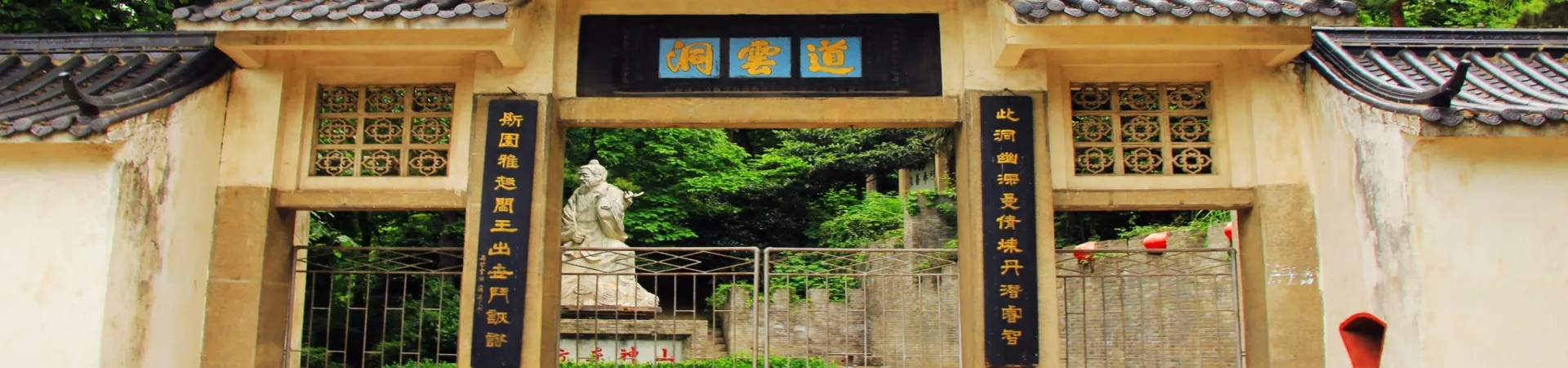
2. Historical and Cultural Heritage 2.1. Legends and Ancient Origins The mountain's name and legend are intrinsically linked to the Western Han Dynasty. It is said that around 100 BC, the renowned scholar and court official Dongfang Shuo, having become disillusioned with political life, retreated to these slopes to live as a hermit. He built a humble cottage, collected herbs, practiced alchemy, and distributed his findings to aid the local people. The mountain thus inherited his surname, becoming Dongfang (Eastern) Mountain. Its strategic importance continued through the ages; during the Three Kingdoms period, the Wu Kingdom, with its capital in Wuchang, utilized the area's rugged terrain for defense. The name "Zoumazhai" (Galloping Fortress) itself echoes this martial past, believed to be the site of an Eastern Wu garrison.
2.2. A Center of Buddhist Culture Dongfang Mountain's spiritual significance is profound and enduring. The heart of this is the Honghua Chan Temple, originally constructed during the Yuanhe era of the Tang Dynasty (circa 806-820 AD). For over a millennium, it has been a vital center for Buddhist teaching, having seamlessly passed its lineage through an impressive 73 generations. The temple's prestige is highlighted by historical records noting that three of its eminent monks were invited to the imperial capital to expound Buddhist sutras, receiving personal audiences and gifts from the emperors themselves. This deep-rooted tradition forms the core of the mountain's identity as a sacred Buddhist site in southeastern Hubei.
2.3. The Architectural and Ritual Landscape The Honghua Chan Temple is not alone. It is the centerpiece of a unique religious landscape where 22 temples of various sizes are thoughtfully scattered across the mountain's ridges and valleys, harmoniously integrated with the natural environment. This constellation of temples creates a distinctive Buddhist cultural characteristic for Dongfang Mountain. In recent decades, this living culture has been showcased through significant events such as four major temple fairs, a "Prayer for World Peace Grand Dharma Assembly," and a "Transmission of the Three Platforms of Precepts Ordination Ceremony." These gatherings have attracted devotees and visitors from over a dozen countries, including the United States, Japan, and Australia, as well as from across China, including Hong Kong, Macau, and Taiwan.
3. Natural Landscape and Scenic Wonders 3.1. A Verdant Sanctuary The mountain presents a captivating paradox: while not exceedingly high, it is exceptionally lush. Boasting a forest coverage rate exceeding 90%, it represents the largest forested area within the Huangshi urban region. This dense canopy is a biodiversity haven, home to more than 2,000 documented species of herbaceous and woody plants. Among these green giants stands a magnificent ginkgo tree, a silent witness to over 1,200 years of history, commanding awe and respect from all who see it.
3.2. The Legendary "Eight Ancient Scenes" For generations, visitors have been captivated by the famed "Eight Ancient Scenes of Dongfang Mountain." Each scene combines natural beauty with poetic lore: * Dao Dong Yun Ting (Clouds Pausing over the Taoist Cave) * Tie Niu Lan Wo (The Iron Ox Lying Idle) * Ling Quan Zhuo Xi (The Divine Spring and the Planted Staff) * Shi Chuan Gao Cheng (The Stone Boat Propped High) * Chan Guan Yue Yong (The Moon Surging at the Zen Pass) * Xian Lü Ri Xuan (The Immortal's Sandals Basking in the Sun) * Qing Song Dao Cha (The Green Pine Planted Upside Down) * Bai Lian Pin Kai (The White Lotus Frequently Blooming) These evocative sites, each with its own beautiful legend, continue to inspire wonder and remain a primary attraction for thousands of tourists.
3.3. Dongfang Mountain Reservoir Adding a contrasting element of tranquil water to the wooded slopes is the Dongfang Mountain Reservoir. Celebrated as "a placid lake arising from high mountains," its crystal-clear, emerald waters shimmer against the green backdrop. This "highland lake" not only provides a stunning visual focal point but is also said to imbue the entire mountain with an added sense of serenity and spiritual vitality.
4. Practical Visitor Information Dongfang Mountain has been officially recognized for its value, designated as a Provincial-Level Scenic Area in 1997 and a National AA-Level Tourist Attraction in February 2003. It seamlessly integrates spiritual pilgrimage with scenic tourism.
4.1. Admission and Operating Hours * General Admission Ticket: CNY 10 per person. * Round-Trip Shuttle Bus Ticket: CNY 20 per person. * Children: Free admission for children under 1.2 meters in height. (Please note: shuttle bus fare policies may differ for eligible children.) * Opening Hours: * Monday to Friday: 08:30 - 17:00 * Saturday, Sunday, and Public Holidays: 06:30 - 17:00 These hours are maintained throughout the year (January 1st to December 31st).
4.2. Contact Information For inquiries, visitors can contact the scenic area administration at: * Telephone: 0714-3189686 or 0714-3189696.
Information last updated: January 10, 2023. Credit to contributor Chen Yanchen.