South Lake
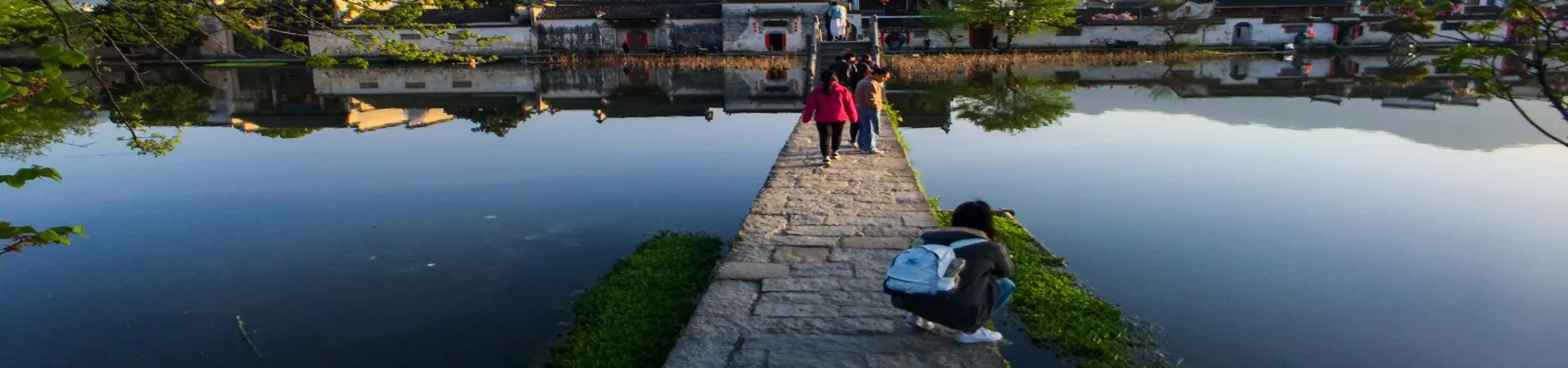
Subtitle: A Ming Dynasty Masterpiece: Nanhu Lake, the Heart of Hongcun
Introduction Nestled at the southern periphery of the ancient village of Hongcun in Huangshan, Anhui Province, Nanhu Lake stands as a serene and picturesque centerpiece, embodying the profound hydrological wisdom and aesthetic pursuit of traditional Chinese village planning. Constructed during the Ming Dynasty (1368-1644 AD), this artificial reservoir was ingeniously designed not merely for scenic beauty but as a critical component of the village's fire prevention and irrigation system. Its existence is a testament to the harmonious coexistence between human habitation and the natural environment, a philosophy deeply ingrained in the local Huizhou culture. For the modern visitor, Nanhu Lake offers a tranquil escape and a living canvas where history, cinema, and timeless landscape artistry converge.
The Landscape and Architectural Harmony 2.1 The Archer-Shaped Expanse and the Iconic Painting Bridge The most striking feature of Nanhu Lake is its vast, archer-shaped water surface, which mirrors the sky and the elegant white-walled, black-tiled Huizhou architecture that lines its shores. This reflective quality creates a dreamlike symmetry, making the village appear as if it is floating. Spanning this crystalline water is the elegant, stone-arched Painting Bridge (Huagiao). This bridge achieved global fame as a filming location in Ang Lee's Oscar-winning masterpiece, Crouching Tiger, Hidden Dragon. It is here that the protagonist, Li Mu Bai, is memorably depicted leading his horse across, a scene that etched the bridge's poetic image into the minds of audiences worldwide. Walking across this bridge allows one to literally follow in the footsteps of cinematic legend while immersed in authentic historical ambiance.
2.2 A Photographer's Paradise Through the Seasons Nanhu Lake's beauty is dynamic and changes captivatingly with the seasons and the time of day, offering endless photographic opportunities. At dawn, a delicate mist often rises from the water, shrouding the bridge and distant buildings in a soft, ethereal glow. The still waters perfectly reflect the silhouettes, creating a scene of profound peace that is ideal for capturing the village's mystical atmosphere. In summer, the lake transforms as lush pink and white lotus blossoms emerge from broad green leaves, adding vibrant strokes of color and a gentle fragrance to the landscape. The contrast between the vibrant flowers, the serene water, and the solemn architecture provides a rich palette for stunning photographs. Every hour, from sunrise to sunset, presents a new play of light and shadow on this liquid canvas.
Cultural Heritage: The Nanhu Academy 3.1 Historical Significance and Architecture On the northern bank of the lake lies one of Hongcun's most significant cultural sites: the Nanhu Academy (Nanhu Shuyuan). Established in the Qing Dynasty (1814 AD), this academy was formed by consolidating six smaller private schools (sishu) that previously dotted the lakeshore. This consolidation resulted in an unusually spacious and imposing complex dedicated to learning, reflecting the high value placed on education and scholarly achievement in Huizhou culture. The academy's architecture is classic of the region, featuring horse-head gables, intricately carved wooden beams, and open courtyards designed for contemplation.
3.2 Layout and Symbolism The academy's layout is deliberate and symbolic. It is arranged in a sequence of three main components: the "Zhi Cheng Si" lecture hall, where students received moral instruction; the "Wen Chang Ge" pavilion, dedicated to the God of Literature; and the "Qi Lu Xian Guan" hall, which honored ancestral teachers. This progression represents the scholarly journey from cultivating virtue to achieving literary excellence and finally gaining official honor. The spacious courtyards and halls, once filled with the murmurs of students reciting classics, now stand as peaceful monuments to a bygone era of scholarly pursuit, their serenity amplified by their proximity to the calming waters of the lake.
Practical Visitor Information 4.1 Admission and Opening Hours Access to Nanhu Lake and the Nanhu Academy is included in the general admission ticket to Hongcun Village. There is no separate entrance fee for the lake area itself. The lake and its surrounding paths are accessible 24 hours a day, allowing for visits during the magical early morning or under the evening stars. The Nanhu Academy typically follows the village's general operating hours, usually from approximately 8:00 AM to 5:00 PM. It is advisable to check for any seasonal variations.
4.2 Location and Transportation Nanhu Lake is an integral part of the Hongcun Village scenic area. Upon entering the village's main gate, visitors can easily reach the lake on foot via the well-signposted ancient stone pathways. A leisurely stroll through the village's labyrinthine lanes, following the ancient water channels, will inevitably lead to its expansive southern shore. The entire village is pedestrian-friendly, and exploring on foot is the best way to absorb its atmosphere.
4.3 Suggested Duration and Tips A comprehensive visit to appreciate Nanhu Lake, walk across the Painting Bridge, explore the Nanhu Academy, and take photographs typically requires 1 to 1.5 hours. However, many visitors find themselves lingering longer, captivated by the peaceful ambiance. For the best experience with smaller crowds and optimal light for photography, an early morning visit is highly recommended. Comfortable walking shoes are essential for navigating the ancient stone paths. For any specific inquiries, the Hongcun scenic area management can be contacted at +86 559 5541158.