Chengkan
Subtitle: A Journey Through Time in China's Best-Preserved Ancient Village
1. Introduction to Chengkan Village
Nestled in the foothills of the majestic Huangshan Mountain, Chengkan Village stands as a serene testament to China's rich historical and cultural tapestry. Originally known as Longxi (Dragon Stream) and under the jurisdiction of She County, the historic prefectural seat of Huizhou, it now belongs to Huizhou District within Huangshan City. With a history spanning over 1,800 years since its renaming to Chengkan, it is widely regarded as one of the most impeccably preserved ancient villages in the country. Its preservation offers visitors an unparalleled, authentic window into the architectural grandeur, philosophical depth, and daily rhythms of ancient Huizhou culture, far from the bustle of modern metropolises.
2. The Philosophy in its Layout and Name
The unique layout and very name of Chengkan are deeply rooted in ancient Chinese cosmology, specifically the Yijing (I Ching, or Book of Changes). The village is surrounded by eight mountains, a configuration said to resemble the Bagua, or the Eight Trigrams diagram. A stream meanders through the settlement, naturally dividing it into two sections that mirror the Yin and Yang fish symbol within the Bagua. In the philosophy of the Yijing, 'Yang' is represented by the character '呈' (Cheng), and 'Yin' by '坎' (Kan). Thus, the village derived its name, Chengkan, symbolizing a perfect, harmonious balance between these two fundamental cosmic forces. This philosophical blueprint is not merely symbolic; it is experienced on the ground. The labyrinthine network of narrow, winding lanes, designed following geomantic principles (feng shui), intentionally obscures cardinal directions, making exploration feel like navigating a living, ancient maze designed for harmony and protection.
3. Location and Accessibility
3.1. Geographic Context Chengkan enjoys a privileged location at the southern base of the Huangshan Mountain range, a UNESCO World Heritage Site renowned for its natural beauty and cultural significance. It is situated approximately 40 kilometers north of the Huangshan scenic area and about 15 kilometers south of Yanxi Town, the current administrative center of Huizhou District. Visitors traveling from Huizhou District towards Huangshan will find the village accessible by turning northeast at the Fozi Ling section of the road.
3.2. How to Get There Public transportation provides a direct link. Travelers can take Huizhou Bus Line 1 or Huizhou Bus Line 17 and alight at the Chengkan Bus Station. From the bus stop, the entrance to the ancient village is within easy walking distance, making it a convenient destination for independent explorers.
4. Practical Visitor Information
4.1. Ticket Information Admission to Chengkan Ancient Village requires a ticket, with a structured pricing system: * General Admission: 107 RMB (applicable year-round). * Concession Tickets (Half-price): Available to minors aged 6 to 18 (inclusive), full-time students holding undergraduate or lower-level qualifications, and seniors aged 60 to 65. * Free Admission: Granted to children under 6 years old or with a height of 1.2 meters and below, seniors aged 65 and above, as well as disabled individuals, active-duty military personnel, disabled veterans, and military retirees upon presentation of valid official certificates. * Note: It is highly advisable to treat the above information as a guideline and verify the latest ticket prices and policies directly at the ticket office on the day of your visit, as details are subject to change.
4.2. Opening Hours The village is open to visitors daily from 07:30 to 17:30. The last admission is at 17:30, so planning an arrival with sufficient time to explore is recommended.
4.3. Suggested Duration of Visit To fully appreciate the intricate alleyways, significant residences, ancestral halls, and the overall ambiance, a visit of 1 to 3 hours is typically recommended. This allows for a leisurely pace to absorb the historical atmosphere and architectural details without being rushed.
4.4. Key Contact For any inquiries prior to your visit, you may contact the village administration at 0559-3536999 or 0559-3537555.
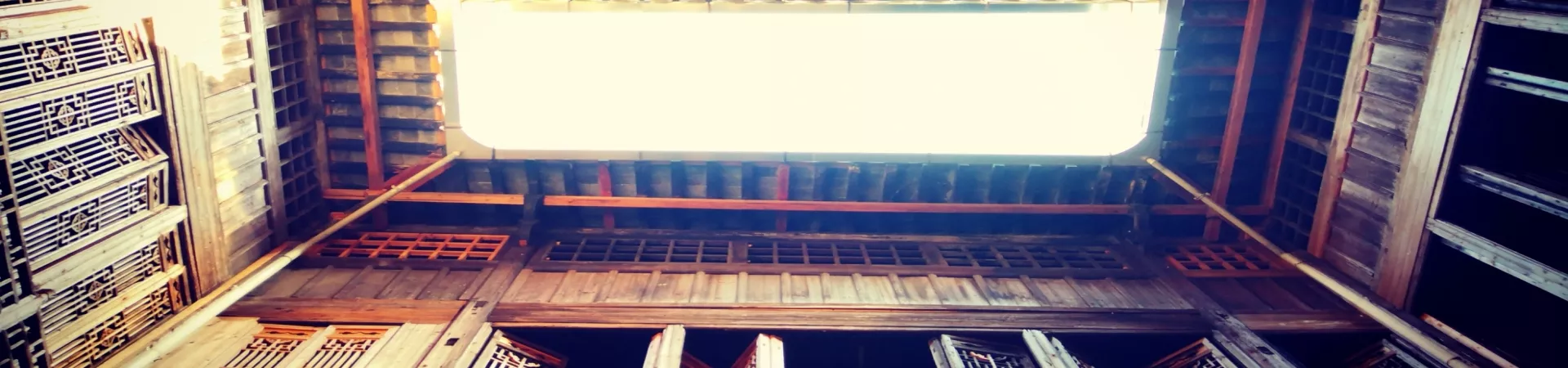
Beyond its philosophical layout, Chengkan is an open-air museum of Huizhou architecture, famed for its elegant white-walled, black-tiled houses with horse-head gables, intricate wood carvings, and serene courtyards. Key historical structures like the Baolun Hall and the Luo Dongshu Ancestral Hall showcase the zenith of Ming and Qing dynasty craftsmanship and the profound Confucian values of the local literati and merchant families. Walking its quiet stone paths, crossing its ancient stone bridges, and observing the daily life that persists within these centuries-old walls provide a deeply immersive experience. The village is not just a static relic but a living community where the past and present coexist, offering a profound sense of tranquility and a direct connection to China's ancestral heritage, all under the watchful presence of the surrounding, mist-shrouded peaks that have inspired poets and painters for centuries.