Dong Nationality Stockaded Village Building Group of Yutou
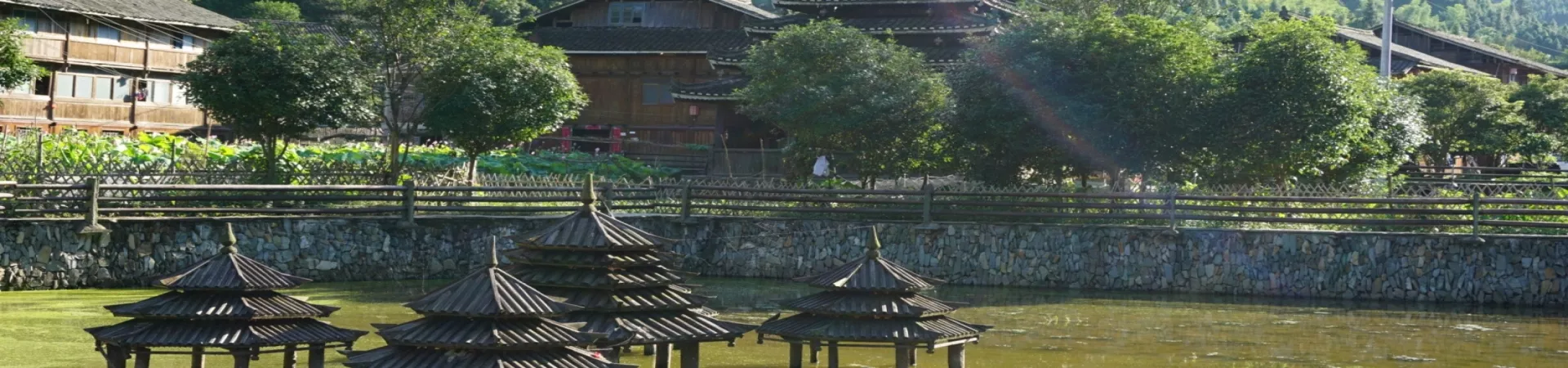
Subtitle: A Living Museum of Dong Culture Preserved for Over Six Centuries
1. Introduction: A Journey into Timeless Heritage
Nestled amidst the rolling hills and lush landscapes of Huaihua City in Hunan Province, the Yutou Ancient Dong Village stands as a serene and profound testament to the architectural genius and enduring culture of the Dong people. Located approximately nine kilometers southwest of the county seat, this remarkable settlement is far more than a mere historical site; it is a vibrant, living community where time seems to have respectfully paused. With a history stretching back to the early Ming Dynasty, the village offers visitors an unparalleled opportunity to walk through centuries-old lanes, interact with the descendants of its original builders, and witness a way of life harmoniously integrated with its natural and built environment. Recognized as a national treasure, Yutou Dong Village is not just a destination but an immersive experience into the soul of Dong civilization.
2. Historical Evolution and Architectural Layout
2.1. Foundations and Rebirth The story of Yutou Dong Village begins in the Hongwu period of the Ming Dynasty (around 1368), marking over 650 years of continuous history. Its initial development was tragically interrupted by a great fire during the Shunzhi reign of the Qing Dynasty (1644). However, from this adversity emerged the village's distinctive and organic layout that we see today. The reconstruction effort was masterfully planned around the central, life-giving Yutou Stream. This natural feature acts as the village's spine, with seven distinct residential clusters branching out along its banks, creating a picturesque and harmonious settlement that appears to grow directly from the landscape itself.
2.2. Flourishing During the Qing Dynasty The 18th and 19th centuries were a period of significant architectural enhancement for the village, solidifying its status as a cultural center. Key structures from this era include: * The Yutou Huilong Bridge (1777): Built in the 42nd year of Emperor Qianlong's reign, this covered wind-and-rain bridge is a classic example of Dong engineering. Serving both as a practical crossing and a communal gathering space, it symbolizes the connection between people and nature, and between different parts of the community. * The Drum Towers of Yashang and the Long Family (1777): Erected in the same year as the bridge, these towering structures are the heartbeats of their respective clan groups. The drum tower, a quintessential Dong architectural form, functions as a town hall, a social lounge, and a ceremonial center, its height and intricate carpentry reflecting the prestige and unity of the community it serves. * Later Additions: Throughout the Daoqing and Guangxu reigns (19th century), the village continued to evolve with the construction of other significant landmarks such as the Tianniu Drum Tower, the Ancient Lusheng Tower (dedicated to the traditional reed-pipe music of the Dong), the Dragon Gate, and the maintenance of the ancient post road, which connected the village to the wider world.
3. Cultural Significance and Preservation Status
3.1. A "Physical Museum" of Dong Vernacular Architecture Encompassing an area of about 18.29 hectares, Yutou is a pure Dong ethnic village, currently home to 176 households and 758 residents. Its paramount importance lies in its exceptional state of preservation. The village is widely regarded as one of China's most complete and intact ancient residential architectural complexes. The seamless integration of stilted wooden houses (Ganlan-style), drum towers, wind-and-rain bridges, opera stages, and stone-paved paths presents a comprehensive panorama of Dong building traditions. It rightfully earns its title as a "physical museum" of Dong folk dwellings, where every alleyway and courtyard tells a story of communal living, ancestral wisdom, and adaptation to the mountainous environment.
3.2. National and Cultural Recognition The outstanding universal value of Yutou Dong Village has been formally acknowledged at the highest levels. On June 21, 2001, it was listed by the State Council as a National Key Cultural Relics Protection Unit (Fifth Batch), a designation that ensures its protection and conservation for future generations. Furthermore, in 2007, it was honored as one of the first "Chinese Landscape Villages," an accolade that celebrates settlements where human creation and natural beauty exist in perfect, picturesque harmony. These titles underscore the village's dual role as both a protected historical relic and a living cultural landscape.
4. Practical Visitor Information
4.1. Admission and Opening Hours To facilitate your visit, please note the following practical details: * Admission Fee: The entrance ticket is priced at 35 RMB. * Opening Hours: The village is open to visitors daily. The operating hours are listed as Sunday through Saturday, 12:00 AM to 12:00 AM. It is advisable to interpret this as the site being accessible throughout the day. However, for the most current information regarding access to specific interior buildings or seasonal variations, it is recommended to verify locally upon arrival.
4.2. Experiencing the Village A visit to Yutou is best undertaken as a leisurely exploration. Wander beyond the main paths to discover hidden courtyards. Observe the daily rhythms of life—elders chatting in the shade of the drum tower, artisans practicing traditional crafts, and the gentle sound of the stream accompanying your steps. The true essence of Yutou is felt in these unscripted moments of connection with a culture that has gracefully endured the passage of time.