Furong Tower in Qianyang Ancient City
Subtitle: A Journey to the Lotus Tower: History, Poetry, and Timeless Beauty in Qianyang Ancient City
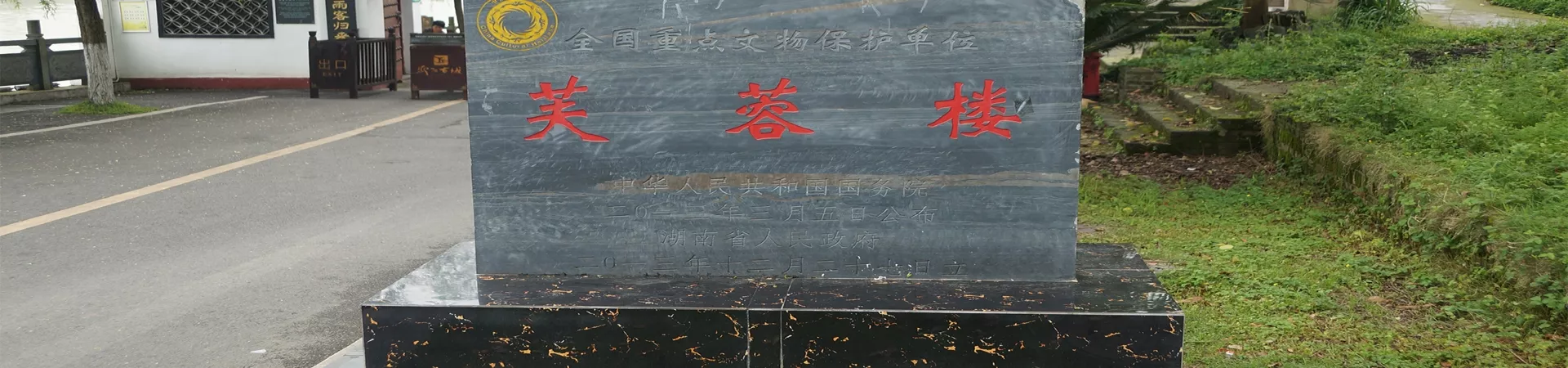
1. Introduction: The Jewel of Western Hunan Nestled at the picturesque confluence of the Yuan and Wu Rivers in Qianyang Town, Huaihua City, stands the Lotus Tower (Furong Lou), a masterpiece of classical Chinese garden architecture. More than just a building, it is a poetic sanctuary, a historical palimpsest, and a landscape art form harmoniously integrated with its natural surroundings. Revered for centuries as the "Foremost Scenic Marvel of Upper Chu," the tower complex offers visitors a profound journey into the cultural soul of China, where the legacy of a Tang Dynasty poet-prince is etched into every walkway, pavilion, and flowing stream.
2. Historical Roots and Poetic Legacy 2.1. Wang Changling and the Tower's Origin The soul of the Lotus Tower is inextricably linked to Wang Changling (c. 698–756), one of the most celebrated poets of the Tang Dynasty's golden age. In 748 AD, following a political setback, Wang was exiled to the remote frontier post of Longbiao (present-day Qianyang County) as a minor official. It was here, amidst the river mists and rolling hills, that he is traditionally believed to have founded the original Lotus Tower. Far from the imperial court, this site became his spiritual refuge—a place for composing poignant verse, hosting literary friends, drinking wine, and bidding heartfelt farewells to visitors. His most famous poem, Seeing Off a Friend at the Lotus Tower in the Rain, forever immortalized the location in the Chinese literary canon, transforming a physical structure into a timeless symbol of friendship, melancholy, and refined artistic spirit.
2.2. Architectural Evolution Through Dynasties While the original Tang structure has not survived the centuries, the current complex is a magnificent tribute to its legacy, primarily dating from the Qing Dynasty (1644-1912) with subsequent restorations. Its design is a conscious evocation of the Tang aesthetic and the scholarly garden ideals that flourished in later periods. The architecture does not seek to replicate a single moment in time but rather to embody the continuous cultural reverence for Wang Changling and the artistic principles he represented. Each restoration has been an act of cultural memory, ensuring the site remains a living dialogue between the present and the poetic past.
3. Exploring the Classical Garden Complex 3.1. Layout and Design Philosophy The Lotus Tower is not a solitary tower but an exquisite classical garden ensemble meticulously arranged to create a sequence of curated views and experiences. The design follows the fundamental principle of "borrowed scenery," where the surrounding rivers, distant mountains, and sky become integral parts of the garden's composition. Winding paths, moon gates, and strategically placed windows frame these natural vistas, making the landscape feel boundless. The architecture is characterized by elegant upturned eaves, intricate wooden lattices, and a graceful, "scattered and well-proportioned" layout that encourages leisurely exploration and quiet contemplation.
3.2. Key Structures and Features 3.2.1. The Main Lotus Tower The central pavilion, often referred to as the tower itself, is the heart of the complex. Typically a two-story structure, it houses steles inscribed with Wang Changling's poetry and commemorative writings from later scholars. Its elevated position offers commanding views of the two merging rivers, a sight that undoubtedly inspired the poet himself.
3.2.2. The Stele Corridor and Calligraphy A highlight for cultural enthusiasts is the long corridor adorned with stone steles. These tablets are carved with masterful calligraphy, reproducing Wang's poems and verses composed by admirers across dynasties. This gallery in stone is a tangible history of the site's literary influence, showcasing the art of writing itself.
3.2.3. Ancillary Pavilions and the Garden Surrounding the main tower are smaller pavilions with evocative names like the "Pavilion for Sending Off a Friend" or the "Pavilion for Listening to the Rain." Each serves as a vantage point and a space for reflection. The garden incorporates traditional elements: ancient trees providing shade, carefully positioned scholar's rocks (Taihu rocks) symbolizing mountains, and tranquil ponds reflecting the architecture, creating a serene and philosophically charged environment.
4. Practical Visitor Information 4.1. Admission Fees * Standard Ticket: 48 RMB per person. * Concessions: Half-price tickets are available for students (with valid ID) and senior citizens. * Free Admission: Children under 1.2 meters in height.
4.2. Opening Hours * Daily Schedule: The complex is open from 08:30 to 17:30, Monday through Sunday, throughout the year. * Last Admission: The final entry is permitted at 16:30. Visitors are advised to arrive with sufficient time to explore the grounds at a relaxed pace before closing.
4.3. Suggested Experience To fully appreciate the Lotus Tower, visitors are encouraged to move beyond simple sightseeing. Read Wang Changling's farewell poem before arriving. Wander the paths slowly, imagining the scholarly gatherings of old. Sit in a pavilion overlooking the rivers and observe the play of light and water. The true essence of the place reveals itself not in a checklist of buildings seen, but in the quiet moments of connection with a landscape that has stirred artistic hearts for over a millennium. The site is particularly atmospheric in the soft light of early morning or late afternoon, and the misty rain mentioned in Wang's famous verse adds a layer of authentic, poetic charm.