Longjin Covered Bridge
Subtitle: A Bridge Through Time: The Resilience and Revival of the Longjin Wind-Rain Bridge
1. Introduction: The Colossus of the Dong Countryside
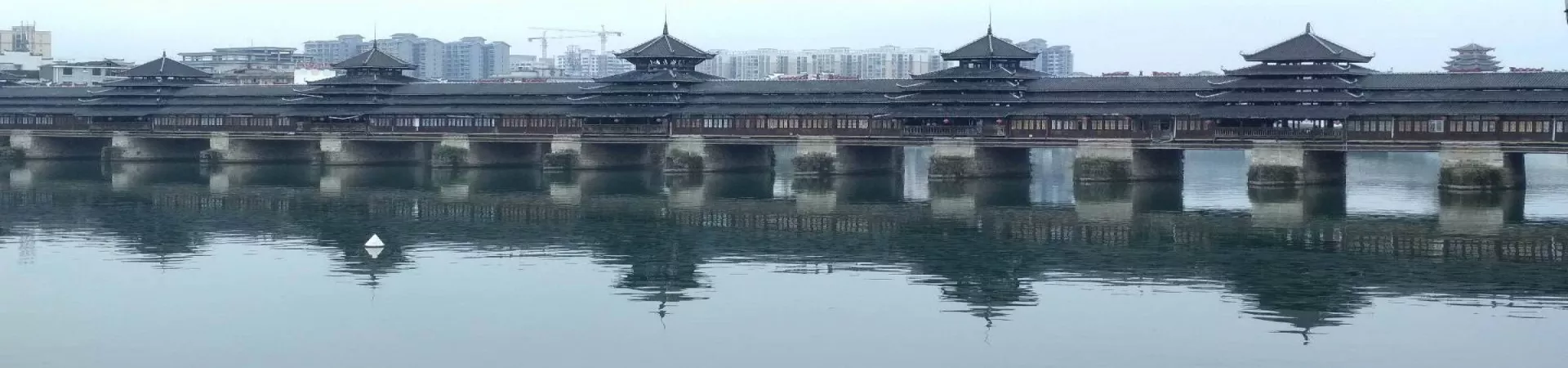
Spanning the Wu River, a tributary of the Xiangjiang, in Zhijiang Dong Autonomous County of Hunan Province, stands the Longjin Wind-Rain Bridge. More than just a river crossing, it is a monumental testament to the architectural ingenuity and cultural spirit of the Dong people. Holding the Shanghai World Guinness Record as the largest Dong-style wind-rain bridge in the world, this structure is a profound symbol of resilience, having weathered centuries of natural and human tumult to emerge today as a vibrant center of community life and a must-visit historical site.
2. Historical Foundations: From Ming Dynasty to Military Artery
2.1. Origins and Early Life The bridge's story begins in the Ming Dynasty, in the 19th year of the Wanli Emperor's reign (1591 AD). Initially named Longjin Bridge and colloquially known as Jiangxi Bridge, its elegant, elongated form earned it the nickname "Black Dragon Bridge" (Wulong Qiao), as it was said to resemble a great black dragon lying across the waters of the Wu River. For over four centuries, it served as the heart of local Dong and Miao communities. It was a practical passageway, a shelter from rain and summer heat, and a social plaza—a place for singing, dancing, evening conversations, and rest after a long day's labor.
2.2. The Trials of War Zhijiang's strategic location, described historically as "the gateway to Guizhou and Yunnan and the throat of Chu," made it a fiercely contested military site. This strategic importance thrust the tranquil Longjin Bridge into the maelstrom of modern warfare during the Second Sino-Japanese War. In the early stages of the conflict, the Nationalist government dramatically altered the bridge to serve the war effort. Its characteristic covered corridors and pavilions were removed, and it was transformed into a wooden-decked, stone-piered road bridge capable of handling vehicular traffic, complete with added sidewalks. It became a critical military supply line for the vast southwestern region, while the nearby Zhijiang Airport served as a major Allied air base. Consequently, both became prime targets for relentless Japanese bombing campaigns.
2.3. Unyielding Resilience Historical records indicate the bridge was bombed almost weekly, with one particularly fierce day seeing 27 Japanese aircraft conducting sorties against it. Yet, against all odds, the sturdy structure endured the onslaught. It stood unbroken, a vital artery ensuring the passage of Chinese troops and civilians throughout the war. Its survival symbolized the unyielding spirit of the resistance and set the stage for a momentous event: on August 21, 1945, Zhijiang became the site for the historic surrender negotiations of Japanese forces in China, bringing the conflict in the region to an end.
3. Architectural Renaissance: Blending Tradition with Modernity
Following the war, and particularly towards the end of the 20th century, the bridge underwent a magnificent restoration and transformation. The goal was not mere reconstruction, but a revitalization that honored its past while embracing new life.
3.1. Structural and Aesthetic Enhancements The restored bridge is a masterful synthesis. The long corridors on either side are now lined with shop fronts, activating the space with commercial and cultural energy. While utilizing modern materials like dark blue glazed tiles for the roof, golden beast-head ornaments, and aluminum alloy rolling shutters for the shops—hinting at contemporary garden architecture—the designers were deeply respectful of tradition.
3.2. Celebrating Dong Artistry and Craft Key elements of Dong architectural art were meticulously incorporated and highlighted. The bridge is adorned with characteristic Dong decorative features such as hanging ornaments and xiangua (elongated melon-like pillars). Stone drum plinths were added to the base of pillars for stability and aesthetic appeal. Viewing pavilions, corridors, pillars, and shop fronts throughout the multi-story structure serve as canvases for exquisite calligraphy and wood-carving art, often featuring works by renowned modern artists and calligraphers.
3.3. A Living Cultural Synthesis The final result is a harmonious blend. The Longjin Wind-Rain Bridge successfully preserves the essential cultural heritage and architectural vocabulary of Dong bridge-building. Simultaneously, it integrates modern construction techniques and artistic sensibilities, creating a functional public space that is both a historical monument and a living, evolving piece of community infrastructure.
4. Visitor Information
4.1. Practical Details for Your Visit * Admission Fee: Free. * Opening Hours: Open 24 hours a day, every day of the year. * Suggested Duration: A visit typically takes between 1 to 3 hours, allowing time to walk the length of the bridge, admire the architectural details, browse the small shops, and absorb the panoramic views of the Wu River.
4.2. Experiencing the Bridge Today Visitors today can walk the same path that served ancient traders, wartime convoys, and generations of local families. The bridge remains a bustling social hub where one can observe daily life, appreciate the fusion of art and architecture, and reflect on the profound history embedded in its very foundations. It stands not as a static museum piece, but as a dynamic, living symbol of cultural endurance and renewal.