Former Residence of Zhou Enlai
Subtitle: A Journey Through the Early Life of a Statesman: The Zhou Enlai Former Residence in Huai'an
1. Introduction and Historical Significance
Nestled within the ancient, culturally rich city of Huai'an in Jiangsu Province, at No. 7 Fuma Lane in the Chuzhou District, lies a residence of profound historical and emotional significance for the Chinese people—the Zhou Enlai Former Residence. This unassuming compound is the birthplace and childhood home of Zhou Enlai, one of modern China's most revered revolutionary leaders and its first Premier, who served from 1949 until his death in 1976. The site's importance is nationally recognized. It was officially listed among the Third Group of Major National Historical and Cultural Sites under state protection by the State Council on January 13, 1988. Further cementing its role in national education, in 1996, it was jointly designated as a "National Patriotic Education Base for Primary and Secondary Schools" by several key government bodies. Its status within China's revolutionary heritage was affirmed in 2005 when it was listed as one of the country's Top 100 Classic Red Tourism Attractions. More than just a museum, the residence serves as a tangible connection to the formative years of a man whose political acumen, diplomatic skill, and personal integrity left an indelible mark on 20th-century Chinese history.
2. Architectural Layout and Historical Context
2.1. Structure and Composition The residence consists of two interconnected courtyards arranged in an east-west alignment, forming a traditional Qing Dynasty-style residential compound. Constructed during the reigns of Emperors Xianfeng and Guangxu (mid-to-late 19th century), the buildings exemplify the vernacular architecture of the region. Built from blue bricks with wooden beams and grey-tiled roofs, the 32 low-rise rooms spread across the two courtyards embody a sense of modest, scholarly elegance typical of a well-to-do family of the period. This architectural environment provides an authentic backdrop for understanding Zhou Enlai's early social and familial context.
2.2. The East Courtyard: Domestic Life and Formative Years The East Courtyard was the primary living quarters for Zhou Enlai's immediate family and is central to the story of his childhood. Key spaces here have been meticulously preserved or restored to reflect their state in the late Qing Dynasty. * Birthplace and Childhood Bedroom: The room where Zhou Enlai was born in 1898 is a focal point. It offers visitors an intimate glimpse into the very beginning of his life's journey. * Residential Quarters: The courtyard includes the living quarters of his grandfather, his stepmother, and his wet nurse. The presence of his wet nurse's room highlights the traditional family structures and the early influences on his life. * Study Room: This room is where a young Zhou Enlai first engaged with classical Chinese texts and began his formal education, laying the early intellectual foundation for his future. * The Well and Vegetable Garden: Perhaps some of the most evocative elements are the original well from which he drew water and the small vegetable garden he tended. These everyday spaces speak to the normalcy of his childhood and the simple, grounded upbringing that preceded his extraordinary political career.
3. The West Courtyard: Exhibition and Commemoration
Originally the residence of Zhou Enlai's paternal great-uncle, the West Courtyard has been transformed into a comprehensive exhibition area. It shifts the focus from personal domestic life to the historical legacy and public reverence for the late Premier.
3.1. Thematic Exhibition Halls The exhibition is organized into five coherent thematic sections, featuring nearly 200 photographs, documents, and artifacts: * Zhou Enlai's Childhood: This section expands on the narrative of the East Courtyard, using photographs and narratives to detail his early family life, education, and the influences that shaped his character. * Family History and Hometown: It provides context on the Zhou family lineage and their deep roots in Huai'an, connecting the statesman to his local heritage. * The People's Remembrance: A powerful and emotional section showcasing the profound and enduring public affection for Zhou Enlai, both during his life and after his passing, through historical images and public memorials. * Inscriptions by Party and State Leaders: This part displays calligraphic inscriptions and tributes penned by other senior Chinese leaders, reflecting the high esteem in which he was held by his colleagues. * Zhou Enlai's Calligraphy and Art Corridor: This section highlights Zhou Enlai's artistic side, showcasing samples of his skilled calligraphy and his appreciation for painting, revealing a dimension of his personality beyond politics.
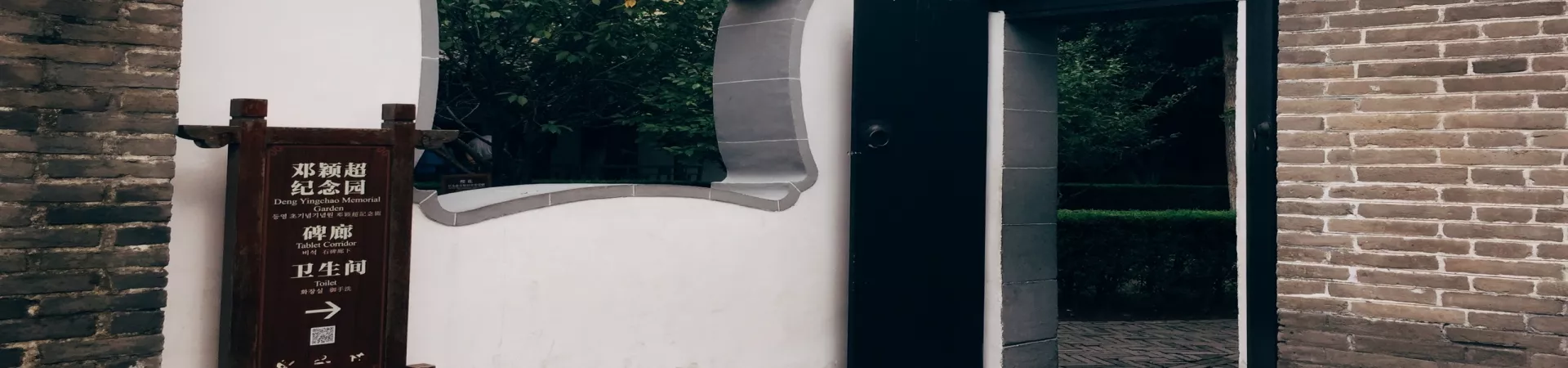
3.2. The Calligraphy Stele Corridor An integral part of the West Courtyard is the serene Calligraphy Stele Corridor. Here, engraved stone tablets display examples of Zhou Enlai's own calligraphic works, as well as commemorative poems and inscriptions by famous figures. It serves as a space for quiet contemplation of his literary and artistic cultivation.
4. Practical Visitor Information
For visitors planning a trip to this significant site, the following practical details are essential.
4.1. Admission and Opening Hours Admission to the Zhou Enlai Former Residence is free of charge, making it accessible to all visitors. The residence is open to the public throughout the year, with specific operating hours: * Tuesday to Sunday: Open from 09:00 to 17:00. Last admission is at 16:30. * Mondays: The residence remains open on Mondays from 09:00 to 17:00, with the last admission also at 16:30. (Note: This differs from many Chinese museums that close on Mondays.) * Special Period (New Year's Holiday): During the period from December 31st to January 2nd, extended hours may apply, with the last admission at 17:00. It is always advisable to confirm the latest times before visiting.
4.2. Location and Contact Details The residence is located at No. 7, Fuma Lane, Chuzhou District, Huai'an City, Jiangsu Province. For any inquiries, visitors can contact the management office via telephone at 0517-85939835 or 0517-85912517.
A visit to the Zhou Enlai Former Residence is more than a historical tour; it is an immersive experience that moves from the intimate, physical spaces of a childhood home to a broader reflection on a monumental historical figure's legacy. It seamlessly connects personal memory with national history, offering deep insight into the environment that nurtured one of China's most distinguished leaders.