Former Residence of Wu Cheng'en
Subtitle: A Journey into the World of "Journey to the West": Exploring the Former Residence of Wu Cheng'en
1. Introduction: The Home of a Literary Giant Nestled at the end of Daitong Lane in the ancient town of Hexia, Chuzhou District, Huai'an City, Jiangsu Province, lies a site of profound cultural and literary significance: the Former Residence of Wu Cheng'en. This unassuming yet historically rich compound was the home of Wu Cheng'en (c. 1500-1582), the brilliant Ming Dynasty literatus and author of one of the world's greatest literary classics, "Journey to the West." More than just a museum, the residence serves as a tangible portal into the life and creative mind of the man who gave birth to the legendary Monkey King, Sun Wukong, and his epic pilgrimage to the West. Its location in the northwest of old Huai'an city, adjacent to the ancient Grand Canal, places it within a landscape that has inspired poets and writers for centuries. Today, meticulously preserved and restored, it stands as a premier cultural tourism destination, attracting thousands of domestic and international visitors daily who come to pay homage and step into the world of this global cultural icon.
2. Historical and Architectural Landscape 2.1. Setting and Context The residence is situated within the historically rich enclave of Hexia Ancient Town, an area renowned for its well-preserved Ming and Qing dynasty architecture and its historical connection to the Grand Canal. This strategic waterway was not only a vital economic artery but also a conduit for ideas, stories, and cultural exchange, undoubtedly influencing Wu Cheng'en's broad worldview. The property's proximity to major modern expressways like Beijing-Shanghai, Nanjing-Lianyungang, and Xuzhou-Huai'an-Yancheng ensures convenient access for contemporary travelers, bridging the past with the present.
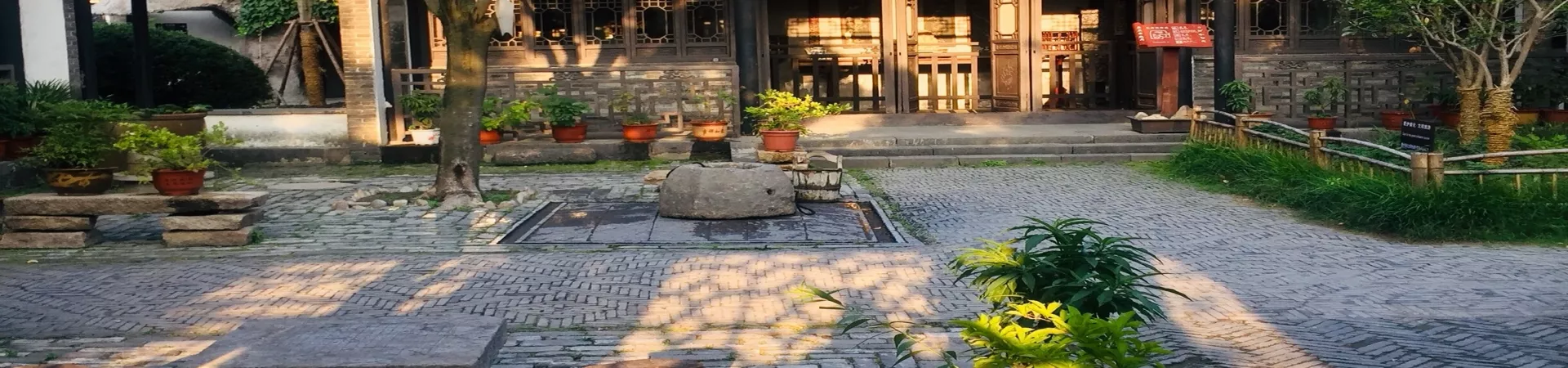
2.2. Layout and Design The compound is a classic example of a Ming Dynasty scholar's residence, reflecting the architectural aesthetics and social status of a mid-level literati family. The layout typically follows a traditional siheyuan (courtyard house) pattern, with several halls, living quarters, study rooms, and gardens arranged around central courtyards. * Main Halls and Living Quarters: These spaces are furnished with period-appropriate furniture, offering a glimpse into the domestic life of the Wu family. Exhibits often detail Wu Cheng'en's family history, his upbringing, and the social environment of 16th-century Huai'an. * The Study (Shufang): This is arguably the heart of the residence. Recreated to evoke the atmosphere of scholarly pursuit, it is here that visitors can contemplate where Wu Cheng'en may have pondered, studied classical texts, and ultimately penned the early chapters of his fantastical masterpiece. The quiet and contemplative nature of this space highlights the contrast between the author's serene real-life environment and the tumultuous, adventurous world he created. * Gardens and Courtyards: The traditional Chinese gardens within the residence provide a serene escape. Featuring rockeries, ponds, miniature landscapes, and lush greenery, these gardens embody the philosophical ideals of harmony between man and nature—a theme deeply embedded in "Journey to the West."
3. Exhibits and Thematic Displays The residence functions as a comprehensive museum dedicated to Wu Cheng'en's life, work, and legacy. The exhibits are designed to educate and engage visitors of all levels of familiarity with the classic novel. 3.1. Life of Wu Cheng'en This section chronicles the author's biography, from his early education and attempts at the imperial civil service examinations to his later years as a writer. It explores his frustrations with the bureaucratic system, which many scholars believe informed the satirical elements within "Journey to the West," particularly its portrayal of a chaotic heavenly bureaucracy. 3.2. The World of "Journey to the West" A significant portion of the residence is devoted to the novel itself. Displays may include: * Manuscript Reproductions and Early Editions: Showcasing the evolution of the text. * Character Depictions: Lifelike statues or detailed illustrations of the main pilgrimage team—the resourceful Monkey King, the pious Tang Sanzang (Xuanzang), the gluttonous Zhu Bajie, and the steadfast Sha Wujing—as well as various deities, demons, and villains from the story. * Thematic Analysis: Exhibits exploring the novel's rich layers: its foundation in the historical pilgrimage of the Buddhist monk Xuanzang to India, its allegorical meanings, its satire of society, and its profound philosophical and religious undertones drawn from Buddhism, Taoism, and Confucianism. 3.3. Cultural Impact and Legacy This area demonstrates the global reach of Wu Cheng'en's creation. It displays various adaptations of the story, including stills from iconic film and television series (both Chinese and international), comic books, theatrical masks, and international translations. This underscores how the tale of the Monkey King has transcended its origins to become a beloved part of world literature and pop culture.
4. Practical Visitor Information For those planning a visit, the following details are essential for a smooth experience. 4.1. Admission and Hours * Ticket Price: The standard admission fee is 30 RMB per person. * Opening Hours: The schedule varies slightly by season. * Summer Period (June 1 - August 31): The site is open from 08:30 to 18:00 daily, with last admission at 17:30. * Winter Period (December 1 - February 28/29): Hours are from 08:30 to 17:30, with last entry at 17:00. It is always advisable to confirm times in advance, especially during public holidays. 4.2. Suggested Duration and Contact * Recommended Visit Length: To fully appreciate the residence, its exhibits, and the surrounding ancient town, a visit of approximately 1 to 3 hours is recommended. * Contact Information: For specific inquiries, visitors can contact the management at +86 517 8580 2897. 4.3. Enhancing the Experience To maximize the visit, consider engaging a knowledgeable guide or utilizing an audio guide to gain deeper insights into the historical context and literary nuances. Exploring the adjacent Hexia Ancient Town after the residence visit completes the cultural immersion, offering a taste of the historical atmosphere that shaped the region. The residence is not merely a collection of old buildings; it is a space where history, literature, and imagination converge, allowing every visitor to trace the footsteps of a genius and discover the earthly origins of a timeless, celestial adventure.