First Mountain
Subtitle: A Journey Through Millennia of Culture and Natural Splendor in Huai'an
1. Introduction to First Mountain National Forest Park
Nestled in the ancient city of Xuyi, Huai'an, Jiangsu Province, lies the First Mountain National Forest Park, a site of profound historical significance and breathtaking natural beauty. Known historically as Nan Mountain or Duliang Mountain, it stands majestically facing the thousand-mile-long Huai River to the south, with its back against a serene range of nine elegant peaks. This unique topography has fostered an environment of exceptional tranquility and scholarly inspiration for centuries. Its legacy as a center for learning dates back to the Han Dynasty when Kong Anguo, a descendant of Confucius and then the governor of Linhuai, established the revered "Chongsheng Academy" here. Officially designated as "First Mountain Park" in 1985, it was later recognized for its ecological and cultural value, being named a National Forest Park in 1996 and a Provincial-level Scenic Area in 1999. The park seamlessly blends majestic landscapes with a rich tapestry of human history, offering visitors a multifaceted experience that is both visually stunning and intellectually enriching.
2. A Tapestry of History and Culture
2.1. A Sanctuary for Scholars and Literati For over a millennium, First Mountain has been a magnetic destination for intellectuals, artists, and officials. Since the Song and Yuan dynasties, its serene environment has attracted countless renowned scholars, poets, calligraphers, and government dignitaries. They came not only to admire its scenery but also to inscribe their thoughts, poems, and reflections onto its very fabric.
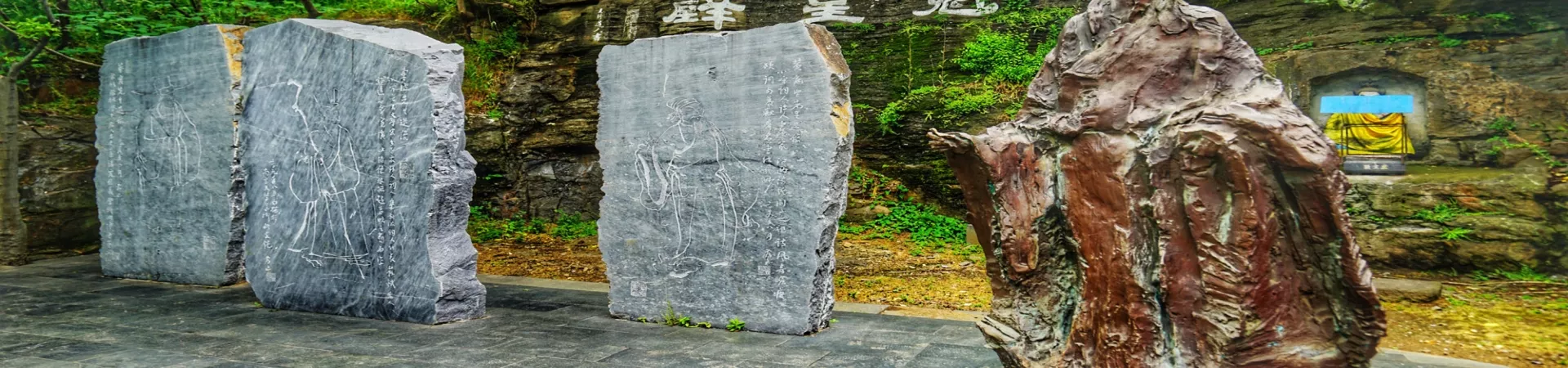
2.2. The Living Stone Library: Steles and Inscriptions The most tangible evidence of this cultural pilgrimage is the vast and invaluable collection of stone steles and tablets scattered throughout the park. These inscriptions, left by visitors across dynasties, form an open-air museum of calligraphy and historical narrative. Each carving tells a story, turning the mountain's cliffs and pavilions into pages of a stone chronicle, making a stroll through the park a direct walk through China's literary and artistic history.
3. The Landscapes and Key Attractions
First Mountain is the crown jewel of the "Ten Scenic Spots of Xuyi," claiming six of these celebrated vistas within its bounds. Each scene captures a different mood and moment, from dawn's first light to the moon's reflection.
3.1. The Six Renowned Vistas of Xuyi * Glass Spring Immersed in Moonlight (Boli Quan Jin Yue): A crystal-clear spring whose placid waters perfectly mirror the moon, creating a scene of ethereal beauty, especially on quiet nights. * First Mountain Nostalgia (Diyi Shan Huai Gu): Viewpoints that inspire reflection on the mountain's long history and the countless historical figures who have stood there before. * Apricot Garden in Spring Daylight (Xinghua Yuan Chun Zhou): A grove that erupts in a blaze of pink and white blossoms in spring, symbolizing renewal and natural splendor. * Rui Observatory at Clear Dawn (Rui Guan Qing Xiao): A spot perfect for witnessing the sunrise, where the first rays of light bathe the Huai River and the surrounding peaks in a warm, golden glow. * Historic Traces of Huijing Pavilion (Huijing Ting Chen Ji): The site of an ancient pavilion that served as a gathering point for enjoying the panoramic views, encouraging visitors to ponder the passage of time. * Evening Bell from Turtle Mountain Temple (Guishan Si Wan Zhong): The evocative sound of the temple bell at dusk, marking the end of the day with a note of peaceful solemnity that echoes through the valleys.
3.2. Natural and Architectural Harmony Beyond these named scenes, the park's topography of lush forests, unique rock formations, and winding paths encourages exploration. Historic structures like temples, pavilions, and the remnants of the ancient academy are thoughtfully integrated into the landscape, creating a harmonious dialogue between human artistry and natural creation.
4. Practical Visitor Information
4.1. Admission and Operating Hours * Admission Fee: The park entrance fee is approximately 20 RMB. For the most current pricing and any potential discounts, it is advisable to consult the scenic area directly prior to your visit. * Operating Hours: The park's opening hours vary slightly by season: * July 15th - September 30th: 08:00 - 17:30 (Last entry at 17:00). * October 1st - December 31st: 08:30 - 17:00 (Last entry at 16:30). * January 1st - July 14th: 08:30 - 17:00 (Last entry at 17:00).
4.2. Transportation Guide * Getting to Xuyi: The primary access to Xuyi is by long-distance bus. * From Xuyi Bus Station to the Park: Upon arrival at the bus station, you have two convenient options: * Public Bus: Take local bus No. 1 or No. 4 heading north. Simply inform the driver you wish to alight at "First Mountain" (Diyi Shan). * Taxi: Taxis are readily available. The standard fare to the park is around 3 RMB, which may increase to approximately 5 RMB during national holidays or festivals.
4.3. Accommodation Suggestions Accommodation in Xuyi is convenient, with several hotels located along the main roads leading into the city. For a comfortable stay, consider well-known local establishments such as the Jingu Garden (Jingu Yuan) or the Xuyi Hotel (Xuyi Binguan). These are familiar landmarks; any local taxi driver or resident can easily provide directions.
4.4. Contact Information For further inquiries or confirmation of details, you may contact the park administration at: 0517-88222828 or 0517-88212696.