Shitiao Bridge
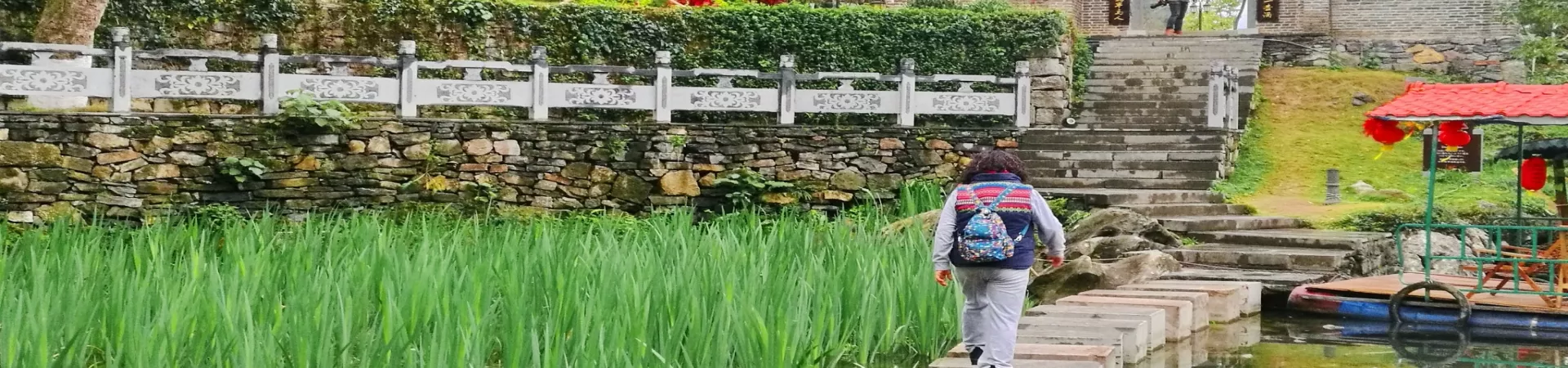
The Stone Stepping Bridge: A Dance Across Time in Huangyao
Introduction: The Heartbeat of an Ancient Town
Nestled within the serene, time-worn lanes of Huangyao Ancient Town in Hezhou, China, lies not just a bridge, but an experience—the Stone Stepping Bridge, locally known as Shitiao Qiao or Dingbu Qiao. More than a mere river crossing, this unique structure is a rhythmic dialogue between human ingenuity and nature, a test of balance that has charmed visitors for over two centuries. It serves as the town's most iconic landmark, often chosen as the poignant finale to a journey through Huangyao's history, leaving an impression that lingers long after the last step is taken.
Historical Echoes: A Legacy from the Qing Dynasty
Origins and Construction The bridge's story begins in the Jiaqing period of the Qing Dynasty (approximately the late 18th to early 19th century), making it a venerable relic with over 200 years of history. Its creation was a pragmatic response to the local environment—a need to traverse the shallow waters of the river without obstructing its natural flow, especially during seasonal floods. Unlike conventional arched bridges, the ancient builders conceived a novel solution: a series of individual stone piers arranged in a line, creating a path that is both functional and harmonious with the waterway.
The Ingenious Design Philosophy The design is a masterpiece of simple yet effective engineering. The bridge consists of 31 stone piers, meticulously placed. Not all are visible; a clever system is at work where taller piers stand above the water surface, while shorter ones are embedded beneath, providing crucial stability and anchorage against the current. This thoughtful construction ensures the structure's resilience, allowing it to withstand the test of time and the elements.
The Art of Crossing: A Journey in Steps
The Rhythm of the Stones The true genius of the Stone Stepping Bridge lies in the spacing of its 31 piers. They are not placed arbitrarily but are arranged according to the natural stride of a walking person. Each step from one smooth, worn stone to the next feels intuitive, creating a natural cadence. This design perfectly balances two needs: facilitating safe and convenient pedestrian passage while maintaining an unobstructed channel for water drainage, ensuring the bridge never becomes a dam during heavy rains or floods.
A Sensory and Emotional Experience Crossing the bridge is an activity that engages the body and the spirit. It demands a moment of focus—a slight pause to choose the next stone, a careful lift of the foot, and a confident yet gentle step down. This "one lift, one step" motion creates a unique blend of slight suspense and pure delight. Locals and travelers alike attest that the simple act of crossing seems to shake off worldly worries, as if each step leaves a trouble behind in the rippling water below. The stones themselves, polished to a silken smoothness by generations of footsteps, tell a silent story of countless journeys taken.
Aesthetic Charm: Nature's Palette on Stone
The Play of Light and Color While functional, the bridge is undeniably beautiful. Its aesthetic appeal evolves with the day. Under the bright sun, a remarkable transformation occurs: the granite stones often reveal a subtle,朦胧的 (ménglóng de - hazy, dreamlike) purple hue, casting a soft, almost mystical glow. This phenomenon, likely due to the mineral composition of the stone reacting to light, makes the bridge a photographer's delight and a moment of quiet wonder for visitors. Whether shimmering in daylight or standing in silent, sturdy profile under the moonlight during its 24-hour open access, the bridge possesses a timeless elegance.
Integration with the Landscape The bridge does not dominate the landscape but complements it. It lies low over the water, connecting the ancient architectures on either bank without interrupting the picturesque flow of the river or the view of the surrounding karst hills. It is an organic part of Huangyao's postcard-perfect scenery, often reflected perfectly in the calm waters, completing the serene tableau of the ancient town.
Practical Information for the Visit
Location and Access The Stone Stepping Bridge is conveniently located within the pedestrian confines of Huangyao Ancient Town. It is easily accessible on foot from anywhere in the town's core. There is no need for complex navigation; following the main paths along the river or simply asking any local will lead you directly to this iconic spot.
Admission and Opening Hours Visiting the bridge is included in the overall entrance ticket to Huangyao Ancient Town. There is no separate fee for this attraction. Furthermore, the bridge is accessible 24 hours a day, offering different charms at dawn, day, dusk, and night. This allows for flexible visitation, whether as part of a structured tour or a spontaneous stroll.
Suggested Duration A visit to appreciate and cross the Stone Stepping Bridge typically requires less than an hour. This includes time to photograph it from the banks, make a careful crossing, and perhaps even pause midway to absorb the surroundings. However, many find themselves drawn back to it, making multiple crossings or simply sitting nearby to watch others navigate its stones.
In essence, the Stone Stepping Bridge of Huangyao is more than infrastructure; it is a participatory heirloom. It invites every visitor to become part of its living history, to feel the connection between past and present with each deliberate, joyful step across its timeless stones.