Huangyao Ancient Town - Shiban Street in Ancient Town
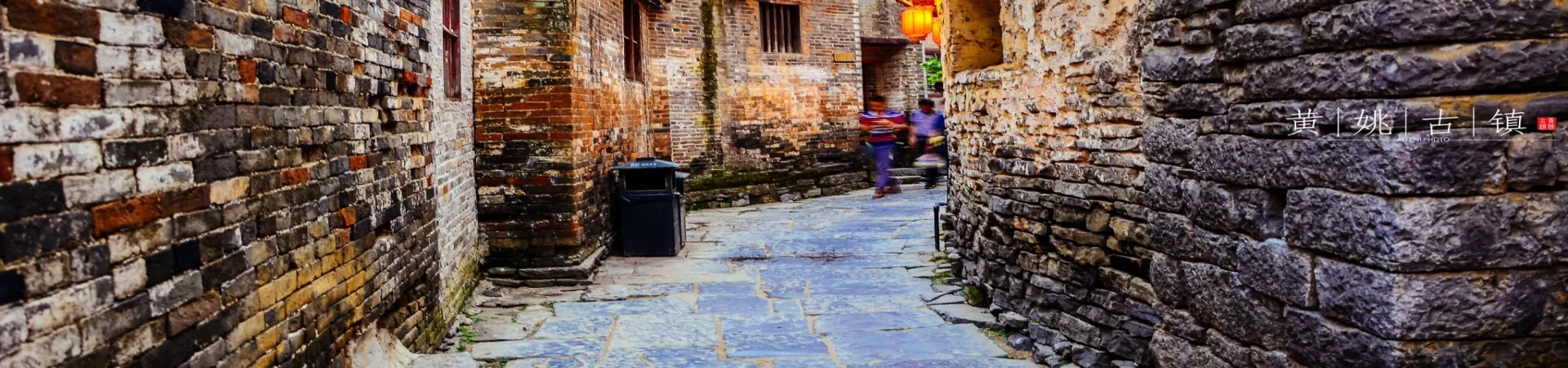
Subtitle: A Walk Through Time: Exploring the Ancient Flagstone Streets of Huangyao
Introduction: The Arteries of an Ancient Town
Nestled within the serene landscapes of Hezhou, Guangxi, the Huangyao Ancient Town stands as a remarkably well-preserved testament to China's Ming and Qing dynasty architecture and community planning. While its ancient banyan trees, serene rivers, and elegant temples often capture initial attention, it is the network of flagstone streets that truly forms the town's living backbone. More than mere pathways, these streets are the historical arteries of Huangyao, whispering tales of centuries-old commerce, daily life, and communal resilience. Laid with smooth, worn slabs of bluestone, they weave through the town in a deliberate, intricate pattern, connecting clan residences, public squares, and market spaces. This network, comprising eight primary streets, offers visitors an unparalleled, immersive journey into the authentic atmosphere of a bygone era, where every step echoes with history.
The Eight Streets: Character and Hierarchy
The flagstone street system in Huangyao is not uniform; it is a carefully structured hierarchy that reflects the town's historical social and economic organization. The eight main streets, each with its own name and character, are Jinde Street, Yingxiu Street, Tianran Street, Zhongxing Street, Anle Street, Lianli Street, Longpan Street, and Shanbang Street.
- Yingxiu Street: Known as the widest of the flagstone streets, measuring approximately 5 meters across, Yingxiu Street likely served as a main thoroughfare for more significant traffic and communal gatherings. Its breadth suggests a role in facilitating trade and ceremonial processions.
- Jinde Street & The "Sheep Lane" Pass: In stark contrast, the narrowest point in the entire network is found at the entrance of "Sheep Lane" (Yang Xiang) on Jinde Street. Here, the street constricts to less than two meters wide. Historically, this narrow passage was famously flanked by two meat vendor stalls, meaning pedestrians traveling in opposite directions could only pass by brushing shoulders. During market days or festivals, this spot would become a charming yet inevitable bottleneck, a vivid reminder of the town's vibrant, crowded past.
- Other Streets: The remaining streets, such as Zhongxing (likely denoting the "town center") and Anle ("peace and happiness"), served various residential and commercial purposes, connecting the different clan enclaves and leading to key landmarks like the ancient stage, the river docks, and the town's numerous well-paved courtyards.
Historical Resilience & Preservation
The survival of these ancient streets is a story of deliberate preservation amidst change. Following the re-establishment of Huangyao Town in 1964, wider, modern roads were constructed to accommodate contemporary needs and traffic. However, in a commendable act of cultural conservation, the old town's core was left untouched. The original flagstone streets were preserved completely intact, allowing the historical layout and ambiance to survive unspoiled by modern development. This decision has created the unique experience visitors encounter today: a seamless transition from the modern world into a perfectly preserved historical landscape. The stones themselves, polished smooth by centuries of footsteps, bear witness to generations of townspeople, traders, and travelers, their uneven surfaces and weathered edges adding immeasurable character and a tangible sense of continuity.
The Visitor's Experience: Practical Information & Tips
Walking the flagstone streets is the essential Huangyao experience. There is no dedicated fee or separate ticket required for accessing the streets; they are an integral part of the Huangyao Ancient Town scenic area. Admission to the town itself covers exploration of the entire ancient quarter, including all its lanes, squares, and historic buildings.
- Time Required: To truly appreciate the network, a leisurely walk of at least one to two hours is recommended. This allows time not only to traverse the main streets but also to wander into the narrower alleys that branch off, discover hidden courtyards, observe the sophisticated underground drainage system running beneath the stones, and appreciate the architectural details of the buildings that line the routes.
- Accessibility: The streets are open for exploration all day, every day of the year. The experience transforms with the time: misty mornings offer a mystical, quiet atmosphere, while the soft glow of lantern light on the stones in the evening creates a profoundly romantic and nostalgic scene.
- Navigation and Atmosphere: There is no single route to follow. The joy lies in getting pleasantly lost, following the curves of the stone paths, discovering a small shrine tucked into a corner, or stumbling upon a local artisan's workshop. The streets are alive with subtle activity—resident elders chatting at doorways, the scent of local specialties like fermented bean curd and rice wine wafting from shops, and the gentle sound of water from the nearby rivers never far away.
In essence, the flagstone streets of Huangyao are far more than a pedestrian network. They are the curated museum floor of the town, its original urban plan, and its enduring social space all in one. To walk them is to traverse the very grain of Huangyao's history, making them an indispensable and unforgettable part of any visit to this timeless ancient town.
Information last updated: January 10, 2023. Credit and thanks to contributor Haijiao Tianya for their input.