Guo Family Courtyard
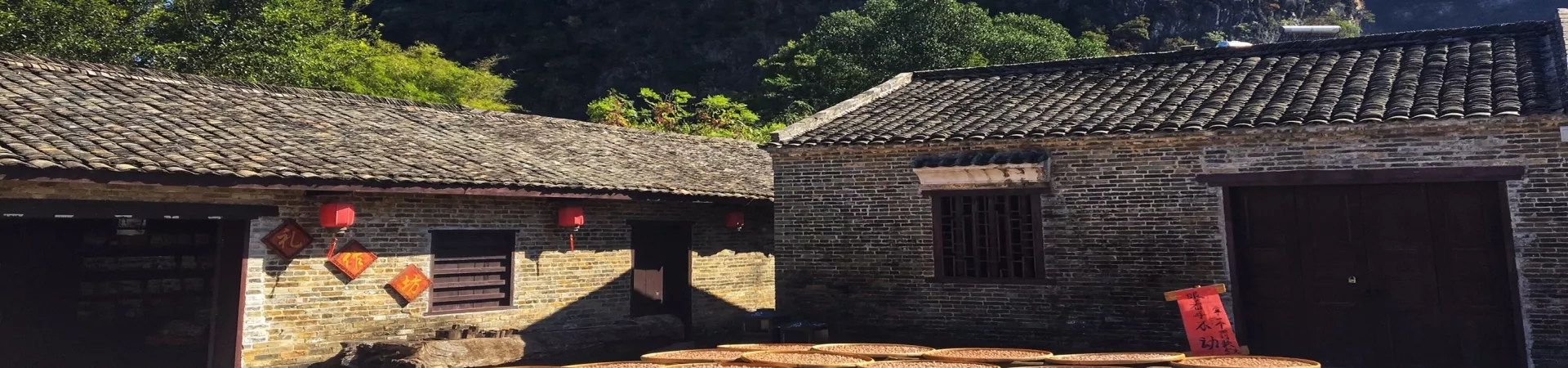
Subtitle: A Journey Through Time: Exploring the Guo Family Compound in Huangyao Ancient Town
Introduction: A Legacy in Stone and Timber
Nestled within the timeless lanes of Huangyao Ancient Town in Hezhou, China, the Guo Family Compound stands not merely as a collection of buildings but as a profound narrative etched in brick and wood. Constructed during the reign of Emperor Qianlong in the Qing Dynasty (mid-18th century), this sprawling estate embodies the pinnacle of "flatland courtyard-style" architecture unique to the region. Its significance, however, stretches back centuries further, tracing its lineage to one of China's most celebrated Tang Dynasty generals, Guo Ziyi. This ancestral pride is woven into the very fabric of the compound, making a visit here a walk through both architectural brilliance and living history. Spanning approximately 20 acres, the estate is a self-contained world of nearly a hundred rooms, enclosed by imposing stone walls, offering a captivating glimpse into the life, values, and artistry of a bygone era.
Architectural Layout and Defensive Grandeur
The compound's design is a masterclass in symmetry, order, and subtle defense. Its perimeter is defined by high, stone-built boundary walls, which served not only for privacy and security but also to symbolically separate the family's harmonious inner world from the outside. Access to this inner sanctum is granted through four distinct gatehouses, each with its own purpose and name, the most notable being the Jielong Gate (Welcoming the Dragon Gate) and the Taiping Gate (Gate of Peace and Prosperity). These gates are more than entrances; they are architectural statements, reflecting social status and auspicious hopes.
The approach to the compound sets the stage for its elegance. A serene pond and cultivated gardens front the main gates, creating a classic Chinese scholarly landscape that emphasizes harmony between human dwelling and nature. This arrangement provided a tranquil buffer space, allowing visitors to transition from the public realm of the town into the private domain of the Guo family, while also adhering to Feng Shui principles to gather positive energy.
The Artistry of Construction: A Testament to Obsessive Craftsmanship
Beyond its grand layout, the Guo Family Compound is renowned for an almost obsessive dedication to craftsmanship, most vividly seen in its brickwork. The entire structure is a testament to patience and perfection. The walls are built using a distinctive and ingenious "one-large, one-small" brick bonding technique. Each course consists of precisely alternating larger and smaller bricks, meticulously interlocked for exceptional stability and a unique rhythmic visual pattern.
The story behind these bricks elevates them from simple building material to objects of art. Historical accounts state that the family patriarch imposed an extraordinary decree upon the brickmasters: a strict daily quota of only thirty grey bricks. Any brick produced beyond this limit was deliberately shattered and discarded. This enforced limitation was not an act of scarcity, but one of uncompromising quality control. It ensured that each and every brick received undivided attention. Every single piece was hand-polished and ground to achieve flawless uniformity in size, shape, and a consistent, deep hue of grey.
The result of this painstaking process is walls of remarkable integrity. To this day, tapping on these centuries-old bricks produces a clear, metallic, and resonant "clink," a sound that echoes the strength and meticulous care invested in their creation. This sonic quality is a direct auditory link to the past, proving the durability and superb firing of the materials.
Spatial Organization and Interior Life
Within the protective walls and gates, the nearly one hundred rooms are organized around a series of interconnected courtyards. This layout follows traditional Chinese siheyuan principles but on a much larger, more complex scale. The arrangement typically separates spaces by function and hierarchy: reception halls for guests, ancestral worship halls, inner quarters for family members, study rooms, kitchens, and storage areas. The courtyards themselves served as centers for family activity, providing light, ventilation, and open-air spaces for gathering.
The interior design is characterized by its clever and rigorous planning. Wooden beam frameworks, intricately carved door and window panels, and tiled roofs all speak of refined taste. The circulation through the compound, from public receiving areas to the most private inner chambers, guides visitors through a spatial narrative of family life, social rituals, and Confucian order that governed the household during the Qing Dynasty.
Practical Information for the Visit
- Suggested Duration: Allocating 1 to 3 hours is recommended to fully appreciate the architectural details, wander through the multiple courtyards, and absorb the historical atmosphere without rush.
- Transportation: The Guo Family Compound is located within the pedestrianized area of Huangyao Ancient Town. It is accessible on foot from anywhere in the town core. The journey through the ancient flagstone streets to reach the compound is an integral part of the experience.
- Opening Hours: The exterior courtyards and grounds of the compound are generally open to visitors all day. However, it is advisable to visit during daylight hours for the best viewing conditions and to respect the quiet of the historical town in the evening. Access to specific interior rooms may have limitations.