Ancient Stage
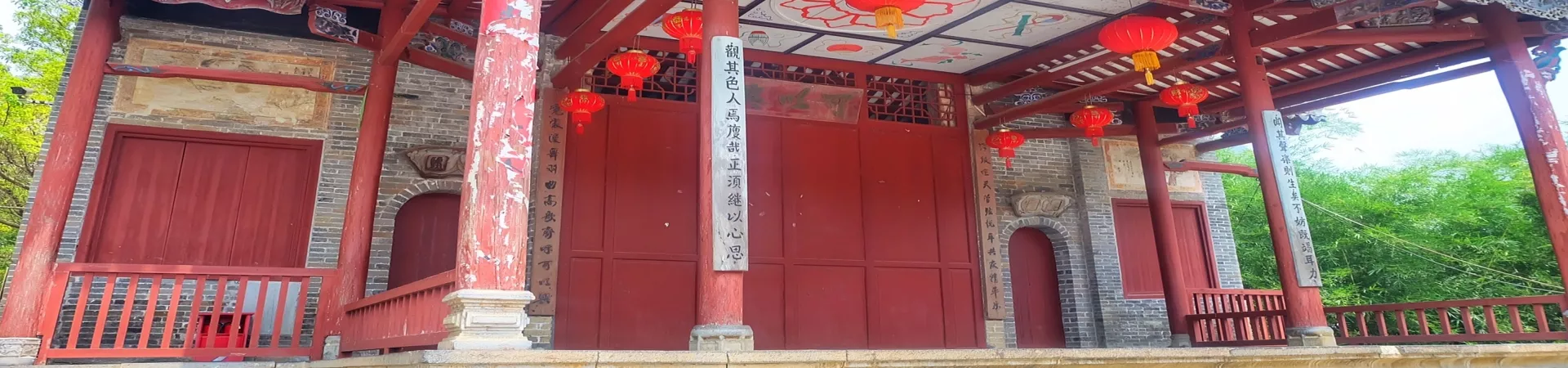
Subtitle: A Stage Where History Echoes: The Ancient Theater of Huangyao
Nestled within the timeless lanes of Huangyao Ancient Town in Hezhou, China, stands a silent yet eloquent witness to centuries of communal life and artistic expression—the Ancient Theater. More than just an architectural relic, this open-air stage is a living, breathing cultural heart, where the past resonates not only in its weathered wood and stone but also in the very air during festive performances.
I. A Legacy Cast in Wood: History and Architectural Significance
1.1. Origins in the Ming Dynasty The story of the Huangyao Ancient Theater begins in the 3rd year of the Jiajing reign of the Ming Dynasty (1524 AD). Having stood for over 400 years, its longevity is a testament to the craftsmanship of its builders and the enduring value placed on it by the local community. It is not a museum piece frozen in time but one of Huangyao's most celebrated and actively used landmarks.
1.2. The Narrative of Performance For four centuries, this raised platform has been the focal point for storytelling and social gathering. Its wooden planks have borne the weight of countless actors bringing to life epic tales of kings and generals, scholars and beauties, and the universal dramas of joy, sorrow, and reunion. As the local saying poignantly reflects, these performances—like the stories they tell—are transient "dreams," yet the stage itself remains, a permanent fixture for the cyclical celebration of culture and human emotion.
II. The Ingenious Design: An Acoustic Marvel
2.1. The Secret Beneath the Pillars What truly sets this ancient theater apart is a remarkable feat of pre-modern acoustic engineering. Upon close inspection, one discovers that the four main pillars supporting the stage do not rest directly on the foundation. Instead, each pillar stands over a large, buried water vat. This ingenious design is the theater's "secret weapon" for sound amplification.
2.2. Principles of Resonance The empty space within the vats acts as a natural resonator. When actors sing or speak on the stage, the sound waves vibrate through the wooden structure into the vats, which then amplify and project the sound outward and upward. This creates a clear, resonant, and surprisingly far-reaching audio effect, ensuring that even audience members at the back could appreciate the performance. This clever solution, conceived centuries before electronic amplification, highlights the profound understanding of physics and practical design possessed by its unknown architect, a design that rivals modern theatrical acoustics in its elegant simplicity.
III. Symbolism and Inscription: The Cultural Heart
3.1. The Central Plaque: "可以兴" (Kě Yǐ Xīng) Dominating the center of the theater's upper facade is a horizontal inscribed board bearing three powerful characters: "可以兴" (Kě Yǐ Xīng). This calligraphic work is the handiwork of Lin Zuojí, a distinguished "Juren" (a successful candidate in the imperial provincial examinations) from Huangyao.
3.2. Interpretation of the Phrase The phrase "可以兴" is rich with layered meaning, drawn from classical Chinese thought. It can be interpreted in several profound ways: * "It Can Inspire": It speaks to the fundamental purpose of theater and art—to stir emotions, inspire virtue, elevate the spirit, and provoke thought among the audience. * "Here, We May Prosper": It reflects the theater's role as a communal center where society gathers, culture flourishes, and the community's spirit is strengthened and celebrated. * A Classical Allusion: The phrase resonates with Confucian ideas about the function of poetry and art in cultivating moral character and social harmony. This inscription elevates the theater from a mere entertainment venue to a platform for cultural and ethical cultivation, aligning it with the scholarly aspirations of the town.
IV. The Living Theater: Experience and Practical Information
4.1. A Stage in Continuous Use The most captivating aspect of the Huangyao Ancient Theater is its vibrant, ongoing life. It is not a silent ruin. During major Chinese festivals, such as the Spring Festival (Chinese New Year) or the Mid-Autumn Festival, the space before the stage transforms. The courtyard fills with locals and visitors alike, "crowded as clouds," creating an atmosphere of exhilarating warmth and shared anticipation. The sound of gongs, drums, and opera vocals once again fills the air, connecting the present directly to the countless performances of the past.
4.2. Visitor Experience and Timing For today's visitor, a visit to the Ancient Theater offers a multi-layered experience. One can admire the Ming-era architecture, study the acoustic ingenuity, contemplate the scholarly inscription, and simply imagine the centuries of spectacle. While a thorough appreciation of its history and design can be achieved in under an hour, the true magic is felt when one witnesses—or even just vividly imagines—a performance taking place, completing the connection between the silent structure and its vibrant purpose. It stands as a powerful symbol of Huangyao's unbroken cultural lineage, where every carved beam and resonating vat tells a story waiting to be heard.