Shigu Academy
Subtitle: A Millennium of Scholarship and Scenic Splendor on the Xiang River
1. Introduction: The Premier Academy of Song China Nestled within the National Historical and Cultural City of Hengyang, Hunan Province’s second-largest metropolis, the Shigu Academy (Shigu Shuyuan) stands as a monumental testament to China’s scholarly heritage. Revered as the foremost among the Four Great Academies of the Song Dynasty, it occupies a serene yet commanding position in Shigu District. Perched on Shigu Mountain at an elevation of 69 meters, the academy complex spans approximately 4,000 square meters, harmonizing architectural grace with its dramatic natural setting. For centuries, it has been celebrated not merely as an institution of learning but as the "Number One Scenic Spot in Hunan," a title that hints at its unique fusion of intellectual prestige and breathtaking landscape.
2. The Legendary Stone Drum and the Mountain The academy derives its name from a central, enigmatic artifact: a stone drum, historically recorded as standing about two meters (or six chi) in height. This drum is steeped in legend and literary lore. As early as the Jin Dynasty, scholar Yu Zhongchuan, in his "Contemplating the Stone Drum," wrote of it "containing a latent resonance, capable of a thunderous roar that startles the nine heavens." The famed geographer Li Daoyuan of the Northern Wei Dynasty, in his Commentary on the Water Classic, noted its presence and the belief that "when the drum sounds, it heralds military affairs." While the physical drum one sees today is a restoration, its symbolism endures—representing both the enduring voice of scholarly pursuit and the site’s deep connection to the forces of history and nature. The academy is built upon the rugged and picturesque Shigu Mountain, where the converging waters of the Xiang River create a stunning vista, inspiring awe and reflection in equal measure.
3. A Living Tapestry of Intellectual History 3.1. A Millennium-Old Seat of Learning Shigu Academy is a rare educational institution whose active life spanned six distinct dynastic periods: Tang, Song, Yuan, Ming, Qing, and the Republic of China. Through each era, it was expanded, repaired, and revitalized, maintaining an unbroken thread of academic tradition for over a thousand years. Its longevity made it a pivotal cultural axis for southern China.
3.2. Illustrious Faculty and Distinguished Alumni The academy’s prestige is rooted in the extraordinary minds it attracted. A veritable who’s-who of Chinese philosophical and literary giants served as lecturers or masters here, including the great Song poets Su Shi and Xin Qiji; Neo-Confucian luminaries Zhou Dunyi, Zhu Xi, and Zhang Shi; and Ming thinkers Zhan Ruoshui and Wang Gen. This tradition continued into later centuries with figures like the renowned scholar Wang Kaiyun. Its influence is equally evident in the stellar alumni it nurtured. The academy was the intellectual cradle for a staggering array of historical figures who shaped China’s destiny. They include the seminal philosopher Wang Fuzhi; the formidable Qing statesman and military leader Zeng Guofan, along with his associate Peng Yulin; the influential scholar and reformer Yang Du; and the iconic modern painter Qi Baishi. This list underscores the academy’s role in cultivating talent across philosophy, governance, military strategy, and the arts.
3.3. A Magnet for Literary Pilgrims Beyond its formal faculty and students, Shigu served as a magnetic destination for the literati of all ages. Poets and travelers such as Du Fu, Han Yu, Liu Zongyuan, Liu Yuxi, Fan Chengda, and the geographer Xu Xiake journeyed here. They came to lecture, to study, to compose poetry commemorating the landscape, to inscribe stele, or simply to seek inspiration amidst its beauty. Their collective visits created a rich, layered cultural palimpsest, with each generation adding its voice to the academy’s legacy.
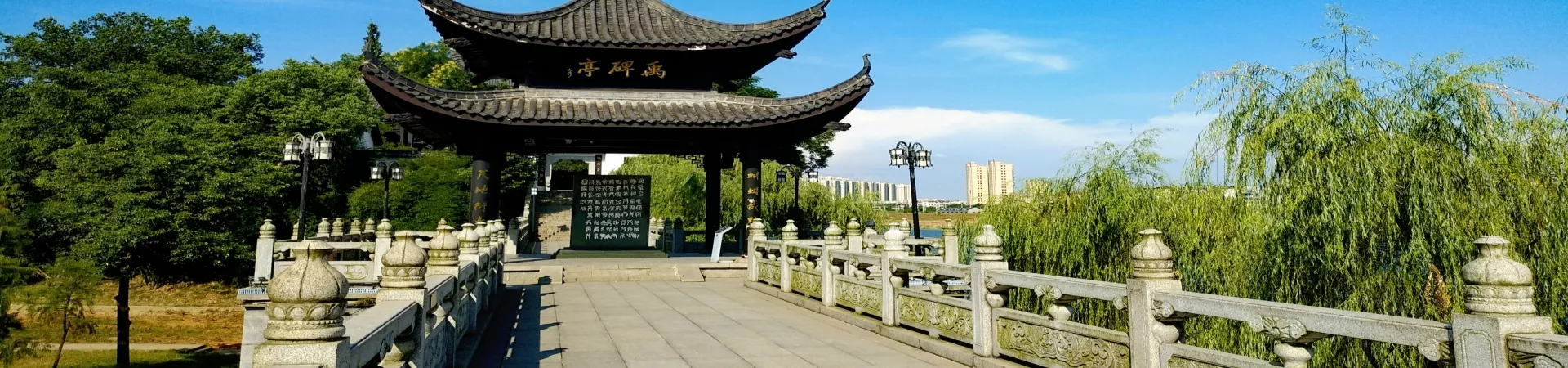
4. Practical Visitor Information 4.1. Location and Ambiance Today, the restored Shigu Academy offers visitors a chance to walk through halls that once echoed with scholarly debate. The complex, with its traditional courtyard architecture, ancient trees, and tranquil gardens, provides a peaceful retreat. The panoramic views from the mountain over the confluence of rivers remain a highlight, offering the same scenic inspiration that captivated visitors for a millennium.
4.2. Admission and Hours * Opening Hours: 08:30 - 18:00 (Last admission at 17:00). The academy is open Tuesday through Sunday throughout the year. It is also open on Mondays. * Admission Fees: Adult tickets are priced at 20 RMB. Children's tickets are available for 10 RMB.
4.3. Contact Information For any inquiries prior to your visit, you may contact the academy at: +86 734 8347663.
A visit to Shigu Academy is more than a tour of a historical site; it is an immersion into the landscape that fueled a continuous intellectual revolution. It is where the tangible legacy of classical education, the echoes of legendary figures, and the timeless beauty of the Hunan riverscape converge, offering a profound connection to the heart of Chinese scholarly and cultural tradition.