Nanyue Zhonglie Temple
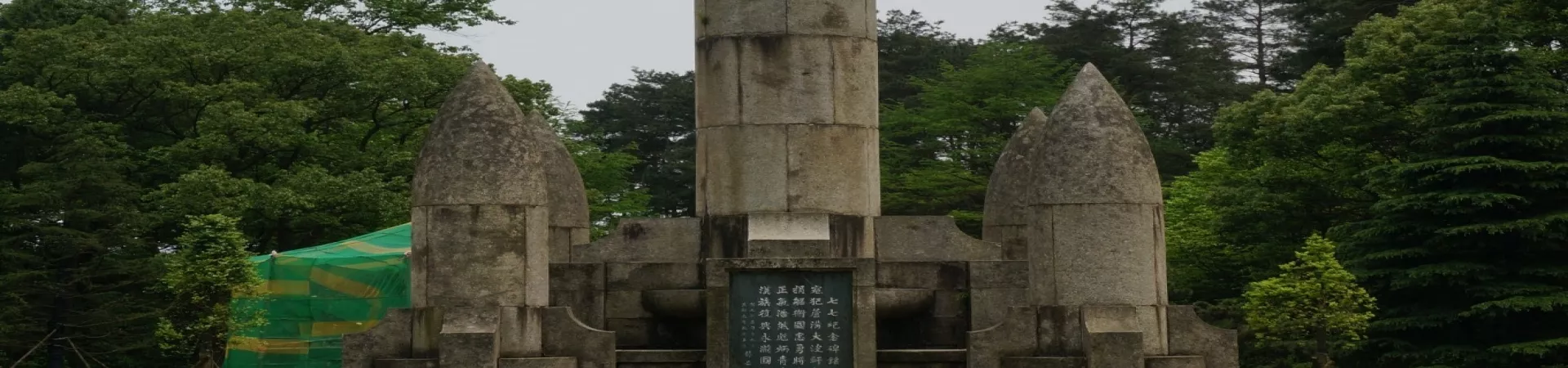
Subtitle: A Solemn Tribute: The Nanyue Martyrs' Shrine in Hengyang
1. Introduction and Historical Significance
Nestled on the slopes of the sacred Mount Heng (Hengshan) in Hunan Province, the Nanyue Martyrs' Shrine stands as one of China's largest and most architecturally significant memorials dedicated to the soldiers who fell during the Second Sino-Japanese War (World War II). Constructed between 1938 and 1943, during the war itself, the shrine embodies the national grief and resolve of a period of immense struggle. It was specifically built to honor the officers and men of the Ninth Military Zone who made the ultimate sacrifice in defending central China. Unlike many historical monuments built in retrospect, the shrine's creation amidst the conflict adds a profound layer of immediacy and raw emotion to its purpose. Its designation, first as a Hunan Provincial Key Cultural Relic Protection Unit in 1983 and later as a National Key Cultural Relic Protection Unit by the State Council in 1997, underscores its enduring importance not only as a war memorial but as a masterpiece of architectural integration with profound historical value.
2. Architectural Layout and Grand Design
The shrine is a monumental example of architectural planning that harmonizes solemn purpose with the natural landscape. Its design follows a traditional, rigorous axial symmetry, creating a powerful visual and spiritual journey from entrance to summit.
2.1. The Axial Ascent: A Journey of Remembrance The entire complex is built into the mountain, following a rectangular layout that progresses from lower to higher elevations, symbolizing both an arduous climb and an ascension to honor. The central axis, stretching 240 meters in length and 60 meters in width across a total area of 14,400 square meters, is defined by a granite-paved walkway. This path is connected by 276 stone steps, guiding visitors physically and metaphorically through the sequential stages of commemoration.
2.2. Sequential Elements Along the Central Axis The journey begins at the base with a ceremonial Memorial Archway (Pailou), serving as a formal gateway into the sacred space. Following the path upward, visitors encounter the iconic "July 7th" Memorial Tower. This five-pillared granite pagoda commemorates the start of the full-scale war with Japan after the Marco Polo Bridge Incident (July 7, 1937). Each pillar is said to represent one of the five branches of the armed forces. Continuing the ascent leads to the Memorial Hall (Jiniantang), which historically served as a space for ceremonies and housing relics. Further along the axis stands the Tribute Monument (Zhijingbei), a stele for silent homage. The architectural and spiritual climax of the axis is the Main Hall (Xiangtang), or Enjoyment Hall, the highest and most important structure. It was designed as the central place for sacrificial rites and houses tablets inscribed with the names of fallen officers.
3. Integration with the Natural Environment
The shrine's power is magnified by its breathtaking natural setting, which frames the man-made structures with serene beauty.
3.1. A Sacred Mountain Embrace The shrine is tightly embraced by the lush, green folds of Mount Heng. Behind the main complex lies the "Memorial Forest" planted by Chiang Kai-shek during his visit, adding a living, growing element to the tribute. The site is surrounded by towering ancient pine trees, their enduring presence symbolizing longevity, resilience, and the eternal watch over the martyrs' rest. This intentional integration creates a poignant contrast and harmony: the stern, orderly granite of human construction sits within the soft, chaotic vitality of nature, together forming a sanctuary for reflection.
3.2. The Final Resting Places: The Martyrs' Tombs Flanking the central axis, integrated into the wooded hillsides, are 13 large collective martyrs' tombs. These tombs are the physical heart of the shrine, containing the remains of thousands of soldiers from the Ninth Theater. They are not isolated monuments but are carefully placed within the landscape, often marked by simple but dignified stele, making the entire mountainside a hallowed cemetery. The presence of these tombs transforms the site from a purely ceremonial space into a genuine resting ground, grounding the memorial in sobering reality.
4. Practical Visitor Information
A visit to the Nanyue Martyrs' Shrine is a moving experience that requires some practical planning.
4.1. Location and Access The shrine is located within the boundaries of the Mount Heng (Nanyue) Scenic Area in Hengyang City, Hunan. Visitors typically access it as part of their journey to the mountain. It is situated on the slopes, requiring a walk along the described axial path, which involves climbing the stone steps.
4.2. Admission and Fees There is no separate admission fee for the Nanyue Martyrs' Shrine itself. Access is included in the general entrance ticket to the Mount Heng Scenic Area. Visitors must purchase the mountain scenic area ticket to enter the grounds where the shrine is located.
4.3. Contact Information For official inquiries, particularly for group visits or ceremonial purposes, the site management can be contacted at 0734-5673377.
4.4. Visitor Etiquette and Experience As an active memorial and a national sacred site, visitors are expected to maintain a respectful and solemn demeanor. The climb up the stone steps is part of the reflective experience. It is advisable to wear comfortable walking shoes and be prepared for changing mountain weather. The site offers a powerful combination of historical education, architectural appreciation, and natural beauty, making it an essential stop for those seeking to understand China's wartime history and its commemoration.