Jet cone
Subtitle: A Geological Marvel in Heihe: Exploring the Mysterious Lava Sprouting Cones
Introduction: Towers of Fire and Stone Nestled within the dramatic volcanic landscapes of Heihe City in China's northern Heilongjiang Province lies a rare and captivating geological phenomenon: the Sprouting Cones, locally known as Pen Qi Zhui. These extraordinary formations are not merely static relics of past eruptions but are iconic symbols of the immense, creative, and destructive forces that have shaped the Wudalianchi Volcanic Field. Far from being simple mounds of rock, they stand as solemn, intricate monuments, offering visitors a direct and awe-inspiring connection to the Earth's fiery interior. A visit here is a journey into a unique chapter of planetary history, where the processes of volcanic activity are frozen in time, presenting a surreal and educational open-air museum.
1. Unveiling the Formation: Nature's Precision Engineering
1.1. The Unique Birth of a Sprouting Cone The Sprouting Cones are a specific type of volcanic fumarolic mound. Their formation is a precise and delicate geological ballet that occurred during the waning stages of basaltic lava flows. As the molten rock, with its relatively low viscosity, spread across the land, its surface began to cool and solidify into a crust. Beneath this crust, however, the lava remained hot and fluid, continuing to flow. When this still-molten lava encountered pockets of groundwater or saturated soil, the result was instantaneous and violent: the water flashed into steam, creating enormous pressure.
This pressurized steam needed an escape route. It forced its way up through fractures or weak points in the semi-solidified lava crust, jetting upward in powerful, focused columns. As these steam jets erupted, they carried with them droplets and spatter of the molten lava itself. This lava spray, exposed to the cooler air, instantly chilled and solidified into small, pancake-like discs or clinker fragments known as "lava cakes" or spatter.
1.2. The Layered Construction Process The genius of the Sprouting Cone lies in its construction method. The erupting steam jet acted like a natural construction crane. The ejected lava cakes and fragments did not scatter randomly; instead, they fell back around the very vent from which they were expelled. Over days, weeks, or possibly longer, this process repeated incessantly: steam explosion, ejection of material, and deposition around the vent. Layer upon layer of these solidified lava fragments accumulated, building upwards and outwards from the base. The steady, fountain-like action of the steam jet is what created the remarkably symmetrical, conical shape, with each layer representing a single pulse of this ancient geothermal engine.
2. Anatomy of a Sprouting Cone: A Closer Look
2.1. Distinctive External Morphology
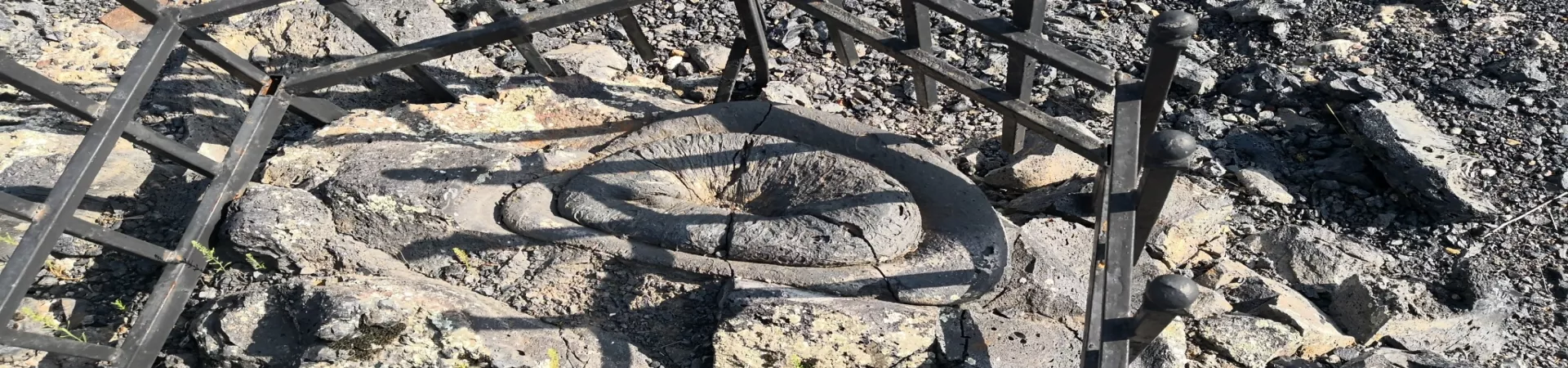
From a distance, the Sprouting Cones present a striking silhouette. They resemble a cluster of dark, slender pagodas or ancient watchtowers majestically rising from the chaotic sea of jagged "翻花石" (Fan Hua Shi) or "ropy lava" that surrounds them. This contrast between the orderly cones and the tangled, twisted lava field accentuates their uniqueness. Their scale is humbling yet accessible, typically standing between 2 to 4 meters in height, with base diameters ranging from 2 to 5 meters. Their form is consistently tapered, wider at the sturdy base and gracefully narrowing towards the summit, a direct result of the depositional dynamics of their formation.
2.2. Internal Structure and Composition The external form is only half the story. The internal structure reveals the true nature of the Sprouting Cone. Unlike a solid pillar of rock, these cones are essentially hollow shells. Their walls, which can be several decimeters thick, are composed entirely of the loosely to moderately cemented layers of lava cakes. This layered "onion-skin" or "brickwork" structure is often visibly apparent on weathered surfaces or damaged sections. The crowning feature, and the key to their origin, is the opening at the very top. This is the original vent—the chimney through which the superheated steam and volcanic gases roared. Sometimes, a smaller internal conduit may be visible within this hollow core, leading down into the depths from which the forces emerged.
3. The Visitor Experience: A Journey Through a Volcanic Landscape
3.1. Navigating the Site and Key Viewpoints Exploring the Sprouting Cone area is an immersive adventure. Well-maintained wooden boardwalks and marked trails typically wind through the protected site, allowing for safe and minimal-impact access. These paths are strategically designed to offer multiple perspectives. One moment you are at a panoramic viewpoint, seeing the entire group of cones standing sentinel over the rugged lava plain. The next, you are at the base of an individual cone, able to crane your neck and appreciate its full height and intricate surface texture. The recommended time for a visit is 1 to 3 hours, which allows for a leisurely pace to photograph the formations from different angles, read informational signage, and simply absorb the otherworldly atmosphere.
3.2. The Surrounding Geological Context
The Sprouting Cones do not exist in isolation. They are the most distinguished features within a broader context of spectacular volcanic geology. The surrounding 翻花石 (ropy pahoehoe lava) field is itself a wonder, with its smooth, billowing, and rope-like surfaces formed by the movement of very fluid lava. Visitors will also likely encounter other features such as lava tunnels (tubes), pressure ridges, and various types of volcanic slag and bombs. Understanding the Sprouting Cones as part of this holistic volcanic ecosystem enriches the experience, illustrating the diverse ways in which a single volcanic event can sculpt the land.
4. Scientific and Preservation Significance
4.1. A Window into Volcanic Processes For geologists and volcanologists, the Heihe Sprouting Cones are an invaluable natural laboratory. They are exceptionally well-preserved examples of hydrovolcanic (water-magma interaction) activity in a continental basaltic setting. Their structure provides clear, physical evidence of the mechanism of phreatomagmatic explosions that occur when lava meets water. Studying their size, distribution, and internal stratigraphy helps scientists reconstruct the specific events, timelines, and environmental conditions (such as groundwater levels) present during the last major eruptive phase of the Wudalianchi volcanoes.
4.2. Conservation for Future Generations As fragile constructions of loosely aggregated material, the Sprouting Cones are vulnerable to natural erosion and, more pressingly, human interference. Climbing on the cones, removing rock samples, or littering can cause irreversible damage. The site is part of the Wudalianchi Global Geopark, recognized by UNESCO, which mandates strict conservation protocols. Visitors play a crucial role in preservation by staying on designated paths, following all guidelines, and treating these ancient natural sculptures with the respect they deserve. Their survival ensures that future generations can continue to witness and learn from these extraordinary towers forged by steam and fire.